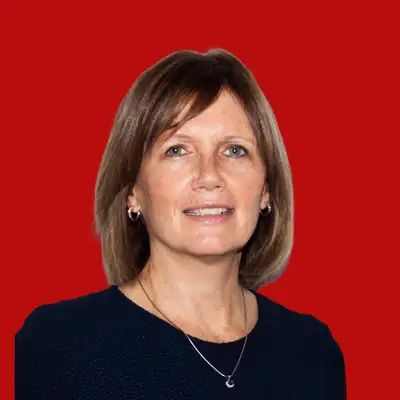
Unlearning as a Leadership Superpower - Ann Reilly - Shift & Thrive - Episode #104
S&T - Ann Reilly
===
Intro: [00:00:00] In today's business world, change is the only constant, and mastering transformation is the ultimate key to success. Welcome to Shift and Thrive. I'm your host, Natalie Nathanson.
Each week we'll bring you conversations with CEOs who delve into how they successfully drove critical change in their organization. This show is sponsored by Magnitude Consulting, bringing you the thinking power of a growth consult. And the getting it done, power of a full service B2B marketing agency.
Natalie Nathanson (2): I am super excited to introduce today's guest. She's a growth and transformation leader who has spent her career helping organizations navigate disruption across markets, technologies, and teams. Her career spans major shifts across advertising, digital media, and technology, with leadership roles at companies including STAR TV, Intuit, and Yahoo.
Today, she helps [00:01:00] teams and leaders build the capabilities they need to thrive amidst constant change to help improve adaptability, resilience, exponential thinking, and AI readiness, and turning industry disruption into a competitive advantage. She is the founder of AdaptSuccess. Anne Reilly, welcome to the show
Ann Reilly: Thank you so much, Natalie. I'm really happy to be here today with you
Natalie Nathanson (2): Thank
you. I am as well. Uh, I know we've had a number of, uh, conversations, and I have so many areas that I wanna get into with you. And to start us off, you know, I know you've spent much of your career leading growth and go-to-market organizations, and then, uh, made an intentional pivot towards coaching and advisory to really help leaders navigate change.
So I'd love to start with your transformation story. Uh, talk to me about what was happening in your career and, you know, what was happening in your thinking that, that led you to that shift.
Ann Reilly: Sure. Well, I started my career in Asia, in Hong Kong and Singapore, and working in advertising, and then moved on to [00:02:00] the media sales side. And then fast-forward to, um, uh, California with Intuit, and then New York and with Yahoo! And then I was mo- moved over to run the Yahoo! EMEA office for the mid-market team.
And so I spent a, a large portion of my career in the advertising and digital media sales. And I got to a point where I, I... To be honest, I needed to get out of my digital media bubble and, you know, really explore what else was out there, and I was very interested in all of the, the change happening. Uh, you know, I had lived through and worked through, you know, the, the dot-com boom, social media, and the mobile boom.
And, you know, now we're, you know, moving into the creator economy. But so, you know, [00:03:00] worked through a lot of those transformations and really wanted to step out of the digital media Um, the, that, that silo and explore a bit more. So I joined a company called OpenXO, which, uh, was founded by Salim Ismail, and he was actually the former head of the innovation group at Yahoo.
And he went, um, out and kind of did a big research project to really understand why companies were growing 10 times faster than their peer set. So companies like Netflix, like Google, Uber, those... Air- Airbnb. And then came up with a framework around it and, uh, to help other companies as well to, to grow faster.
But the, the key parts of it that I found super interesting was how these companies were using data, and also how they were [00:04:00] using emerging and converging technology. So I started really learning about,
um, AI and
the impact that it was gonna have on the workplace, and I actually had a kind of clarifying moment and thought, "Oh my God, we're not ready for this."
And I was thinking about myself and these roles back at, at Yahoo and Intuit and and in different countries, and, you know, just how I operated in that bubble and thought that, you know, that it was really gonna change how we work, um, much more than the internet changed how we work. And I was very curious about how people were going to adapt to that change, and what would happen if they didn't.
And so that's, you know, really kind of the, the, the pivotal movement of my move into this [00:05:00] innovation disruption, and then the, um, change management aspect of my work.
Natalie Nathanson (2): Yeah. And I know you've been, uh, kinda operating in this capacity for over a few years now. Uh, I'm curious to hear a bit, you know, from your personal journey, like what new kinda skills or capabilities have you found needing to develop in yourself to make the shift?
Ann Reilly: Well, there's quite a few. I think the, you know, o- one skill that is really necessary, um, a- and it's, it's a skill that a lot of us have or can develop, i- is the skill of curiosity. And I think that in my, uh, in my digital media budg- bubble, I was so familiar with the work and, you know, we have this, y- you know, I was working for public companies, and there's a cycle to work.
You know, the quarterly cycle, the budgeting, the goaling, um, and, you know, the, the sales process. And I was so, uh, [00:06:00] entrenched in the cycles. And I f- I feel that with everything exploding now driven by AI,
that you really do need to, um, to summon your curiosity and really go out and explore. And it's not a one-time thing.
It's not something you should do every six months. It's something that is, you know, needs to be done on an ongoing basis because things are happening at such rapid pace and, you, you really need to be able to, you know, start seeing around corners and just, you know, finding the signals through, through the noise of what matters, what doesn't, what you need to pay attention to, what's not as urgent.
Um, so I think that is, is one, um, skill. And I, I think also as, you know, as I moved around the [00:07:00] world that really kind of understanding, um, what, of what environment I was in and how I needed to achieve my goals was very important, and it was as much about learning new skills as unlearning skills. And I think the unlearning is actually, uh, more important right now because we have, we have spent so much time, um, you know, to, to earn degrees, earn certifications, earn experience, um, but the world is shifting beneath our feet and everything's changing.
So it's, really time to unlearn a lot of the things that got us to where we are today.
Natalie Nathanson (2): I love that theme, and I actually wanna do a deeper dive on the unlearning concept because I think it's important and, uh, not talked about, [00:08:00] uh, as much maybe as it, as it should be. Um, and you've got me thinking about it from when we, when we first started talking. Uh, one thing I wanna ask about curiosity because I think, you know, some of us are naturally kind of more curious than others.
Uh, I consider myself a very curious person, and I think, like, ...in the current times with AI and all of that, uh, I'll often say I can indulge myself in my curiosity in ways that I couldn't before, and that can be going down, you know, any number of rabbit holes, whether that's professional, personal, like any kind of thing you, you hear.
You can, you know, quickly get a lot of information on it. Um, how do people develop, uh, kind of curiosity as a, as a skill, as a mindset, so if someone doesn't feel like they, uh, kind of have that or do that often enough?
Ann Reilly: I think like any skill, you have to practice it. You know, and it is a, it's a muscle you can develop, but with, with a lot of things that I'll talk about today, the skill development, you know, an important piece of it is actually [00:09:00] scheduling time. So how do you, you know, actually put this on your calendar?
And for curiosity, um, in terms of, you know, business, the environment, AI, that would be actually going out and, and, and, um, doing research on your industry of, you know, how people are using AI now, what's hap- what startups are popping up, uh, how is that gonna affect your business or your r- your, your role, your job, your career?
And really starting to ask yourself these questions about, "Hey, what's, what is changing around me? What do I need to know about, and what is, what is happening around me?" Um, so I do think that, that scheduling that exploration time is, is very important. Another thing, uh, would b- also be to, you know, think about the questions that you're asking people when you meet them, and really be [00:10:00] intentional about, you know, what information you wanna find out and what you, you know, would like, you know, would like to share as well.
So, you know, when I'm meeting new people, you know, instead of, you know, doing the small talk now, I'm, I'm starting to ask them, "Hey, what are you excited about? What's, you know, what are you, what's happening in your life that, you know, you're looking forward to?" Or, "What events are you going to and why are you going to them?
What do you hope to, hope to get out of the event?" You
Natalie Nathanson (2): I like that. Those are very, uh, kind of pragmatic and I think on the, you know, any- anyone you meet, you know, everyone has an interesting story to share. So kinda cutting past the, the small talk and practicing that curiosity there I think ...is a, is a great, uh, piece of advice. Um, so I wanna come back to, uh, your, you know, your, uh, information about unlearning and, um, I guess first can you talk about, uh, you know, what, what kinds of things, uh, do leaders need to unlearn to be successful in today's [00:11:00] environment?
Ann Reilly: ~there are so many, and~ I actually think it's quite a, a kind of personal leadership question that everybody needs to be asking themselves right now because of, you know, where you are today and where you wanna get to. You know, what's the, what's the next level of, of job or of mastery? You know, what, what is, what are your goals?
And so I, I would always start there, you know, in my coaching practice of w- you know, with, with leaders and teams of, you know, what is your next goal? And, you know, let's make it, let's make it a, a big goal. And then, you know, uh, I think that, you know, e- examining what are the skills that you think are needed in order to achieve that goal, but I would ask you to, you know, really start questioning your assumptions in a, in a healthy way.
You know, because you got to where you are today, I got to where I am by, as I said, my, my [00:12:00] experience, my education, the certifications that, that I earned. But that not, m- might not be necessary for the next level. I might need a whole new set of skills. So maybe it is, uh, more on the communication side. Maybe it's on the creativity or innovation side.
But the, say the, the Sales management skills that I really worked hard at, and the leadership skills in a corporate environment, you know, those were so useful to me throughout my career, and I use them now in terms of coaching people, but a lot of them are not things that I use in my day-to-day life. So I need to let a lot of those go, uh, so that I can, you know, develop new skills.
I think, um, you know, some of the ones that I really work [00:13:00] with leaders on are, you know, a lot of leaders feel like they need to have all of the answers, you know, before they, uh, you know, b- before they show up to a meeting or to their team. Um, they, they think that their expertise, um, is so solid that they won't get disrupted.
I think that that's a risky attitude to have because disruption is happening across the board and top-down. And I think companies also need to, you know, really look at their, their business models. You know, is that, is, is their business model something that's going to survive and grow in this age of AI, or is it something that needs to be, you know, rethought on an ongoing basis?
And it's also, you know, mindsets, it's, uh, you know, how you, how you view change. A [00:14:00] lot of people are like, "I don't like change." Um, so that might be something to work on unlearning. And then also, you know, the way that you approach a certain job or deliverable. You know, maybe there are things that you need to unlearn there, uh, in order to, you know, do it a better, faster, more effective way.
So there's a wide range of things that people need to or could, could unlearn depending upon, you know, where, what their goals are.
Natalie Nathanson (2): I think, uh, like a lot of skills, uh, for folks probably developed organically, right? What are your natural strengths? And so that... ...But then you reach that, like, what got you here won't get you there, um, and then need to, like, reach a point where you're more deliberate about it. Um, and then tying it back to kind of our, our premise that the pace of change now is kind of faster than, uh, ...than it's been, and it's probably not slowing down anytime [00:15:00] soon.
Uh, maybe the, the humbleness, uh, or recognition that, you know, what makes companies successful is different. And so I think that ties to a number of the areas, uh, that you're talking about of leaders, like not needing to have everything kind of all buttoned up or having all the answers and, uh, just kind of recognizing, uh, kind of different ways of working.
Ann Reilly: It's usually a place where, when I'm talking to executives about this, where they know that there's some friction there. Uh, it's usually also nagging them in their head of like, "I know, uh, there's a probably a better way to do this, but I'm time-pressed. I have to get this report out. I have to, you know, hit the quarterly goals."
And that, you know, they think that doing it the old way is just faster than learning a new way because be- being a beginner is hard. But so I think it's something that,
uh,
people know that they have to change for [00:16:00] themselves. Uh, and that's where I usually start, like, "Where do you see the friction? Where is that voice in your head telling you, like, you know, I'm Why am I still doing it this way?" I talked to somebody last week who said, "You know, I'm doing some things here that I did 20 years ago, you know, in the same way, and there's, there's gotta be a better way to do it." But do you, do you see that, Natalie? Do you see, like, some things that, you know, you're, you have some friction on, that you're like, "I, I need to spend some time to rework this," or, "I'm
Why am I still doing it this way?"
GMT20260629-165854_Recording_1280x720: Yeah.
Natalie Nathanson (2): for sure. And I would say I, uh, kind of, uh, enjoy kind of that, uh, kind of analysis of kinda how am I coming across, what needs to be different. You know, I'm in a entrepreneur's organization, so kinda with that peer group, we do have those ...types of,
uh,
discussions, uh, which is very helpful to get that outsider [00:17:00] view in a very kinda honest, uh, and ...honest way.
Um, I would say for me, uh, one of the things that you mentioned, right, moving forward without all of the answers or without a, a plan and knowing that kinda the, the rules are changing as we go, uh, is, is one area. And I'm, uh, you know, one of those, uh, risk-averse entrepreneurs, which can be, ...can be rare. I'm a planner, and so it pushes very much, like, against ...my comfort level to keep moving and keep innovating and evolving the business while, uh, right, every time we make, I make a decision on something, three other things are changing at the same time.
But you need to kinda have that, that confidence to move forward or kind of moving with, with partial, uh, information. Um, and then I think the second one is, you know, the thought around, uh, just kind of transformation and transforming the business, uh, to kinda stay, stay current with, uh, kinda the times and as both, uh, from the internal standpoint, um, [00:18:00] uh, evolving kind of the inner workings of the business and how, you know, workflows are set up and things of that nature.
Uh, but also kind of the industry itself is, is shifting. Um, and I think the, um, you know, the, the realization that, uh, kind of transformation is, is likely not going to end, so it's not ...a project. It's not a ... You know, ...it is an initiative, but there's no, there's no endpoint. And so just the shift in mindset around what that means, uh, for, for myself, for how I lead the team, for how we kinda manage our, our energy levels, uh, around that
Ann Reilly: Mm-hmm. Yep, that's great. And you're, you're right that this, this, um, transformation that we're h- h- going through right now, there's, there's no end point, and this is just the constant state of how we work now. And, you know, you were saying about, uh, you know, moving forward not knowing, you know, [00:19:00] what's, what's going to happen or having all the answers, but 50% of CEOs are actually, um, uncomfortable about disruption, or they're, they're not prepared for disruption.
GMT20260629-165854_Recording_1280x720: So
Ann Reilly: you know, the reason is, is that we're all in, in uncharted territory. We're all creating this as we move forward. So that is, you know, why I also think that this, uh... that, that teams and leaders really need to tap into their adaptability as well, and, you know, be- be- because we're creating this future as we, as we move forward
Natalie Nathanson (2): Yeah. Well, and I think, I'm sure this goes in other, uh, you know, industries and business models as well, but for a lot of professional services firms, uh, like the, the CEO or founder often comes from that industry, right? So for myself, I, I did marketing my whole career. I started a kind of go-to-market marketing consultancy.
Um, but then as the [00:20:00] business grows and, and evolves and needs different things, um, in some ways it, it's a disservice to know kind of the space that you're in because it can keep you kind of too far, uh, in the details. Uh, it's kind of different to look at how to bring in experts that know how to do things.
Like we just brought on a, uh, a CTO this year, right? And so now some of the conversations happening are much more technical than I, ...uh, have, uh, been part of in this kind of context or may ever need to know, but it's really more about how to ask the right questions, how to get enough information without feeling like I need to, to know it all, but knowing that, you know, we have the right, the right experts
Ann Reilly: Right.
No, that's great. And yeah, I, I kind of, I think the age of having complete information before we make a decision is, is gone. And, uh, because even if you think you have it, it will change pretty quickly
Natalie Nathanson: Hey, this is Natalie, your Shift and Thrive [00:21:00] host. After chatting with lots of CEOs, one thing is crystal clear. Leveling up your company means having a killer Go-to-market strategy. That's what my crew at Magnitude Consulting does every day. If you're trying to step up your marketing game, whether it's strategizing, accelerating your pipeline, expanding into new markets, or getting into AI and automation, let's talk.
No pitch, no pressure. Just good conversation. Visit shift and thrive podcast.com/natalie to schedule a time. Can't wait to connect.
Natalie Nathanson (2): I'm curious if there are any examples, uh, from clients that you've worked with that have gone through like a, a, a big transformation of their own of, um, looking at kinda un- unlearning and, and how they went about that?
Ann Reilly: Sure. So yeah, I've worked... I- it's actually the most popular or most people have been most curious about the unlearning dimension of adaptability, and I work, I work with this model called the ACE [00:22:00] Model of Adaptability. And just, just to let you know, the A- ACE stands for ability, character, and environment, and unlearn sits under the ability pillar because it's a skill.
So it's something that a- again, we can, um, improve and we need to practice over time, and we can talk about ways to practice it, uh, as well. But the... You know, when, when I'm working with, um, organizations, uh, about this, uh, uh, about unlearning, they're really Working at both the individual level, the team level, and the whole environment level.
Because as you s- as you think about unlearning, um, you know, this is about questioning assumptions, questioning how you've done things all, you know, all along. And when you start to, um, dive into that, that can cause a bit of [00:23:00] chaos in the company or discomfort in the company. Because imagine if, you know, you hire somebody new and you, um, you do have this open culture of, of questioning assumptions that, you know, if everything gets questioned, you might think it's gonna slow you down.
You might think it's a hassle. Um, but it's actually... You know, so it's challenging to manage that, and that's what I do, um, you know, work with, you know, one company in particular on, like how can they move their environment from being, you know, more hierarchical and, and a kind of a closed culture of, you know, here's- here are how things are set in stone, to practicing the habit as individuals and teams to question assumptions.
And that goes to, um, one, one thing that we [00:24:00] did was, um, having a, a session each month where people, the team would come together and say, "Hey, I think we need to really question how we're working with this client. I think we need to question this whole process. Why do we have 72 steps in this whole process?"
Um, it's just, it's, it's out of date. Or even, you know, how, how are we communicating our brand? I mean, that's a big discussion but, you know, that, that relationship with your customers and, and clients changes, um, can change a lot. And so, you know, those are all questions that, you know, some of them are smaller to take on, of a process, but a, a conversation about how your brand is being, um, being perceived in the market is a pretty big question for a company to, to undertake.
But as the AI world shifts, as communication shifts with [00:25:00] influencers and creators and, and, uh, and also as, as demand changes or the expectations change, these are all things that, you know, pe- people in companies, leaders should be should be open to the questioning of are we still on the right path? The answer may be yes, but the answer may be, you know, we need to tweak it or we need to really, um, change this whole approach to how we're, you know, dealing with this, this, um, initiative or, um, program that we have
Natalie Nathanson (2): And how does a leader assess if their organization is kind of adaptable enough? And I would assume, like you said, it's kind of the, the individual people, it's the leaders, it's kind of
the culture
overall. Um, how do you kinda get a clear sense, uh, of kinda where your organization sits?
Ann Reilly: Yes. Well, that's a question I asked myself when I was working at OpenXO and really learning [00:26:00] about AI and the emerging converging technology, and thinking that, thinking that, you know, we weren't ready for this. And, you know, we hear, hear this word, you know, you, you need... or phrase that you need to adapt all the time.
And I thought, "Well, what does that really mean?" And, uh, so I, I
w- linked
up with a company called AQai, who actually has a scientific way of measuring adaptability, and that's the ACE model that I, um, mentioned just a c- few minutes ago. And it really, um, I really connected to it because there are these 15 different dimensions of adaptability, and we all, I think, adapt in different ways at different times under different changes.
But it's so important to me right now to help people to proactively adapt, because I think if you're [00:27:00] passively adapting, then you're, you are going to struggle with the velocity of change that we're, we're in the midst of right now. And, you know, sometimes, you know, you need to really, you know, understand the skillsets of, of adaptability.
So how's your grit? How's your resilience, your mindsets, your ability to unlearn, your mental flexibility? You know, what's your character like? Are you more play to win? Are you play to protect? Are you more detail, um, oriented? Are you big picture? Are you introvert or extrovert? Because they react to changes, um, quite differently.
And then what's your environment like? So does your environment overall support change, or does it hinder change? Do you have flexible processes, processes, or are they, they pretty strict? Are you hierarchical, or are,
GMT20260629-165854_Recording_1280x720: Are you hierarchical, or are you,
Ann Reilly: are you more open? So all of those combine, um, to give you a, a [00:28:00] score on your adaptability intelligence.
But it's something, again, that, you know, can be improved and, you know, as you, you know, work on it. And I, I sometime- times, or I often, you know, will say, "Hey, I, I n- I need to summon my resilience right now." You know, I just, you know, had this change that happened, and I really need to work on, you know, my resilience.
And, and to do that, I think about, you know, things that I've gotten through in the past, how I, how I bounced back from some setbacks, how I, you know, move forward, and that's actually an, uh, a, an example of intentionally adapting, um, to changes. Because I think, you know, we will all adapt, uh, but the difference between adapting deliberately is going to be, um, a lot greater than passively adapting
Natalie Nathanson (2): Yeah.
And
do you [00:29:00] find, uh, I don't know, maybe it's based on the, the current times we're in, like are organizations typically not changing fast enough, or are you seeing kind of the, the over-rotation to, uh, maybe trying to change too much too quickly? Like how do, how do you gauge the right pace of change for, for your particular organization, like at a particular point in time?
Ann Reilly: W- well, I don't think most organizations are, are changing fast enough because they're not investing in people enough. I mean, with, with AI programs, there's, um, there, there's, um, research out that says that for most AI initiatives, 93% of the budget goes to the tools and technology, and only 7% is spent on the people.
And this was actually a, a common theme at, at the Cannes, uh, Lions Festival that people, leaders are starting [00:30:00] to really realize that, oh, technology isn't the problem. We have an abundance of technology. We have more technology today than we could probably ever use, and it's only going to keep developing and compounding and, and tomorrow we'll have that much more technology.
So the technology isn't the problem in adapting. It's how people actually absorb, uh, the, the changes and how they apply them. How can they use these new tools? So it's very difficult for humans to keep up with the pace of change of, of technology, and so that- that's the, that's a big problem. But if... I'm hearing lots of signals, the signals through the noise that, that leaders are waking up to this and saying, "We are not supporting our people enough to help [00:31:00] them through this," because there's a lot of exhaustion out there, there's change fatigue, um, there's, you know, there's just cognitive overload, and we can't keep up.
So how do we really work on helping people to embrace the changes that are most important to the organization, and then apply the technology to help them achieve their, their goals?
Natalie Nathanson (2): Yeah. And so talk to me about how, how someone would, would do that. How would a leader go about doing that for the benefit of, uh, ensuring their team does not get burnt out and kind of spread too thin and, and all of that? So if someone wants to do it right, what do they do?
Ann Reilly: Well, I think the, the first phase is really always the, the diagnosis. Uh, because I, we hear, you know, we, uh, we, we think we know what's going on, but often even within a team, you [00:32:00] don't have the same perception of how the company is managing change or supporting it. Um, I, in fact, was, um, doing, uh, an adaptability program with a, a big retailer, and one of the conversations I had, the, um, person, who had been there for quite a while had said, you know, "We have a, a very supportive environment.
You know, we're... I know that we're gonna sc- score high on this pillar. We're... You know, we, we work together towards change. We're supportive, we're flexible." And so I was, you know, very encouraged by that. And then the next, um, the next person I talked to told me the exact opposite story. He said, "I just... I'm, I'm struggling.
This is my dream job and I can't get anything done here." And so really doing this diagnosis phase and understanding the [00:33:00] reality of, of the, the employees and how they perceive their, their environment is, is very important. Um, and then also what are their individual, um, abilities, their individual skills.
Are they... Do they have the grit? Do they have the mindset? Do they have the resilience? And then what type of people do you have? Are they more introverts or extiv- extroverts? You know, are they, um, are they more play to protect, play to win? And really getting a, a baseline of that and then, and then mapping that to your goals so you, um, if you're looking to create a more innovative environment or innovative company, um, and take advantage of AI, you really want to understand how strong you are, um, overall in the ability to unlearn, how you're...
how strong you are in mental flexibility and your, your team support. [00:34:00] Um, so those are, you know, three dimensions that we would look at in particular, and then start training the individuals and, and the teams up on those skills as they relate to the company's goals.
Natalie Nathanson (2): Yeah. That makes sense. Uh, and I know we're talking a bit kind of around, uh, AI as kind of the underpinning for a lot of, uh, what's driving this change. Um, is there anything that we haven't talked about that you'd wanna share around, you know,
what
leaders could be doing differently in how they approach, you know, AI transformation?
Ann Reilly: , I think the leaders really need to support the people, and how, you know, what are the, um, tools they need or the training that they, they need. I, I see obviously AI as the biggest, most common disruptor, you know, across all industries and across all jobs. You know, we're seeing our jobs change, we're seeing the skills that we need [00:35:00] change.
But, you know, study after study shows that, excuse me, that, that organizations aren't supporting the employees to do this. And they're, you know, they're, they're begging for it. They're, they're also using A- AI tools. They're figuring out, figuring it out for themselves whether or not the tool is approved by the company or not.
So, um, I, I work also with a tool on AI readiness, because that is the big disruption. So you know, I, I believe that you have to have the AI skills in order to succeed, and pair that with these adaptability skills. And, you know, we see that in organizations that 80% of employees on average are using shadow AI or are using tools that are not approved by the company.
And there's, there's a, there's a big risk to that, uh, certainly because of [00:36:00] company data, and you don't know how people are using it. They're often not telling you that they're using, uh, these unapproved tools, uh, because they're, they, um, have a fear of their job. Um, but you should also see it as a signal that, that the employees really want to use these tools.
So
how
can you actually support them in getting the right tools in their hands that, um, work within your governance, which might ne- need to be updated? But how, how can you support the employees so that they can use tools that they need to get their jobs done in a better way?
Natalie Nathanson (2): There's an element I keep thinking about as you're talking, and that is kind of the, like, the psychological safety ...around a lot of this. And I, you know, see this with, uh, companies of all sizes, but I think especially some of the bigger companies where you're seeing, uh, layoffs and then you talk about kinda [00:37:00] AI efficiencies, but then, you know, everyone needs to evolve.
Um, and you just can see where that's a recipe, uh, for,
uh,
burnout and attrition and, and all of that. Um, and so I'm just, like, wondering how, how does that, like, play in, uh, uh, to the kind of companies you're working with?
Ann Reilly: Well, the, the companies that I work with, because the, the notion of adaptability is, is a newer one, even though the word's been around a while, this whole how do you measure it? How do you improve it? Why is it so important? And, you know, KPMG just came out with an adaptability index, so I, I love seeing that and, and, and recognizing the importance of it.
And, you know, so the, the, the leaders that are using these types of tools are the ones that are saying, "Things are moving really fast. I don't, I don't have all the answers. There's a lot of uncertainty out [00:38:00] there, and I need to figure out how to elevate, empower, and energize my team around these changes, and how do I do that?
You know, what is, what is the data that I can get? What are the frameworks that I can use? And how do I help my whole team to move forward to, to reach our goals and, and grow faster and make this competitive advantage?" So it's really, it, it's more the, the mindset of the leader who is like, "I wanna help my t- I really wanna lead through change, and I wanna, you know, take this team and really, really empower them, but I need to give them the skill set.
I need to give them the tools. I need to give them the frameworks and, and help them to, you know, get really good at navigating change," whether it's a, a reorg, a merger, you know, a new AI competitor, AI native competitor, a new business model. [00:39:00] And as you build the flexibility within your team or the adaptability within your team, you're going to make people stronger and being able to see those opportunities before anybody else sees them.
Natalie Nathanson (2): Are there any ways you've seen, uh, companies kind of celebrate their adaptability, uh, that might be, uh, interesting for others to hear?
Ann Reilly: So it, there are some companies that are incorporating adaptability as a value, as a corporate value, which, um, I really like to see. And, you know, the, the one thing I also think that's important as, you know, as we also kind of weave in AI into this, in, into this discussion, is the whole working out loud, uh, concept.
So it... This is really useful as people understand how to use AI and share how to use AI, that, [00:40:00] that having all of the answers before you share with colleagues is going to slow you down. So people are unlearning, you know, that, that skill set of keeping it to myself until I'm ready to unveil it, and just, and sharing, sharing as you build.
And I think that that, that person in the company who says, "Hey, I'm gonna go, you know, sit in a conference room and work on this agent, and anybody can come and, you know, watch me, share with me, give me ideas," and start building together, um, that person is going to be seen as the, the innovator, the builder, and that, that person, you know, and, and their results will be celebrated because it's really moving the company forward.
So the people-- companies are encouraging, you know, that, you know, sharing of successes and also sharing of [00:41:00] failures. Um, and, you know, being, being, you know, proud of both and, and what they learned throughout, you know, both experiences
Natalie Nathanson (2): Yeah. That resonates for me. And, you know, we did, we've had a number of things like that in place, like office hours around kind of different initiatives and, you know, folks can drop in. Uh, my favorite was, uh, at a number of our offsites now, kind of company, uh, quarterly offsites, we've done these hackathon type, uh, ...scenarios.
Sometimes something that's kind of not directly, uh, in the business just to get our, our, you know, h- hands dirty with some of these tools. Um, now we're planning one, uh, for vibe coding, and the ...idea is not that everyone, uh, in the company needs to become a vibe coder. We have some folks that are much more, uh, technically astute that would, you know, lead this type of work.
Um, but giving everyone the, the comfort level and ability to experiment, and I think that's what, uh, [00:42:00] kind of fos- fosters the
kinda show, don't tell, that it's, it's okay to just experiment and, ...um, and not have everything kinda all buttoned up, like you said
Ann Reilly: A- and
you'll probably find some great ideas coming from people in functions that, you know, you, you weren't expecting the idea to come from there because it's not their, it's not their re- role, it's not their responsibility, but they have this point of view, and now they have these tools that they can e- express themselves and, and contribute.
So that I think is really interesting when, you know, somebody from a completely different function comes up with an idea that will move another part of the business forward because they, you know, they, they've been sitting there with the idea. Now they have the opportunity to, to share it, and that's, that's, you know, having that level of psychological safety in the organization is super [00:43:00] powerful
Natalie Nathanson (2): Yeah. And it's maybe one of those examples where knowing less can be an asset, right? Because you don't maybe know all the inner workings of how it's been done before to think about it differently, uh, as well as just that cross-functional benefit too
Ann Reilly: it's an exciting time for having those, uh, those types of experiments. And I think looking at them as experiments and what you will learn out of them and what you will gain is, is also a great way to exercise that, you know, that mindset muscle. How do I, how do I view all of these, uh, initiatives as experiments?
And how do I collect all the data and feed it in so that we're learning and growing with this experimentation? I mean, the whole thing about, you know, most scientists, you know, there... That most experiments f- that scientists do fail. Um, and but it's all information to get to that, that amazing [00:44:00] discovery that will change people's lives
Natalie Nathanson (2): Yeah. Yep. Well said. Uh, so Anne, I wanna ask a more introspective question to you before we wrap up the conversation. And just thinking about, uh, your career, uh, is there a piece of advice that you've been given that has really, uh, stayed with you most?
Ann Reilly: The first one is to, uh, make some bold moves. Like, really have a list of what are the bold moves that are really going to move me forward, mo- move me closer to my goals, and, and writing them down and, you know, figuring out and figuring out how to do them and actually doing them.
So let's not be incremental about this. Let's, let's really make some, some giant leaps. So I think that, you know, when somebody really challenged me on that and, you know, gave me the courage and confidence to, to do that, that, that was, um, that [00:45:00] really changed my career as well. And then the second one is to ask for help, um, because the bold moves, uh, you can't do the bold moves without usually asking for help.
And I, um, learned a lesson back at, at Yahoo New York, in fact, of, you know, I was, I was in a training session, a, a, a new product, and somebody who was a super salesperson, you know, raised their hand at the end when, when they asked who needs, "Who, who needs help?" And she raised her hand, and I was like, oh, interesting.
And then I went and talked to her and I said, "Why," you know, "Why do you need help?" It was pretty, it was pretty, you know, self-explanatory. And she said, "I need help because I want all of those people to work on my business and help me." And I was like, "You are brilliant." And so that [00:46:00] whole, uh, concept of not trying to do it all on my own, I'm not gonna prove anything to anybody by saying I reached this goal on my own, and it's, and it's really not as fun to do it on your own.
So I really try to figure out, you know, who I need help from and, um, you know, a- and, and ask them for it, but also, you know, I'm very open to, you know, helping others to achieve their bold moves.
Natalie Nathanson (2): Yeah. I like those, and they sound very nicely aligned, uh, with the work, uh, work you do today. Uh, so great way to, to tie back to, uh, you know, the conversation we've been having and all of the insights that you've shared. So thank you for that. And as we wrap up the conversation, if listeners wanna get in touch, what's the best way for them to reach you?
Ann Reilly: Or you can find me, uh, at my website, which [00:47:00] is www.adaptsuccess.com or on LinkedIn, uh, under Anne Riley
Natalie Nathanson (2): Wonderful. Well, thank you, Anne. I loved, uh, our conversation and so much of what you shared and the conversation around, uh, what leaders need to unlearn and how, and, you know, the adaptability and how to do that deliberately so that you're not, uh, in the passenger seat of that. I think there's so many, uh, valuable, uh, insights and frameworks here, so thank you for everything that you shared
Ann Reilly: Thank you, Natalie. It was great to talk to you
Natalie Nathanson (2): Yes, you as well.
Uh, and thank you too to everyone who's listening. If today's conversation sparked something new for you, please pass this along to another leader because we know that insights like this fuel fresh thinking and help all of us drive real transformation in our companies and in ourselves. So thank you again, Anne, and this has been another wonderful conversation on Shift and Thrive.
I'll see you all next time
Outro: That's a wrap for this week's episode. For show notes and [00:48:00] more visit Shift and thrive podcast.com. A special thank you to our sponsor, magnitude Consulting, bringing you the thinking power of a growth consultancy and the getting it done Power of a full service marketing agency to help B2B companies fuel their growth.
For more information on magnitude and to get your complimentary transformation readiness assessment, visit magnitude consulting.com/. Get ready. Thank you so much for listening. We'll see you next week.
Creators and Guests