Transforming the Automotive Industry From the Inside - Floris Chaumat - Shift & Thrive - Episode # 118
S&T - Floris Chaumont
===
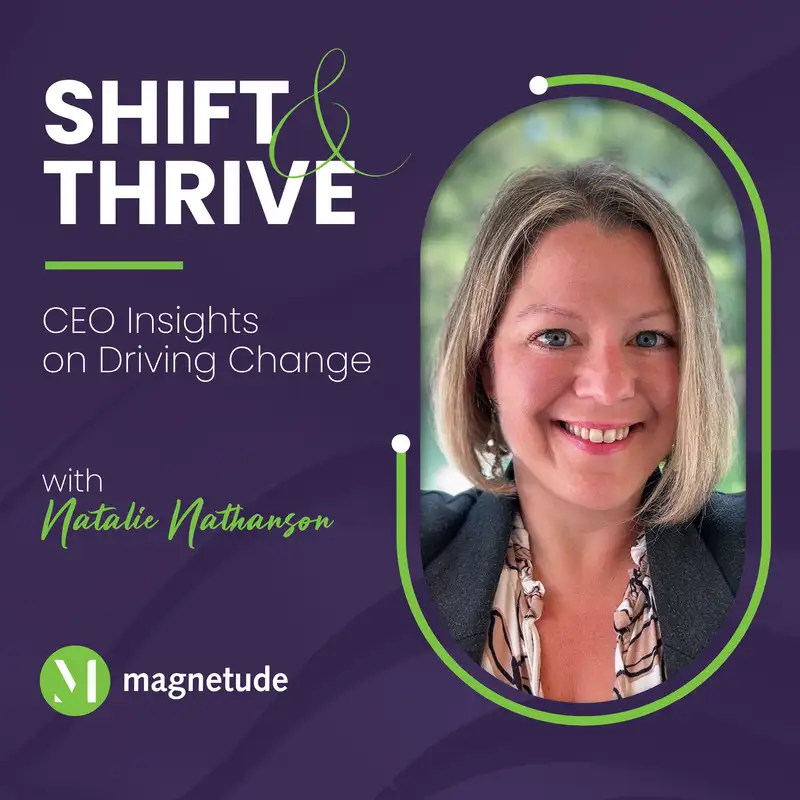
Intro: [00:00:00] In today's business world, change is the only constant, and mastering transformation is the ultimate key to success. Welcome to Shift and Thrive. I'm your host, Natalie Nathanson.
Each week we'll bring you conversations with CEOs who delve into how they successfully drove critical change in their organization. This show is sponsored by Magnitude Consulting, bringing you the thinking power of a growth consult. And the getting it done, power of a full service B2B marketing agency.
Natalie Nathanson: I
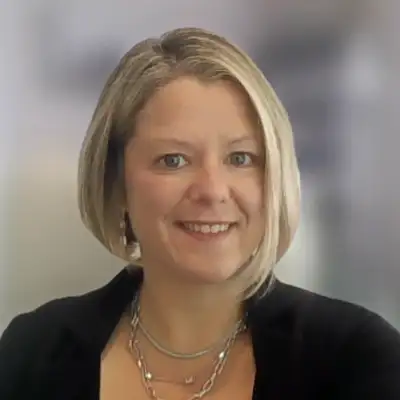
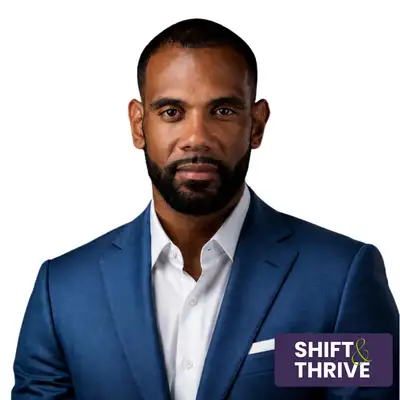
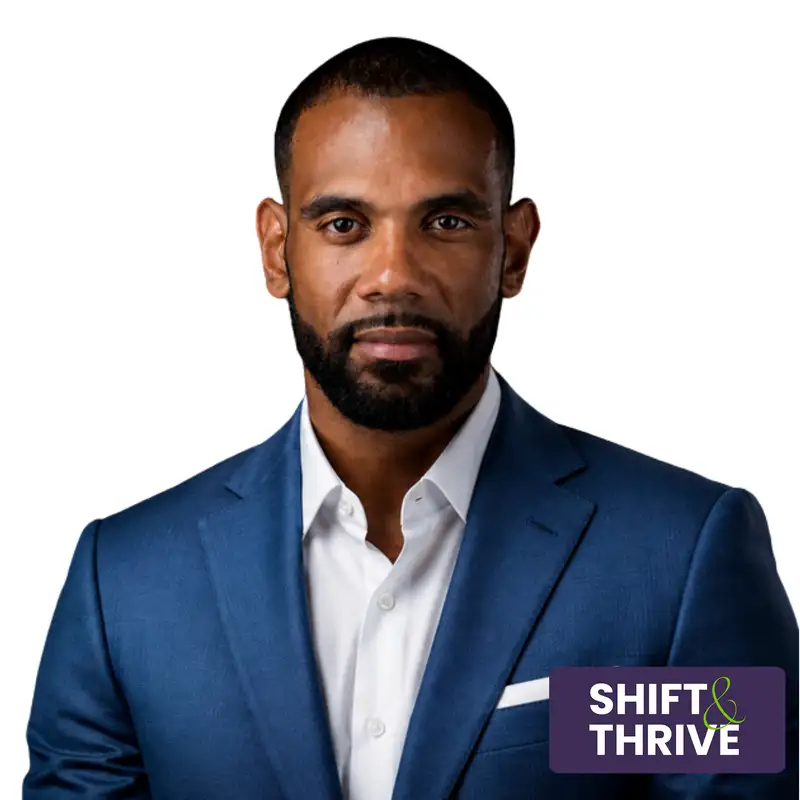
am really looking forward to today's conversation. Today's guest has spent nearly two decades in the automotive retail industry, rising from the sales floor to become general manager of a $100 million business at the young age of 27. Later in his career, he grew to lead multiple dealerships, turning around underperforming businesses and building a reputation for combining operational [00:01:00] excellence alongside his passion for technology and innovation.
And rather than walking away from his frustrations in an industry he loved, he chose to reinvent it, leaving a successful career as an operator to building an AI-powered platform designed to positively transform the entire vehicle ownership experience for both consumers and dealerships alike. In this capacity, he is the founder and CEO of Tradora.
Floris Chomat, welcome to the show.
Floris Chaumont: Thank you. Thank you
Natalie Nathanson: I wanted to start by asking you, I know I mentioned this in the introduction a bit, but you've really seen firsthand how the automotive industry operates, what works, where the friction point is, room for improvement, et cetera. And so if you've gone from operating within the industry to trying to transform it, what have you learned about what it really takes to create meaningful change in a deeply established industry?
Floris Chaumont: Well, the first thing that I definitely learned is, you know, know the indust- the industry you're trying to disrupt very thoroughly. Um, you know, fortunately enough, I was, I was in that industry for a [00:02:00] while, so I really got to see the ins and outs of, of everything, how everything works or lack thereof. Um, so the, the first lesson I, I was...
that I've really learned is understand your, what you're disrupting. Lead, you
know,
try to understand how the system behaves so you can fix the problem. You know, sometimes people are just too eager to fix things, and by trying to fix things, they actually make things worse, and I feel like that's what the industry has gone through for a very long time.
So, uh, I am now trying to improve the operate- the operating model from within, um, which initially that was the goal. I was trying to make my life easier, and I'm trying to spread that to, to other operators. Um-
Natalie Nathanson: Yeah. I'm, I'm curious to ask you because I think there can be a temptation, uh, to kind of look at an established system and assume kind of the legacy way is irrational as opposed to kind of it must have been like that for a reason.
So I'm curious, kind of what are the things that you being kind of an insider on this industry, uh, is helping you think about that an outsider might not realize?[00:03:00]
Floris Chaumont: Well, you know, our, our industry works a bit differently than most industry, I think. And the reason why is because the automotive business actually has multiple business under the, the core business, right? So you have a dealership, but within the dealership you have sales, you have used car sales, you, uh, new car sales and used car sales.
You have service, you have parts. Sometimes you have body shops. They have a complete different way of taking care of their customers, even to account for money, how to drive consumer or how to make consumers happy. So if you don't understand each businesses within your business, you can come up with solutions that only work partially for your business and not across the board.
And I think I was always intentional at understanding every one of them and then trying to identify the patterns to really connect all of them in under one model, which we don't usually do in our industry that way. We usually manage them separately in a way
Natalie Nathanson: Yeah. And I'm, I'm interested a bit in the behavior change that you're kind of expecting or wanting to see in [00:04:00] your, your target market. Uh, can you talk about, uh, you know, just what that looks like for you, and how are you thinking about, you
know, potential
objections to what you're doing and, and overcoming them?
Floris Chaumont: I've had some objections, and the objections have been interesting because the objections have been, "There's no way you built this." That's actually been my, my main objection. The objection has not been, "Okay, the, the vision and the, uh, the underlying idea is bad," is, "There's no way you pulled this off." Uh, not because they don't think I can pull this off, it's because we've been working in the way that's been so inefficient because the legacy way has...
You know, I used to have 20 logins to do my job every day, and most of these softwares didn't always talk to each other, so you have to work in separate softwares and sep-separate verticals. But on your P&L statement, everything is connected, but the way you work, it's not. So my objection has been really that.
There's no way you pulled this off, and we did. Um, and because of it, um, [00:05:00] I think the consumers, uh, the consumer is experiencing a mirror of the way we work internally. It's literally what they're experiencing. Everything is just separate for a consumer. Anything related to your car, you have to go to so many different companies to handle your car.
It's ridiculous. And but it's a mirror the way we've been doing it. So the objection is not a bad one. The objection is we love this, and we just can't believe that somebody has finally decided to do it. What tends to happen is most people from the outside of the industry are trying to build things, but just to fix one problem because they don't necessarily understand the interconnection of all of it.
So I think that's where we are different.
Natalie Nathanson: Yeah, that makes sense. And I know with any, uh, kind of transformation, there's the, the personal side as well. Um, and you going from kind of an operator to a kind of technology provider in the industry, uh, must have had a number of shifts for you. I'm curious kind of what, maybe first, what was it kind of psychologically like to kind of walk away from the operating career and realize that your, your [00:06:00] day-to-day has changed?
Floris Chaumont: Yeah. You know, I had to learn to be less hands-on. I've always been a hands-on operator. Um, and you know, you can walk to every department and get involved. Once you go to the startup world, there's no department to walk to. Uh, more importantly, you know, um, you know, it's, it's, it's now you really have to delegate the work.
That's been my transformation. Not that I d- didn't delegate the work before, but as an operator, it's almost like the head coach of a football team. You have to be involved in everything for the team to kind of keep going. Now, the, the adjustment to me is I don't have to be that person. So it's a beautiful adjustment.
It's hard, you know, but now I just don't have to be involved in everything. I have capable people across the board who understand the business, who can do the work on my behalf. So that's probably the hardest change for me is, is, is, is adjusting hands-on versus delegating and trusting and, and off we
Natalie Nathanson: And what, what kinds of things have helped you make that switch?
Floris Chaumont: Mindlessly hiring the right person or surrounding yourself with the right people. They, [00:07:00] th- there's... God, it's, it's, it's probably the most important thing, you know, in any businesses, by the way. But putting the right butts in the right seats can, can, can really work magic. And so you have to be intentional at hiring people who are aligned with you.
You know, I- I've told people, you know, it's almost like a marriage, you know. Uh, I always tell people alignment is more important than love. You know, love has its, has its ups and downs, but if we align and we see things the same way, then we move in the same direction. So surrounding yourself with people who are aligned in your vision, your direction, the way you work, is so paramount.
And, and I've, and I'm learning that more and more every day here
Natalie Nathanson: Yeah, and I know you've hired lots and lots of people kinda in the automotive world and now, uh, presumably building a different kind of team in tech.
Are there any things that you've had to kinda unlearn or think about very differently around, you know, what good talent looks like for you?
Floris Chaumont: Yeah. I mean, I had to learn the fact that I'm no longer the smartest guy in the room, which is, by the way, it's the most beautiful thing you can, you can go through, at least for me. I just thought it was humbling but good at the [00:08:00] same time,
uh, because now I have people telling me what to do every day, and I give my opinion and I've learned more from my team in the past few months than I've learned in a few years and, and, and I just love that.
I just think that's the best synergy you can have with a team. So that's, that's been the, the adjustment that I absolutely love it, however
Natalie Nathanson: , I'm curious to ask a bit about, um, kind of the cross-functional, uh, expertise, because I know you mentioned when we spoke previously that, um, you clearly kind of worked your way up the, up the ranks in, uh, automotive dealerships and really tried to make sure you understood every part of the business rather than being in one lane, which I'm sure is helping you now.
Um, how do you instill that kind of, kind of curiosity or thirst for kinda learning the different parts of the business in leaders that, like, maybe if it's not coming naturally?
Floris Chaumont: Great question. It's, it's-- To me, it's, first you have to explain to people why you're doing things. Um, if you want people to understand your vision, what makes sense to you doesn't necessarily make [00:09:00] sense to them. So, you know, you have to really be intentional at when you first hire strong people and give them context, and, and then-- and let them own outcomes as well.
But if you explain them, explain the why to them and what outcome it will create by showing them how it c- all connects, the same way it connects for me, it'll connect for them, and then I-- it makes the job easier for, for everyone. So once they see the pattern of if, if, then, if, then, if, then, and then this is the outcome, then they own the outcome a lot easier than saying, "Hey, go get this done," and they have no idea how to go about it, right?
Something that would make sense to a CTO in a n- in another industry might not make sense as a CTO for an automotive industry. Like, you have to look at things differently. Um, so, uh, that's, that's really to be the biggest part for us is, is, for me is, is partly that, is, is give them context, tell them why, explain everything.
And, and then one of my favorite line is, without clarity, there's no accountability. You cannot [00:10:00] hold them accountable if you didn't make it clear to begin with. So make it very clear, and then usually they start owning the issue the same way you do. In fact, they start giving you their opinions and feedback, and it makes the solving the problem even easier to solve
Natalie Nathanson: And how do you think about the importance of kind of domain expertise versus kind of industry expertise or knowledge as you're building your current team?
Floris Chaumont: Well, you know, uh, like my team have been-- this is where it's a bit different. Half of my team has automotive background, um, because I think the context of our industry is so important. We, we don't work like most verticals, and within our vertical we have several. Um, so you know, it, it's, it's important to surround yourself with people that understand how it all works for the most part, because otherwise it, it usually shocks people how hard, how our industry works.
Um, so from that standpoint, you know, having somebody from the outside is also a blessing at the same time because they'll, they will have like a new way, a [00:11:00] novel way of thinking about something that we never thought about in our automotive industry that they learned from maybe the real estate vertical or a complete different vertical that we can then use into our vertical.
So I think both are equally important, uh, and both sides can actually teach each other, you know, experience or knowledge of, of, of domain knowledge separately, and we get better together.
Natalie Nathanson: Yeah. It sounds like they really do, uh, play off of one another, and I would think- uh, depending on the function, uh, it matters more in some than others.
Floris Chaumont: Yeah
Natalie Nathanson: And I wanna, uh, turn a bit to how you're bringing Tradora to market. Uh, because I know you're ser- s- serving both, you know, the dealerships and the consumer, but, uh, kind of focusing on the dealerships, uh, initially. And so I wanna hear kind of what went into the thinking around that and, uh, how is it, how is it playing out for you, uh, at this stage?
Floris Chaumont: So our, our, our, our-- We go through a dealer distribution model that is our initial wedge. It's not the end state, but this is how we're starting. We're going [00:12:00] through the dealers. Uh, the dealer already have the customer, right? They already have the vehicle, they already have the service relationship. Um, you know, so we, we entering through already an existing trusted channel from a dealer perspective.
So our wedge and our initial wedge is dealer distribution. So as we acquire dealers, we organically get users and have those dealers engage better with the users instead of trying to go get the users first and get to the dealers, which is a very expensive proposition. So we, we actually, uh, get to have the best of all the worlds without, you know, necessarily, you know, spreading ourselves thin.
Um, you know, the B2B distribution model can really reduce consumer acquisition costs versus, you know, acquiring every user from scratch, 'cause that's a very expensive thing to do online. Um, now the long-term opportunity is the, the consumer relationship, ownership relationship, and the intelligence compounds around the consumer and the vehicle over time.
Um, and then as it compounds, it makes life [00:13:00] easier for the consumer to make better decision with our application. So, um, I'm not an outside-- I'm not an outsider to this. I see both sides. I'm a customer, you know, I bought cars, and I also operated the stores that sold cars. Uh, and, you know, we're not doing everything wrong, but as it pertains to the consumer, we could do better.
We have, we have optimized the transaction instead of optimizing the ownership, and this is where-- this is what I'm doing, is optimizing the ownership
Natalie Nathanson: I know for a solution like yours, creating something that, you know, didn't exist before, that kind of the target market, as you said earlier, kind of doesn't, doesn't believe it, it's possible, uh, that that creates a unique kind of approach for when it comes to marketing and sales.
Um, wanted to hear kind of what's working for you. Like how are you getting the attention of, uh, potential customers?
Floris Chaumont: Uh, I mean, it's a combination. Social media has been very, very big for us. You know, the, the power of, of LinkedIn is kind of, I think, understated by many. Um, I have quite a [00:14:00] big of a, quite of a big, you know, not necessarily following, but a lot of connections in my industry. Our industry is big and small at the same time.
Um, so because of it, I think it, it helps. You know, I speak the car lingo. They know this is where I come from. I know quite a few people, and we all know the issue that we've had for decades. We all know it. We talk about it. We just wish we could fix it. And then now that somebody's finally raising their hand to say, "Okay, I'm gonna take on this," it's actually-- it makes it easier for me to find, in a way, to find dealers 'cause I was one of them, right?
It's, it's not... I don't have to discover and find my customers. I was the customer at some point. So I'm just tapping into my network, and it's been working fantastic.
Natalie Nathanson: Yeah. That's great. And I'm curious if there's anything you're noticing about kind of those earlier customers that kind of they're willing to take the leap.
Are they kind of more open to technology? Do they experience the pain points you're solving kind of more than average? What do you notice? What kind of patterns are you noticing?
Floris Chaumont: So what's interesting is, as legacy as our industry [00:15:00] can be at times, we're actually very open to technology and trying everything and anything. That's, uh, that's, that's one thing I can say about our industry, we'll try anything. If it can make our day better or founders or customer, w- we'll try. Um, but
I
think the behavior change is probably harder than the technology implementation, right?
Um, you know, trust and adoption, you know, decides whether the transformation is real, uh, to some, you know, to some degree, so. But it's, it's, it's-- otherwise, it's really the behavior change. It's them thinking, "We've been doing it this way this entire time. I'm used to 30 logins," and the dealer realizing that maybe eventually he might not need as much.
There's a lot of things that can be centralized in one way, which in turn, the consumer will feel the result of that as well with less fragmentation. You don't have to go to 10, 10 different companies to do 10 different things, right? So, um, yeah. It's the behavior change that's hard. It's, it's believing that it's possible.
But once they go live and we show it to them, they [00:16:00] realize, "Oh man, it actually is possible,"
Natalie Nathanson: I'd love to hear more about this behavior change and, like, where it happens within the dealerships.
Like, how much is kind of in kind of leadership that, you know, the people you're talking to as you're selling versus kind of broader changes in kind of how they operate?
Floris Chaumont: , It starts at the top of the leadership. Um, you know, um, once leader has bought-- are bought into the fact that a change needs to happen and be more efficient with their dollars and be more efficient with their time, you know, no one coherent will believe that logging into twenty, thirty, forty different logins will make your day efficient, right?
It's, it's-- And the arrival of AI to me is what should solve this problem. Instead of automating current silos, we should combine silos the best way we can and find more context and better outcomes quicker. Um, and that's what I'm trying to do because I, I think our industry is still kind of stuck into automating workflows separately using AI.
So it makes sense to everyone. It's just because it's been done [00:17:00] the way it's been done for so long, they just have a hard time believing that it can be done differently in a much more simple way, like everybody else usually does in different industries
Natalie Nathanson: Hey, this is Natalie, your Shift and Thrive host. After chatting with lots of CEOs, one thing is crystal clear. Leveling up your company means having a killer Go-to-market strategy. That's what my crew at Magnitude Consulting does every day. If you're trying to step up your marketing game, whether it's strategizing, accelerating your pipeline, expanding into new markets, or getting into AI and automation, let's talk.
No pitch, no pressure. Just good conversation. Visit shift and thrive podcast.com/natalie to schedule a time. Can't wait to connect.
I wanna shift gears a bit and, and learn a bit more about you personally.
I know you've mentioned you came to the US from France, uh, at age 15 on your own. So I would love to hear just what was that experience like and, uh, kind of how did that [00:18:00] shape you?
Floris Chaumont: Man, it's been s- it's been a while back. It's, it feels surreal. But yeah, hopped on a plane in a, in a carry-on when I was 15. Basketball brought me to the US. I had a scholarship to play in a prep school, uh, at the time from France, and I took the, the opportunity. I took a chance on myself, flew in with a carry-on, and found myself in Indiana, which was an interesting transition from Paris.
But, uh, yeah, that, that shaped me. I didn't speak a word of English. I had never learned English. I took German in school, so that probably was a mistake at the time in hindsight. But, uh, yeah, I came, I came here on my own and, and basketball gave me... You know, it mattered to me at the time. It gave me this competitive nature, um, you know, and I...
But my deeper trait was always trying to understand how, how things work. So came here, fought my way through basketball, was able to make something out of it, and one thing led to another. I found my way in the car business after college, uh, somehow, some way, but it was a complete accident. It was a summer sales job from, uh, a friend of mine, uh, who [00:19:00] had been in the industry for a while and said, "Hey, come get a real job this summer just so you can make some quick money."
And then next thing you know, here we are
Natalie Nathanson: Yeah. H- how did you develop your, uh, kind of affinity towards kinda technology and innovation, and how has that kinda showed up for you throughout your life?
Floris Chaumont: , I'm an absolute deep nerd at heart. People don't know that. So, you know, if I've been an operator for a while, the people that really know me know that. But, you know, I'm sure some employees, former employees of mine will not believe what I just said, but I'm an absolute nerd. I like to understand systems.
I like to build things for fun on my own. Um, I just, I just find, I find it very fun. There's nothing more interesting to me than finding a pattern, building a model, and building something to solve a problem. I like to be efficient. I'm a little, I'm a little OCD with that. Um, I love me a Rubik's Cube, so if you put it in front of me, I'm just not gonna stop until I solve it.
Uh, and the bigger, the more complicated the system, the more interesting the puzzle and, you know, the more focused I get. So, um, automotive became the biggest one I've ever [00:20:00] seen, and I decided to undertake it in trying to, in trying to play with this Rubik's Cube now
Natalie Nathanson: And when you took the leap to build Tradora, what was the decision like?
Was it kind of, I don't know, instant clarity, "I'm going forward with this"? Was there any kind of considerations? What was kind of happening inside for you?
Floris Chaumont: I had the idea randomly driving my car eight years ago. Uh, I was a bit early 'cause AI wasn't around, so it would've been an expensive endeavor. Um, I called a, a friend who is now my co-founder, Phil Watstein. I called him randomly and, uh, and said, "Hey, just tell me if I'm crazy, but here's my thought." You know?
And at the time I was operating a store and I was a partner of that store, and he said, "You're absolutely not crazy. We need to do this." And that was seven, eight years ago. Then in the meantime, life happened, so we kind of shelved it, um, because my career also really took off on my end. And so we kind of shelved it.
And then a year ago, having a random conversation with a longtime friend of mine in automotive business as well, his name is Herman Quadros, the VP of, uh, Chrysler, Dodge, [00:21:00] RAM of Chantilly, Virginia. Random conversation la- last, last year and is-- and, and just pretty much told me as I was telling him about my idea from seven years ago, and said, "Why didn't you build this shit?
'Cause I'd sign up for it today." And here we are a year later. Not even. So that kind of is how it all played out. It was just talking to people. I just believe the more you talk to people, the more clarity you get. And talking to a friend and a dealer who was a vice president and a dealer himself telling me yet again, "You should build this," gave me the motivation to say, "Let's build it."
And so I called my co-founder and we built it
Natalie Nathanson: Yeah. Nothing beats hearing directly from, uh, from the, the target market that they need- this, they want this, and, right? Like if you build it, they will come.
Floris Chaumont: Yeah.
Natalie Nathanson: Uh, it's also just a great example I think of, you know, technology kinda catching up to kind of what's possible.
Uh, I'm curious to hear if, you know,
maybe
an example or two of what's in the product, uh, that like maybe wasn't possible, uh,
kinda
five years ago or, uh, [00:22:00] whatnot with kinda current technology, current AI.
Floris Chaumont: Well, what Current AI does, it allows us to build context around the entire car, right? When you own a car, um, you have insurance on a car. Um, you have a lender on a car. Um, you might have an extended warranty on a car. You're gonna have Carfax for your history. You need to schedule for service. You need to maybe trade or sell it.
If you think about this, all these things were separated. There was not one place you could go to to do any of these things in one place from a consumer standpoint. And that's just this-- And on the dealer side, we work the same way. And then so when I've identified that gap, I-- all I did was just, you know, let's bring all that together into one place so you can manage your asset.
To me, I consider a car... The car is the second largest purchase you'll make in your life after a house, right? Yet there was really nothing to manage that asset because it's technically a depreciating asset. It actually, technically, it, it is a depreciating asset. Your, your house would appreciate, your car would [00:23:00] depreciate.
And I think because of it, it has been ignored for a very long time. But because it's a depreciating asset doesn't mean that you can't do things to mitigate your depreciation, make it more efficient, and have the transparency you n- you need to know how to handle your car. There's a lot-- There are a lot of people who are not car people.
They don't know what to do. They don't know what things cost. Um, and this is also why industry has a bad rep, right? It-- We, we have a bad rep because of it. So the transparency for consumers and having everything in one environment, I think that's the novelty. And then on the dealer side, the ability to see signal instead of waiting for the consumer to, you know, knock at their door, like through a form submission or call in, signal is more important, you know, especially if you want to retain your customer.
You want to be there when they start behaving in a way where they're interested in something for their car, and that's where we, we jump in. When the, the users start behaving in a way where they're looking for insurance, refinance or trading their car or selling it, whatever the signal is, we help them [00:24:00] accomplish that and save money while doing so, and also have the dealer involved to help that consumer save money and transact and have a better ownership with their car.
Natalie Nathanson: I'm curious to ask, are there kind of things that excite you about kind of what do you believe is next in automotive?
Floris Chaumont: I think our industry is gonna see a significant change here in the next five years. I, I think we're not ready... I'm not gonna say we're not ready. I think people are not expecting what's coming. Um, we've had several examples, uh, of that. You know, Carvana just bought some new car franchises, I think in the West or Midwest, and it, it proved to everyone that you can actually sell new cars and make it easier, remove frictions from, from consumers, and sell new cars and customers are happy with you.
And I think that's where the model is going. It's almost like the Amazon model. Remove the friction, make it convenient for people to buy a car, and the more, the less friction there is, the better, the, [00:25:00] the happier the consumer, the more they are to transact with you. So I think the way we see today with sales and the way we sell cars, I think that's gonna change.
The way we handle consumers, I think it's gonna be less voice communication, but more communication maybe through an application like we've built. You could call Amazon to place an order, but nobody calls Amazon to place an order, right? So, uh, we'd rather use the app than talking to someone on the phone, and I think that's where we're headed, is that transformation of remove friction, make it transparent fully, um, and customers will love you for it.
So this is where we're headed, transparency and efficiency
Natalie Nathanson: Yeah. Well, speaking as a consumer who's purchased a handful of cars, uh, in my lifetime and by no means, uh, an expert, I can say that anything to remove friction and, and have that trust that, uh, I'm getting what I think I'm getting, uh, would go a long way.
Floris Chaumont: Agreed.
Natalie Nathanson: would love as we close the conversation to ask as you think about kind of your, your career, uh, what's been the [00:26:00] best piece of advice that you've gotten that still shapes you today?
Floris Chaumont: You
can do anything, but you cannot do everything. I think that's, that's a big one. Uh, you know, focus and delegate is important. You know, bandwidth matters. Keep-- Saving your bandwidth matters. Um, you know, another one is, is do not confuse motion with progress. You know, sometimes people get busy, but it-- being busy doesn't mean you're moving forward.
Um, you know, so that's, that's-- You have to keep yourself humble and be honest with yourself. Are you being busy today or are you moving forward? They're mutually exclusive. They don't always come together. Um, like I was telling you earlier, without clarity, there's no accountability. That comes with yourself.
Hold yourself accountable. Be clear with yourself on, uh, on what you want. Um, and, you know, make decisions with the information you have, and pivoting matters. Feedback, feedback, feedback. What, what could be right today could be wrong tomorrow, and the only way to find that out is hear your customers, [00:27:00] hear your employees.
You're, you know, if-- The way you treat your employees is the way you treat your customers, so if you're not willing to take feedback from your employees, you're not taking feedback from your customers. And I've always believed in that. So, uh, be intentional at listening, uh, because you, you'll find and learn new things from some of the most random people, uh, and realize you have to pivot.
So don't get stuck in your own way. Pivot. Build something for your customers. Not-- Don't build something for yourself or what you think is good for the customer, 'cause there is a difference. Um, but that's, that's really the best advice I can give someone. Your, your customers is the voice and take some things with a grain of salt, but they're your customers, so align with them.
Don't expect them to align with you
Natalie Nathanson: Those are all great, and I think that is a fantastic place for us to wrap. So as we wrap up the conversation, can you let listeners know how they can get in touch?
Floris Chaumont: Uh, they can find me on LinkedIn. That's the best way to do it. As I told you earlier, I'm very big on LinkedIn. Uh, I also have the web- my website, flourishromar.com. They can go to if they want to reach out to me [00:28:00] directly that way as well. Um, anybody can reach out to me. I'm an open book. I'll talk to anyone, but those are the two, two best places to reach out to me
Natalie Nathanson: Uh, well, thank you, Flores. This has been a great conversation. I loved learning a bit more about the automotive industry, and really
the conversation
around kind of the advantages that come from changing an industry that you know from the inside, and, and how to navigate some of those complexities.
So thank you for that.
Floris Chaumont: Nice. Of course. And thank you for having me. This was, uh, this was great
Natalie Nathanson: My pleasure. And thank you, too, to everyone that's listening. If today's conversation sparked something for you, please pass this along to another leader. We know that insights like this fuel fresh thinking and help all of us drive real transformation in our companies and in ourselves.
So thank you again, Floris, and this has been another wonderful conversation on Shift & Thrive. I'll see you all next time
Outro: That's a wrap for this week's episode. For show notes and more visit Shift and thrive podcast.com. A special thank you to our sponsor, magnitude Consulting, [00:29:00] bringing you the thinking power of a growth consultancy and the getting it done Power of a full service marketing agency to help B2B companies fuel their growth.
For more information on magnitude and to get your complimentary transformation readiness assessment, visit magnitude consulting.com/. Get ready. Thank you so much for listening. We'll see you next week.
Creators and Guests