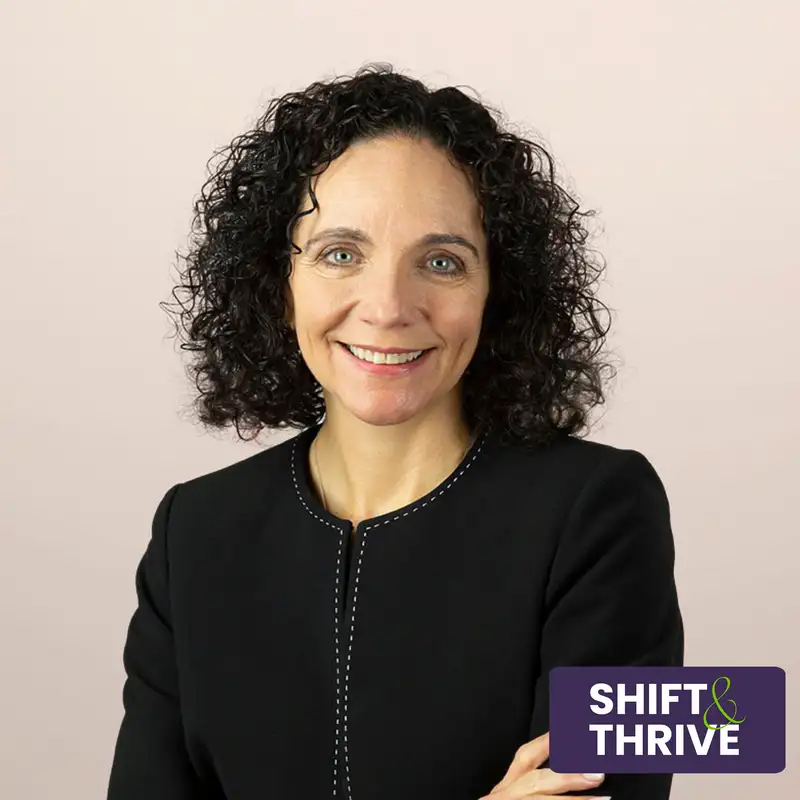
The Hidden Cost of Change: What Leaders Miss - Kelley Hippler - Shift & Thrive - Episode # 109
[00:00:00] In today's business world, change is the only constant, and mastering transformation is the ultimate key to success. Welcome to Shift and Thrive. I'm your host, Natalie Nathanson.
Each week we'll bring you conversations with CEOs who delve into how they successfully drove critical change in their organization. This show is sponsored by Magnitude Consulting, bringing you the thinking power of a growth consult. And the getting it done, power of a full service B2B marketing agency.
Natalie Nathanson: I am thrilled to speak with today's guest, especially because our paths crossed many years ago at Forrester Research, and she is a leader that I have deeply respected ever since. She's a powerhouse go-to-market executive who spent 23 years there, ultimately serving as their global chief sales officer, where she led a team of over 800, grew revenue by 51%, and helped [00:01:00] scale the company to a 1.13 market cap.
She's known for her people-first leadership style and is an expert at aligning employee experience with customer retention through moments of complex go-to-market transformation. Today, she's bringing that operational expertise to an innovative SaaS platform that helps global enterprises manage and monetize customer education and training at scale.
She's the chief revenue officer at Thought Industries. Kelly Hippler, welcome to the show
Kelley Hippler: Oh, Natalie, thank
you so
much for having me, I'm a huge fan
of the show and the work that
you're doing,
So, uh, really excited for today's conversation.
Natalie Nathanson: Thank you. I am as well. And I know, Kelly, that transformation has been a through line across a number of your roles. And so I want to start there. And thinking back to an earlier role where, uh, you were building a more modern go-to-market motion in, in industry where that maybe wasn't as common, uh, I wanted to unpack that a bit and ask, you know, what did, what did that transformation teach you about how to bring an organization through that kind of change?[00:02:00]
Kelley Hippler: Yes, absolutely, Natalie. So, uh, when I was at BrieflyLegal, a big part of what we were doing was establishing back office
support for
law firms, which in and of itself is not, uh, necessarily unique on
the accounting
and
the finance
side. But what was really different was bringing a traditional B2B SaaS go-to-market arm and putting it in a sales situation where, by and large, you know, most attorneys, it's still an
eat-what-you-kill model.
And so it was a great opportunity to
really reinforce,
um, the importance of great change management and that
constant communication that is
needed to help bring people along. Uh, it really gave us a chance to look
at technology,
not just for the sake
of technology, but how
do you embed technology into workflows to help
make people's
jobs easier.
Um, and then it was just a, another great, um, focus and, um, you know, underscored the importance of
making sure
that product, marketing, sales, um, and
customer success
were all aligned, um, in order to be able
to move
[00:03:00] forward and accelerate. And so while it may not sound groundbreaking to actually have sellers selling on behalf of attorneys, um, that is a space
where most
folks are, you know, accustomed to pitching and positioning themselves.
And we were able
to show them that
having
people who are
career salespeople can
sometimes bring
a different level of expertise, because what makes for a really great attorney doesn't necessarily
make for,
um, you
know, somebody
who's great at, at being
able to sell
themselves. Uh, and it was also a great opportunity to actually start bringing data into
some of the conversations with
the attorneys as well.
And so there were some beliefs around sort of who the best customers were at the law firms. And by doing some lifetime value and client acquisition cost analysis, we were actually able to
show them
who their best customers actually were and what the benefits would be of kind
of doubling
down in those industries and practice areas, um, where you had the highest average spend and lowest, uh, attrition rate. So it was just
a really [00:04:00] good reminder of
how those fundamentals can really
help to
accelerate growth. And when it comes to change management, you just can't reinforce the message enough to
try to help bring folks along, both
internally and externally.
Natalie Nathanson: Yeah. I've been in a number of environments where maybe it's a professional services business that has, you know, practice leads and kind of the, the, those are the folks kind of leading the, the sales motions, and then you're bringing in kind of that formalized sales, uh, as you're talking about. And I know there can be kind of resistance to that.
Um, so I'm curious, like what kind of resistance did you face, and then how did you move through that?
Kelley Hippler: Absolutely. You
know, I think that that is, uh, also a through line
through change
management. And what I've always tried to explain to folks is you don't have
to win
everybody over at once, but you find those folks that understand what you're trying to do, want
to partner
with you.
I think it happens a lot with sales overlays as well. And then you work
with those
early adopters, and as soon as they start meeting with [00:05:00] success, other folks will start
to lean
in
and be like,
"Hey, what are you doing over there? How do I get to, you
know, join,
join
the party?" And so
instead of trying to win all the hearts and minds
at once,
um, by focusing on those early adopters, getting
some wins
under your belt, and then
sharing those,
uh, with the broader community, I have found is a good way to, over the fullness of time, get people to, to lean in.
I think sometimes folks
focus on
trying to bring everybody along all at once, and I think
that's just not
realistic, right? Everybody has to go through a change curve, and they will go through it at different paces. And so leaning in on those, uh, early adopters can really help to accelerate the change.
Natalie Nathanson: Yeah. I like that because it does then create kind of this pull strategy, right? So it's not just feeling like it's, uh, being pushed down to people, but, uh, they're getting excited and kinda intrigued and, and interested in, in getting involved. Uh, I could also imagine that sometimes that change maybe doesn't then happen as fast as, uh, kind of the executive team would like or anything like that.
I don't know if that was the case in this [00:06:00] particular circumstance, but are there things that you think of, of like how to find that balance of creating that, that pull, but then, like, when do you need to... When you need to accelerate it, kinda what do you do?
Kelley Hippler: Yeah, no,
that is a great, a great question, and I do think one of the downsides of that, to your point, is, is the trade-off with speed.
And I think sometimes, um, when you're in those situations, actually trying
to bring
some new talent into
a particular
situation who buy into the longer term vision can also be a really good way to try to help to accelerate change. 'Cause I think you do sometimes, unfortunately, get down to there's a population of folks who are just
going to
forever be resistant
to the
change, and I think that that creates, um, a challenging situation
for management to
figure out at some point, um, you know, how long do you let
that tail
be and when do you have to potentially address some of those pieces?
But infusing some
new talent,
um, who don't know anything other than the
new model,
uh, can also be a great way to, to accelerate the change. Um, and would, would love to [00:07:00] also get your, your thoughts on what you've seen work there as well.
Natalie Nathanson: Yeah. Yeah. And I think that bringing in new talent is a, a really, uh, good one. It brings kind of that new, like, life and energy in. Um, I also think there's a question for the CEO around kinda when and how and how much to get involved, right? Because if you-- they--
she or he does that too early, it is kind of that push, push down that, uh, can create more resistance. Uh, but I also find sometimes the CEO's kind of afraid to, uh, rock the boat too much, especially if the resistance is coming from kind of s- some of the strongest kinda SMEs or whatnot. Um, and sometimes that means, like, the executives rolling up their sleeves and kinda spending more time, uh, with the team and talking through it more, uh, and highlighting those early wins.
Like you said, bring the champions along, and making sure that that's not only at the department level, but getting kinda celebrated and recognized across the organization.
Kelley Hippler: Yeah. No, absolutely. And,
and to your point,
I
[00:08:00] think, you
know, people do lean into and, um, stories do resonate, and I think the better you can tell those stories around the why, why this
is important, how it's gonna
benefit both clients and the individual, um, you
know, just
goes a really long way towards getting folks to, to lean in.
'Cause as
we were
talking about as we were prepping for this, you know, human beings, we're wired to be resistant to change, and so you have
to go
into these change management situations knowing that you have
to create a
very
compelling reason
for somebody to move beyond
the status
quo because it is just in the nature for most
of us,
um, you know, to, to wanna stick with what we're, what we're
comfortable with.
So we are sort
of fighting, um, that bias
to, to sort of stick with what we know and stick with what our comfort level is.
Natalie Nathanson: Yes. Yes. Right. So some changes might be kind of easy to roll out on paper, but then when, uh, it's, it's the people that, uh, that really have to, have to work through to make it successful. Uh, I'd love to, uh, shift a bit from the topic of [00:09:00] transformation to talk a bit about what has shaped your view on go-to-market.
So I'm curious if there's been, you know, an experience or an idea that, you know, informed or changed how you think about go-to-market and creating value for customers.
Kelley Hippler: Yes,
absolutely. And, and ironically, because I know we're sort of talking about change and transformation, but for me, I still harken back to, um, a Harvard Business Review article that I got introduced to back when I went for, uh, my MBA, and, uh, and that would be the service profit chain. And really the high level concept is that the way you
treat your
employees is how they will, in the end, um, treat your customers, and I think that's something that has always been fundamental to how I like
to lead
and, um, and manage teams.
Which again, makes sense, right? Your employees are gonna spend more time in front of and with
your clients,
um, more so than you ever could as a leader. And so if they're not having
a good
experience with your brand, your organization, they're not bought into
the strategy, you know,
[00:10:00] ultimately that will transfer into the experience
that they're
delivering to your clients.
And so really thinking about your employees as the best lever to accelerate and deliver a great customer experience is something that has always stuck with me. And as much as things change, I do think that's one thing that I continually come, come back to because at the end of the day, it... there is a relationship on, on both sides.
Even if you're selling software or another tool, um, you know, that trust that
gets built,
um, over
the fullness of
time is critical to retaining clients, generating advocates out in the marketplace, um, and helping to hopefully upsell additional products and services.
Natalie Nathanson: Yeah, for sure. And I think we're seeing kind of more and more of this kind of both, you know, for better and worse depending on how it's being managed. But I think the reality is, like, we are living in times with a lot of change and a lot of transformation in organizations, and, uh, I think sometimes there are those unintended consequences.
Like, I've seen this play out, uh, in a, [00:11:00] a large technology company recently where leadership wanted to or needed to reduce kind of the size of the organization. They were reluctant to call it a layoff, um, so it kind of happened under the radar, so to speak. But under the radar we know is always, uh, still s- broadcast through LinkedIn, people's posts, things like that.
Um, and I think... And, and then kind of the, the reduction was supposed to come, uh, secondly through attrition, and I think the challenge is you don't control who leaves. So all of this to say that, uh, there was a lot of kind of downstream consequences of trying to do it in a way that wouldn't frighten the market, uh, but instead I think it became pretty chaotic.
And you, you know customers are going to feel that, right? And maybe it's not all immediate, but you might get slower response times, disrupted relationships, inconsistent communication, or just, like, employees that are, uh, kind of frustrated. Um, and I think those are some of the things that don't always show up on paper at the outset, uh, when kind of this [00:12:00] change is being, uh, planned out.
So I'm curious, like, how, how do you think CEOs should be thinking about kind of the downstream customer cost when they're making these kinds of, uh, decisions?
Kelley Hippler: Yeah, no, that is a, a great call-out, and I think oftentimes people quite frankly don't. They just look at the headcount, the cost of the headcount, and don't necessarily take into consideration, um, you know, what's gonna happen if that relationship breaks.
How long is it gonna take to reset once we introduce a new person in there? And then what are you losing in terms of, you know, potential renewals that may not happen as well as upsell? And I don't think
that most
people think about and/or forecast in the opportunity costs of breaking
those relationships.
I think nothing's more frustrating to a client than continually getting introduced to a new account manager or a new CSM, and, uh, when we were at Forrester we used to call it the 51st dates, uh, phenomenon, where, you
know, it
is the client who then is put in the position of having to constantly educate, um, [00:13:00] the new account manager
or new
CSM on what they've been doing with the organization, what they're looking for, because especially
when there
is a layoff, um, there's no real transition plan that happens.
And
so I
think there are a lot of impacts and, and I've seen it before where going back
and doing
win-loss analysis, you
see that
oftentimes, um, accounts where, um, an account
changed hands have
a much higher propensity to churn than those that don't. Um, and then oftentimes folks don't even think about or calculate in what
did we
lose in terms of potential upsell by not having coverage, um, on those accounts.
But I think if folks really went back and looked at, um, what their attrition rates look like when you've had changes in the support
team versus
not, that is a calculus that
absolutely should
get
added in, um,
anytime you're thinking about
an event like that. And I
think unfortunately and sadly, most folks just look at the cost and not
the potential impact, um,
to
the clients,
um, let alone those poor individuals, um, who are also impacted, um, as well.
Natalie Nathanson: . Well, and you're [00:14:00] making me think of, um, you know, process-wise, what can you do proactively at the outset to mitigate against that? And I think most organizations now are at the very least kind of recording their sales calls, customer interactions, so, right? Like, doing your homework, kind of the new person coming into that relationship, do your homework, come prepared, acknowledge kind of the, uh, kind of the disruption, uh, I think can go a long way.
And I'm curious, are there other kinds of things that, uh, you've done or would advise, uh, to do in those kinds of situations?
Kelley Hippler: Yeah, no, that is a, a great call-out and sort of a, a great save with the technology and the ability to,
to go
in and get up to speed pretty quickly. Um, I think that also, um, while the tools are there to do that, that also then assumes that the human beings who are, in theory, probably picking up extra accounts actually have the time and the bandwidth to do that before they're expected to get on
the phone.
And, and
I think oftentimes when there is, in particular, a reduction in force, um, folks are being asked to do [00:15:00] more with less versus, you know, stuff's been cleared off, off individuals' plates. And so I think if you are going to
do something
like that, really focusing on are there other activities and time that's being spent internally, whether on meetings or administrivia, that you can actually take off of people's plates so that they have the time, the space, the mental capacity to really focus and double down on the clients and be really explicit about this.
Like, "Hey, we know we've given you, you know, X percent or X number more accounts to cover. Here's how we're gonna make it possible for you to do that within the confines of, you know, however much time
you're spending
at work," versus it just feeling like
an additive.
And, um, because I know for those folks that
are left, oftentimes,
you know, you're dealing with survivor's guilt or you may have some resentment there.
And again, I think those are moments where that can also potentially
come through
with a new
client relationship. And
so really being
thoughtful about
how do you set those sellers or CSMs up, um, to
be able
to do that work
and do
it in a [00:16:00] way that rebuilds trust, um, with
the clients,
you know, I think is something that really needs
to be
planned out and thought of instead of just,
"Oh, hey,
here are three more accounts for you to go cover and, and, you know, good luck with that."
So,
Natalie Nathanson: Yeah, I like that. I think those are things very much in an organization's control and, you know, as we've said, not always, uh, what happens. So I think
those are good, uh,
good guidelines to follow. Uh, Kelly, I want to shift gears a bit and talk about AI, uh, because I know you're seeing, uh, AI play out very directly, uh, with your sales team today and seeing some, some great successes.
Uh, so I wanted to start by asking you, like, what's changed the most in how your team, uh, actually works, uh, since you started, uh, embedding AI within to the function?
Kelley Hippler: Absolutely. So AI is
really starting to
become a game changer, and I think, you know, for the last
year
or so, I think a lot of it was sort of theoretical, and people were starting to lean in.
You know, maybe using it for emails and a few other things. And, um, [00:17:00] and this year
and and where I'm at
Thought Industries right now, you know, Claude has really become a game changer
for us.
And part
of what I love is that we're using some of the same tools internally that we're making available to our clients, which, A, is just helping with the sales subject matter expertise in terms of being able to position the value.
Um, but working with our CTO
directly, we've had
a number of s- uh, sales skills that we've been able to create. And so just one example is, um, a skill that helps with filling out, uh,
RFPs or
request
for proposals.
Um, I think most folks know they are the bane of a seller's existence. They're something you have
to do,
but oftentimes they come in blind, and so your odds of winning are pretty low, and you oftentimes have to pick and choose which ones you're going to respond to.
Well, now with
the skill
that we have, instead of it taking potentially days
to complete
an RFP, we can get
a first
pass done within about 15 minutes. Um, and so it allows us to be able
to compete
in more,
uh,
situations where, um, you know, we, we may or [00:18:00] may not have
a chance, but
better than not, at least putting our hat in the ring.
But it's not tying up internal resources for, for days on end to be able to do that. Um, it's also been great just for consolidating information across multiple systems, again,
to get
a quick snapshot. So
if I'm
gonna join a call, whether it's with
a client
or a prospect, I
can get
up to speed very quickly on what's been going on within that organization because it plugs into all of our different tools and can create a really great snapshot.
Um, and
uh, it's
actually been so interesting 'cause I think this is now at a place where we actually have tools that are helping sellers to be more productive. You know, thinking back to sort of some of the initial CRM rollouts or other tools, you know, a lot of those at
the end of the
day, um, and reps saw through this pretty quickly, had more to do with management inspection, right?
Management wants
to see
the pipeline. Management wants to see my activity. And so a lot of sellers were a little resentful because they felt like it was taking their time away [00:19:00] from selling to do administrivia. I think with, with I- sorry, with the AI tools, you're really seeing this pivot where reps are like, "Oh my gosh, this is helping me to be smarter, to do my job
more effectively."
Um, and my account executives actually have a
weekly standing
meeting now where they just get together for a half hour, they all share what they're doing with AI and sharing best practices
so we can
then take, um, and replicate those across the team. And, um, and I think oftentimes it's been a pull to try to get sellers to focus on enablement even when tools are made available to them.
Um, and AI is one where I think they're actually seeing the value, and when they see the value and they know it's gonna help make
them more
successful, um, they will leverage the tools
in
in ways that I haven't seen historically.
Natalie Nathanson: Yeah. Yeah. I'm curious, you know, what are the interactions kind of across departments or, like, interactions at the executive team level around, I don't know, maybe what's happening in sales versus, like, customer success, marketing, other kind of related, uh, [00:20:00] areas?
Kelley Hippler: Yeah,
that's, that's a great question, and I think part of what
we have
been trying
to do is,
uh, we did start initially with
the sales
organization, and so now that we have, uh, met with some
good success
there, sort of working to
figure out,
uh, how do we roll more of it out across the organization.
And I will also say a lot of
the tools,
and so, you know, we use a
call recording
software as
an example,
uh, but it's not just viewed as a sales tool. So marketing will go in, and they will, you know, pull for competitive information or what pain points are people mentioning, and so they're leveraging it as well.
Um, and then as we've been rolling out a steady stream of, um, AI tools, we've also set up different, um, reports that go to the product team that help to share,
um, product, you
know, mentions of, you know, AI in the product, what are people looking for, what are the use cases, what are the objections. And so we're really using those call recordings as a single platform, um, to really help the go-to-market team get a [00:21:00] shared
picture, and
the, basically the executive leadership team to really get a shared view of
what is
going on
in the
market, how are people responding,
'cause we're
now at a point where we've got, you know, launches coming
pretty regularly.
And so it's helping us
to figure out where are things
getting stuck,
um, how do we then deploy a tool or some training or something to help either the sellers, um, or our clients, um, to get through any blockers as
we continue
to roll out, uh, new AI functionality in the product itself.
Natalie Nathanson: Yeah. That's fantastic. I personally think the, you know, call recording data is gold, and I like how it's kind of permeating different parts of the organization and can support the individual themselves in their day-to-day work at the team level, at the executive level.
Kelley Hippler: Yeah. Absolutely. And again, it's great just to see all the functional areas leaning in, and it really allows us to focus on
like, discrete
client
use cases
and not thinking about AI as, um, you know, AI
for AI's sake.
But it all goes back to like what [00:22:00] problem are we helping a customer to solve, and really making sure that we've nailed, um, what's the use case, How's this gonna be applied,
How does
this drive value, um, and making sure that we've got that messaging lined up from whatever we're putting out in
the market,
'Cause we know more and more buyers are doing more research before they ever reach out to an organization, um, all the way through
the sales
process. So also making sure that
folks are using
the same words, describing things the same way, and understand the value I think is becoming table stakes, that you have that same messaging, um, from marketing all the way through the sales process to what's being delivered, um, to your customers.
Natalie Nathanson: Yeah. I want to talk a little bit about a different facet of, uh, kind of the sales side with AI. And you had mentioned this when we spoke previously, you're finding kind of a bigger gap between, uh, kind, in, in some organizations, uh, the strongest sellers and, and everybody else, kind of seeing that gap widening.
Uh, I'm curious kind of why you think that's happening and, you know, what do you think it means [00:23:00] for, you know, how to think about sales talent in the current environment?
Kelley Hippler: Yeah, absolutely, Natalie. And I think what's so fascinating is as these tools become so readily available because, you know, we've
got these
SaaS tools and so many different ones that can help
at different
stages in the process, um, what
you start
to see are some folks that just rely on
the tools and,
and I would almost say do sort
of a, a
set it and
forget it, where
they're quite honestly, like, not even really thinking about what they're doing.
It's just, "Oh, let me set up a sequence," or, "Let me, you know, spam or hit, hit
these people,"
versus, um, those folks that
are really
thoughtful and trying to do personalization at scale and saying, "How do I leverage these tools
to become
smarter around, you know, who I'm reaching out to, what their likely problems are, um, how my product or solution might
be able
to help them?"
So you can come in with a much more tailored and thoughtful conversation. And I think we can all see it, right? I
don't
even want to know how many emails you probably get
a day,
But you can see the ones where at least [00:24:00] there was an attempt to
research something about
the work that you're doing, et cetera, versus the automated ones that, that come in, um, oftentimes
with still
"Dear First Name," um, that, you know, reference the other product and nothing to do with you, that
are wholly
generic, um, that are such a turnoff, versus who's really using the tool to become smarter and be more thoughtful and have a great outreach with somebody.
And so I do think that that is going to make it so much more clear to
prospective customers
about, you know, who's curious about your business, who wants to help you to come out of this with
a win,
versus who's just trying to sell their own product. And so I do think as
these tools
become more prevalent, that gap is gonna become even wider, um, as we move forward and, and would be curious to get your take on that.
Natalie Nathanson: I think the thing I always think about is, uh, and I, I say this a lot that, uh, now to work with these tools, people have to have a more critical eye than ever, whether you're in sales, marketing, and o- other, other roles, [00:25:00] because it's easy to see something that kinda looks good on face value or kinda be tempted by kinda the efficiency.
Um, and I think the reality is in some cases, using the right data, like, and, and kinda early kinda drafts of text or things like that might actually ultimately take you longer, but you're getting to a much stronger, uh, kind of product or byproduct. Um, the thing I think about is that happens naturally for some people, and I think culturally,
like,
you can, uh, support that in the culture of kind of the team, the department.
Um, but, like, can you train it in somebody or incentivize it in somebody that, where that doesn't come naturally? Um, and you know, we have a very small team, so I've been very fortunate that everyone is kind of very kind of excited and invested and, and all of that in, in kinda doing this right. Um, but I think it's harder kind of the larger the organization is.
Um, and I'm curious if that's something that kind of you've grappled with, and do you find... Are there other ways, I guess, to incentivize kinda having [00:26:00] that critical eye and bringing that judgment in, uh, where it's not happening naturally?
Kelley Hippler: Yeah. No, that's, um, that's
a really
good point, and sort of my philosophy and approach,
and it's
been
the same
internally for sales as, as
what we've
rolled out to our clients is, you know, always wanting to get eyes on something before it goes out. And so making sure
that there
is that step where a human being is supposed to check something.
And to
your point, some of them may, some of them
may not.
Uh, you know, the hope is that the sellers do take the time to, to do that and
to personalize,
But I really think it's important that you set that expectation that, you know, somebody should be looking at something before
it goes
out to, um, a client, um, or a prospect.
And we sort of have taken the same approach and philosophy, um, with the cloud skill that we created for, uh, clients to be able to create and update, um, their customer education content, where they still always
get to check
the draft before anything gets published, so nothing gets published to
their site, um,
without somebody giving it a thumbs [00:27:00] up.
And I think making sure, especially at least for now, um, that that human inspection is still part of
the process, um,
helps to prevent unfortunate situations. You
know, on
the downside,
of course,
it, it does rely on the humans
to not
just, you know, hit the button and let something go. But I think that you'll pretty quickly figure out, you know, who those individuals are, um, by looking at
things like
their response rates back, et cetera, or their success rates,
conversion rates
will probably pretty likely point
you towards,
um, who's putting quality product out there versus who's just hitting send.
Hey, this is Natalie, your Shift and Thrive host. After chatting with lots of CEOs, one thing is crystal clear. Leveling up your company means having a killer Go-to-market strategy. That's what my crew at Magnitude Consulting does every day. If you're trying to step up your marketing game, whether it's strategizing, accelerating your pipeline, expanding into new markets, or getting into AI and [00:28:00] automation, let's talk.
No pitch, no pressure. Just good conversation. Visit shift and thrive podcast.com/natalie to schedule a time. Can't wait to connect.
Natalie Nathanson: Yeah. You know, I'm thinking, you know,
in the,
in the marketing world, like there are some shifts in kind of what we're looking for when we're looking for a new hire and have expectations for the role, and I'm curious if that's translated for you on the sales side, and are there any things that you're looking for differently in a seller today that maybe you weren't a few years ago?
Kelley Hippler: Absolutely. I would say probably number one
on the
list is curiosity. So who are people who are naturally curious? Because that plays into, you know, who's
gonna wanna
learn about new tools and ways of doing
their job
better. And I think curiosity is also really important with, um, finding individuals that actually
will be
willing to and want to understand the client's business, and then what are the problems that your tool or service help your client to [00:29:00] solve.
And so,
you know,
especially going back to when I started selling, like, that would not have made, like,
probably
the top 20 list of, of what folks were, were looking for, going back to
the old sort of
boiler room days
or
or Wolf of Wall Street. You know,
take your, take
your sales, um, you know, stereotype, uh, movie of choice.
But I do think,
you
know, um, you know, having that, that curiosity, um, having empathy and really understanding that when your prospective clients are evaluating your tool versus somebody else's, like these are career making or breaking bets, um, that folks are making. And really understanding what the impact is gonna be for your buyer, your champion internally, if your solution doesn't deliver what you say
it's going to
deliver.
And really needing to understand that
this isn't just about
selling a tool or a product, but it's delivering on the value because, um, that individual that you're selling it to has probably put political capital, and in some cases potentially their job, on the line, um, to go with your [00:30:00] solution. And so making
sure that folks
really do understand, um, the implication of making sure that your
company can
deliver on, on what
you promise. And
so I think having that empathy is, is a big piece of that, um, as well. And so I, I do think that what it takes to be
successful now
as a seller has, has shifted dramatically in the last five to 10 years.
Natalie Nathanson: Yeah. Well, and I think that point about curiosity I think permeates, uh, you know, different, different functions. And I think about, uh, something you brought up when we spoke previously around, uh, kind of continuous learning and the concept
of, uh- everboarding,
which, uh, I wasn't familiar with, but then went and did my homework after our conversation, and really around the idea that the learning doesn't stop at onboarding, um, but needs to be continuous.
And I think that ties very closely in with, uh, kind of the curiosity, right? If you're curious, you're naturally looking to do that, uh,
kind of continuous, uh,
learning for yourself, and then hopefully supported by your [00:31:00] organization. Uh, and I'm curious, like, what do you see as... Like, what does this culture of continuous learning look like, uh, in an organization, or I guess in a sales organization?
Kelley Hippler: Yeah, absolutely. And so, you know, to your point, I think a lot
of the
focus of enablement
work historically
has been on new hires, right? Like, how do we get these new hires in, get them onboarded, and try to get them productive as quickly as possible? And a lot of that focus sort of came at the neglect of training managers on how to manage, which is completely different from selling, um, as well as, you know, helping your sellers to become even more proficient.
And I think that there is just so much change right now going on in the marketplace that needing to have, um, an enablement program that really tackles both of those things is just critical to making sure
that folks
are staying up with the tools and technology, your product changes, what's going on in the market,
the changes
in buying behavior.
And so we actually do have, um, a weekly enablement session, and [00:32:00] we sort
of rotate across
selling skills, um, product updates, process updates,
and technology.
And so we have worked on a calendar with our team. We prioritize each quarter based on what we know is coming from product, um, as well as what our sellers tell us that they need.
And then we also go
into our
call recording and ask our call recording, you know, based on our, our sales process and methodology, where are we
the weakest right
now? And so we take all of those inputs
and come
up with, um, you know, enablement program. And we really do
try to make it more
about creating space for people to practice.
Um, I know reps
hate role-playing,
but it does really, really solve a purpose. And I think one of
the challenges
right now with, um, just B2B selling in general and folks doing a lot of education upfront is that pipelines are getting a lot leaner. It's much
harder to
get things in the top of the funnel, and so you have
to make sure that you're
maximizing, um, every at-bat that
your sellers
get.
And so the best way to do that is to actually [00:33:00] get them to practice. And I've seen it
before where
you have a new product launch, marketing makes... You know, comes up with
this great, you
know, deck.
You
share the deck. Everyone's like, "Great." But then it's a whole other ballgame to get
people to
actually say
the words
and not just have the slides and send
the slides.
And so we've
really been focused on trying to create a space
on a
regular basis for people to actually do that practice, um, you know, in a safe environment with small groups. But, um, that has just really become table stakes and just setting that expectation that we do enablement on
a weekly
basis. I think even that mindset alone, um, people know that it's part of the expectation of their role.
They know that things are gonna
be changing.
They know that our goal is
to just get better
every day. And if we do that, we will do well by our clients, and we'll make sure that
the company
gets to, um, the goals that it's looking to achieve.
Natalie Nathanson: Yeah. I think that's great, and it really does show, I think you used the term kind of mindset is that, you know, this happens on, on a regular basis, [00:34:00] that it's just the part of the
DNA of how kind of that, that team operates. Um, when you mentioned the salespeople disliking the role plays, uh, brought back some memories from earlier
in my, ...in my career, in my sales enablement
days.
Uh, but I was just remembering an anecdote, uh, a sales leader shared with me the other day, um, that they rolled out, uh, kind of a role play using actual prospect data and using kind of AI and automation to make that kind of a real, real world, uh, environment, and then get the coaching from, uh, kind of back from kind of the LLM.
Um, and that, that was kind of an unlock, uh, for that team that all of a sudden it didn't feel as awkward because it wasn't an, against a colleague. Uh, it
was- uh, right, with technology, um, and in a real environment that then practicing there could then easily be applied to that actual prospect.
Kelley Hippler: Yeah, absolutely. I think those coaching tools are great because it really does create a safe space because
you can
go up [00:35:00] against the AI as many times as you want. Um, you know, some folks, I'm sure it's
a one
and done, and then they're comfortable sending it along to their leaders.
Others, it really gives them that safe space to try and try again until they get comfortable with their messaging. And then to your point, you
can feed
it with data that makes it, um, you know, very realistic and aligned to
a buyer
persona. I've also seen some tools where you
can basically tell it like, you know, to
be aggressive or, you know, try to shut someone down, and you can, you know, program in, you know, again, just different types
of personas that
you're likely
to come
up against.
But it is, you know, a true safe space where the reps are sort of by themselves and, you know, really able to practice until they get comfortable, um, with what they're doing.
So I think
there's a lot of benefit, um, from having the ability
to do
role plays, um,
with some of
these different tools that are out there now.
Natalie Nathanson: Yes, for sure. Uh, I want to shift gears a bit and, uh, talk a bit at the CEO level, because I know you've worked alongside a number of CEOs [00:36:00] over the years. And wondering if there's something you wish more of them understood about, you know, what it takes, uh, for go-to-market to build sustainable growth?
Kelley Hippler: Yeah,
absolutely.
And I think, you know, it's, it's such a hard role. Obviously, CEOs are in a, a tough role where, you know, they're expected to grow their businesses. Obviously, you don't
become a CRO unless you're expecting
the same. I've, I've yet to see an organization that's like, "We just wanna stay flat, like, and then, then
we're good."
Um, but, you
know, I think
really making sure that you've got not just the, the sort
of tops down, like, you know, here's
where we're trying to get to, um, but actually taking the time
to build
a bottoms-up plan as well and
making sure
that the math comes pretty close to, to tying out. I think that regardless of the technology enhancements and other tools, there are just physics to selling, right?
If you have open headcount or performance management that needs
to happen,
there is gonna be a gap until you get new sellers in. Um, even if you are fully staffed, right, there is a average number of days to close
and a, a size
that [00:37:00] your pipeline needs to be in order to
get to
a particular Revenue number.
And I think more folks, um, in my experience that I've come across,
I've seen
more of it being a tops-down exercise versus a combination of tops-down, bottoms-up. If there's a gap, having a conversation about
what would
need to happen, um, in order for that, um, you know, to be true and for the plan to be delivered on.
And I think
that that's
where, um, what starts off as an aligned plan can become very quickly misaligned, um, across your revenue engine if folks haven't agreed on the baseline metrics. Here are the levers that
we're gonna
go after, um, agreeing on sort of sales strategy in terms of are we going to expand through geo or upselling and cross-selling.
We're gonna
look for new buyers within the organizations
we have.
Those are all pieces of that bottoms-up plan that if you're not agreeing to as part of the planning process, will probably cause a lot
of swirl
within the organization when you then try to deliver on that plan. So I know [00:38:00] it can feel like it's really slowing the
process down, um, but
the, the years where we've had a bottoms-up and, um, tops-down plan where, you know, product, sales, marketing were all aligned on how we were gonna get to
the revenue
number, um, are some of the best years, um, that I've had in
my career.
And so taking the time to drive that alignment as, as my son would say, making sure
that the math maths,
um, is, you know, definitely a, you know, strong
predictor in
my experience of likelihood to then achieve the plan.
Natalie Nathanson: Yeah. I think it's such an important point and, right, with a, a goal of growth or aggressive growth, uh, the temptation is to skip some of that initial planning or getting the cross-functional buy-in, uh, but then you end up missing the number and ending up in a worse place than where you started. I'm curious on your perspective of, uh, like how do you know when a stretch target, uh, has crossed into something that is kinda too much and could actually create some of that, uh, negative impact?
Kelley Hippler: [00:39:00] Yeah. I mean, I think if you can't actually sit down and identify, like, what levers would need to, to happen, 'cause I- one of the things I love about, about sales
is right there
are a finite number of levers, and it's a lot
of math.
Um, and so you can
pretty quickly
figure out, like, okay, would it have to be an increase in your top of the funnel or your win rates or accelerating deals, um, or some combination of all three. And I think when you start actually putting down the math and doing
different scenarios
and saying, "What would this mean f- that our average, you know, seller production would need
to be?" Or,
"How much higher of a win rate would
we need?" I
think you can pretty quickly figure out what's a stretch versus what's probably not likely to happen. And, and I think stretch goals are great. The problem is if you really push
it too
far, and especially with a sales team, if
you can't
show them the math of how they get to plan and how they get to their on-target earnings, um, you definitely
run the
risk of folks just checking out, looking for [00:40:00] another role.
And so I think there is a, a fine balance there, but I really do think that that's where looking at the math and saying, "Okay, you know, yeah, 10% productivity increase, but, you know, here's where we're gonna get it.
You know,
we're gonna get
it through a
price increase, or this tool should be able to give us
a point
or two."
And I think really being able to build that math to say,
like, okay, what
would need to happen for that scenario to actually become reality?" And figuring out, like, am I comfortable with that knowing that it's a little bit of a stretch versus like, yeah, everybody would need to double productivity. Like, then you're probably gonna be in a place where you're just gonna have a lot of folks that are very stressed out, probably get
to a
lot of finger-pointing.
You know, marketing's not generating the
leads, sales
isn't. Like, I think that's when things really
can start to
devolve pretty quickly if, uh, if folks are too far over their
ski tips. Um, and
the, the biggest thing on go-to-market is
just making
sure that, um, product sales and, and marketing all
stay aligned,
um, to be able to deliver on [00:41:00] that plan.
'Cause the more
friction that gets introduced,
um, into
the selling
situation, um, the more it's just gonna slow those results down
Natalie Nathanson: Yeah. I like how you're talking about kind of the finite number of levers and then kind of making sure you're clear on the assumptions behind them and kind of how you can navigate, uh, you know, those components. Uh, I'm also thinking about, you know, changes in, in buyer behavior, uh, as of late, and that that could actually change some of the assumptions.
I'm curious what you're seeing, uh, as far as, you know, some of those input areas, uh, whether that's kind of pipeline or lead times or what are you seeing in the market there?
Kelley Hippler: Yeah, absolutely. I
mean, I'd say probably
the single biggest change is just, uh, much smaller pipelines, uh, much thinner. we used to talk about, you know, having potentially a 3X to a 5X, or in some selling situations, uh, a 10X. Um, and there just aren't as many, um, leads coming into the funnel. And again, I think that speaks to the fact that
buyers
are doing so much more education [00:42:00] upfront.
I also think
that organizations right now, you know, uh, especially in the... If they
bought a
lot of different SaaS tools they're sort of reevaluating, like, do we need the tools that we even have, let alone adding, adding new ones. And so I think sellers across the board are having
to adjust
to having a smaller, thinner pipeline to work with, which really means you've got to do an excellent job of either qualifying or disqualifying, um, to make sure that the opportunities that you have that are in the pipeline,
um,
are viable because of that.
Um, I think the other thing
that continues to
increase is also the number of stakeholders that are involved
in
a purchasing decision. And so
one of
the things that I've also seen is that sellers who don't know how to be multi-threaded in an opportunity oftentimes will wind up with a surprise, um, further down in the process because they've only been
working with
one individual within an organization, oftentimes taking them at their word that they are, you know, the decision maker or they hold the budget, only to find out it's actually,
you know,
somebody else a couple rungs [00:43:00] up the ladder who they never got visibility to in the sales process.
And so, you know, definitely managing a smaller pipeline, um, which necessitates needing to make sure that you're multi-threaded within accounts. Um, and then also just seeing average cycle times slow down, um, and really working to figure out what you
can do
to try to accelerate those as you go forward. And I think
some of
those things do go hand in hand.
I think if you can get to the economic buyer, and this is something that we're working on more quickly in
your process, you're gonna
be less likely to get bogged down. But I think because a lot of sellers, um, and we all do this, we like, we get happy ears.
We get
somebody who likes working with us. They
tell us
that they have budget.
They tell us they're the decision maker. So you just
keep working
with that same person, even though you probably know in your
heart of
hearts that there are more people who need
to be
involved. Um, and so if you don't do that work upfront
to really
map out the organization, the decision-making process, and then the paper process, which is a whole new selling process in and of itself now within, um, a lot of enterprises, [00:44:00] um,
you will
really find your, your sales process slowing down on
the back
end.
Um, so I think
those are
a couple of
things that
we've definitely been coaching our reps, uh, to be ready for and to respond to.
Natalie Nathanson: Yeah, yeah. I think those are, uh, important ones to, to keep an eye on and ones that I think a lot of us, uh, even those kinda outside of sales have experienced and understand, but then making sure that that's kind of, uh, in the, the day-to-day practices, uh, in the sales organization is, is what's most important.
Um, Kelly, this part of the conversation I could keep asking you,
uh-
for your perspectives
for, for hours. Um, but wanted to, uh, shift gears and before we wrap up the conversation, ask if there's, uh, a piece of advice, uh, that you've received or consumed that's, uh, really impacting how you lead today
Kelley Hippler: Absolutely.
Well, I think the thing I would say to leaders out there is that AI in particular is something where you have
to lead
from the front. I think that there have been moments in [00:45:00] time, and, and I will fully admit, you know, there were, were times where we would, um, procure a piece of software and, you know, enablement would sort
of handle
rolling it out
to the
teams, and maybe didn't roll up my sleeves
and, and
figure out how to use it and maximize it myself.
Um, I don't believe AI is something where leaders can sort of sit on the sidelines. I think leaders really need to lean in, embrace it,
make sure that
you're staying up
to speed
on not only
what tools
do you have, but what tools, um, may be coming that
could help
your sellers to
be more
productive as you move forward, and this truly is a, a lead from the front moment, um, for, for sales leaders out
there. And
so I would definitely encourage folks, if
they're not
really leaning in on, on AI to help make themselves
more productive, but
also to set a good example for their sellers, um, to definitely embrace it.
Natalie Nathanson: Yeah. I think that is very good advice. I couldn't agree more, and I think that permeates, you know, every, every facet of the organization, that you can't really get away, uh, with just pushing it down. You have to kinda [00:46:00] internalize it because it is that big of a disruption and change to the market. Uh, so thank you, uh, for everything that you shared here.
Uh, this has been wonderful. And if listeners wanna get in touch, what's the best way for them to do that?
Kelley Hippler: Yeah. Best way, Natalie, would just be through LinkedIn, so, um, Kelly Hippler, and always happy to, to connect with, with other folks on, on go-to-market.
So, um, something I'm just slightly passionate about, so, uh, always, always happy to make connections there.
Natalie Nathanson: Wonderful. Wonderful. And you are a wealth of experience and, uh, and, uh, e- examples, uh, from, from throughout your career. Uh, so that's a, a wonderful offer. Um, and I loved, uh, hearing so much of what you shared with us today, uh, especially the connection between, uh, kind of the employee experience and kind of the, the customer or prospect experience, especially during periods of change.
I think that's so true. Uh, and then the, the, the physics of sustainable growth and really how you can kinda dig in and make sure that the assumptions under the numbers, [00:47:00] uh, can actually work. So, uh, just, just to name a couple, but there were so many valuable takeaways in, uh, in what you shared, so thank you for that
Kelley Hippler: Oh, well, thank you, Natalie. Really enjoyed the conversation.
Natalie Nathanson: I did as well. And thank you too to everyone who's listening. And if today's conversation sparked something for you, and I am sure that it did, please pass this along to another leader in your network, because we know these are the kinds of conversations that help all of us scale smarter, build stronger, and create more resilient go-to-market engines.
So thank you so much again, Kelly, and this has been another wonderful conversation on Shift and Thrive. I'll see you all next time
That's a wrap for this week's episode. For show notes and more visit Shift and thrive podcast.com. A special thank you to our sponsor, magnitude Consulting, bringing you the thinking power of a growth consultancy and the getting it done Power of a full service marketing agency to help B2B companies fuel their growth.[00:48:00]
For more information on magnitude and to get your complimentary transformation readiness assessment, visit magnitude consulting.com/. Get ready. Thank you so much for listening. We'll see you next week.
Creators and Guests