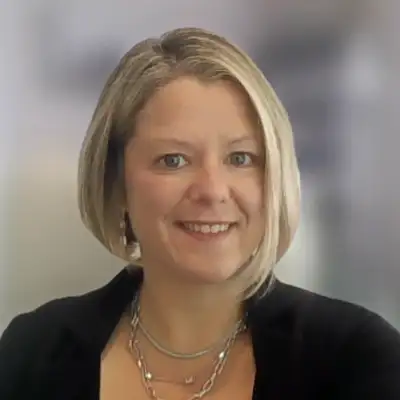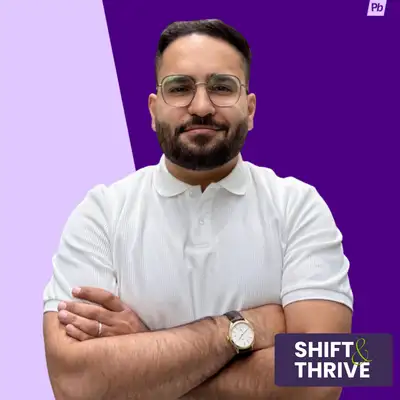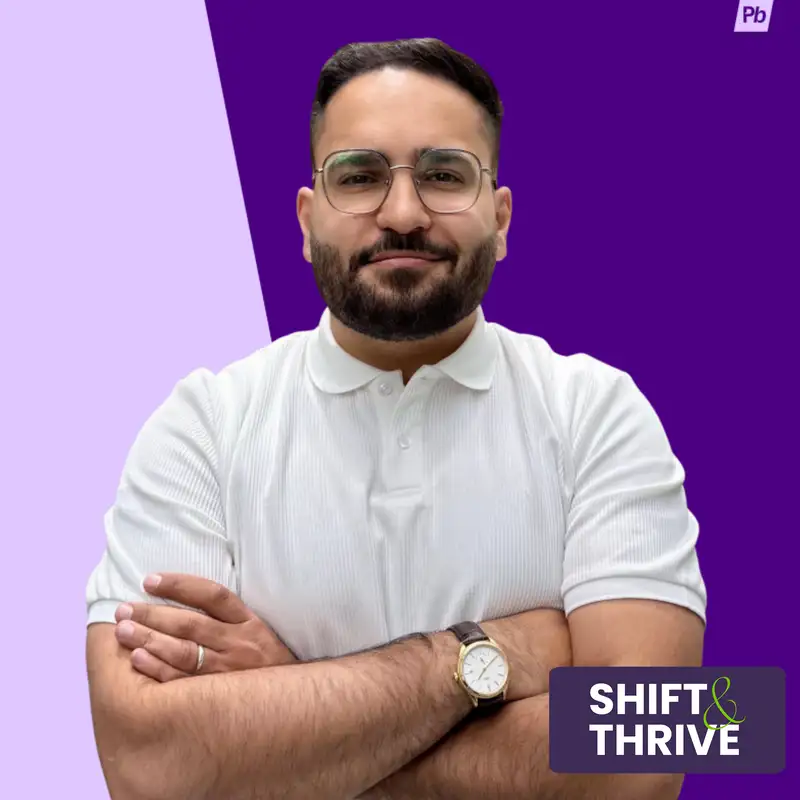
The Hardest Part of Scaling: Learning to Let Go - Ahmad Jadallah - Shift & Thrive - Episode # 102
S&T - Ahmad Jadallah
===
[00:00:00] In today's business world, change is the only constant, and mastering transformation is the ultimate key to success. Welcome to Shift and Thrive. I'm your host, Natalie Nathanson.
Each week we'll bring you conversations with CEOs who delve into how they successfully drove critical change in their organization. This show is sponsored by Magnitude Consulting, bringing you the thinking power of a growth consult. And the getting it done, power of a full service B2B marketing agency.
Natalie: I
am very excited to introduce today's guest. He is a founder who's taken an unconventional path from becoming an MD to founding AI-driven startups that seek to transform biotech and bioinformatics. After earning his medical degree, he pivoted early after spotting an opportunity to bridge computational science with life sciences.
He went on to launch Phi Science, a deep tech institute, and later [00:01:00] founded his current venture, PanBio, an AI native platform designed to make biomedical data more accessible and actionable for researchers worldwide. With experience working across global markets and supporting growth across selling into businesses and governments, he brings a distinctive lens on how to scale transformative innovation.
He is the founder and CEO of PanBio. Ahmad Jadallah, welcome to the show
Ahmad (2): Thank you,
Natalie. Pleasure to be here.
Natalie: Uh, it's great to have you. And I would love to start the conversation with your per- personal journey because I know one of the most powerful themes for me, uh, when we explore on the show is, you know, internal transformation that leaders go through. And going from kinda medicine to kinda tech founder and CEO is a, a unique leap, and I imagine required some shifts in, in your mindset.
So would love to, uh, start, if you could tell us kinda what was the moment that you decided to make that change, and then would love to talk about some of the shifts that took place.[00:02:00]
Ahmad (2): Yeah,
of course.
Well, yeah, you know, I, um, I was going through med school and, um, at, um, I
w-
w- The moment we started in going into actual medical sciences, like, um, topics like pharmacology, pathology, and all of that, I knew I'm not meant to be a physician. I, I, I saw these fields as
a little bit,
uh,
uh, how to
say it in a nice way,
Very repetitive and a little bit like, uh, uh, boring to me.
But on the, on the
contrary, I
was enjoying fields like,
uh, genetics
and cell biology and all of that. So, um, so I started doing research in med school, and I-- that was in Jordan at that time. And Jordan is one of the countries that unfortunately we don't have, uh, a proper research infrastructure. And, uh, that, of course, is very important, uh, in my field and my domain.
And I was starting to think, how can we make an actual transformation in research that is not country-led? That [00:03:00] led me at that time to believe in applied research. Applied research is where basically it's a research that is part of the industry, supported by the industry, serves the industry in
a way,
a research that is aimed to be transformed into a product one day.
not
like basic foundational
research that,
um, goes into the journey of
discovery per
se, for the sake of discovery. So applied research to, to
a country
like Jordan was, um, was very, very important. And at the same time, it's a k- It's the kind of research that would be easier and more accessible if you relate it to an industrial incentive.
If you bring pharma company to support-- pharma companies to support research, if you bring agritech companies to support research, then we can connect researchers, students,
and scientists with the industry
faster. The incentive is
much clearer.
And at that time, I established the Phi Science Institute. I was in my third, uh, year then
[00:04:00] And
Phi Science at that
time was still actually, um, a network, like a grassroots movement
to support science,
research.
We were doing... The most, the most important product that we had was actually events and conferences where thousands of students came, not because our conferences were great, it's because it filled a huge need and a huge gap in students' life. And, uh, imagine a conference about Phi's scientific research conference or Phi's applied research conference, like conferences that are...
You would expect it to be very boring, get attended by thousands of people, like, in, in a country like Jordan, which is a very small country of six, seven million people at
the time.
So you would know that this is a
hu- th-
this reflects the passion towards science and towards research among the younger generation.
And we still see
that, of course, in different countries, not only
in Jordan.
So that drove me into ap- the field of applied research and of course industry and all
of that.
Phi S- Phi [00:05:00] Science grew from that point. And, and I, I con- I finished my med school, but I knew that the day I'm gonna finish my med school, I'm gonna leave it all behind, and I did.
I, I left clinical medicine, and I continued my research journey in, in, in stem cells at first and then genomics and bioinformatics. Uh, what happened is that I moved to Boston. And when I moved to Boston, um, a new CEO for Phi
Science was
hired, and I established my next venture, PanBio today. It was called Bionel initially, Bionel.ai, and today we're PanBio.
And that was actually the movement. What really turned me from an MD into, um, uh, into research, into startups is that actual journey and, um, that impact that I saw. And today, I saw, uh, uh, today I believe that research is really led through the industry. There is a huge- [00:06:00] There's a huge shift in research and how we see research today that it u- it used to be coming out of universities most of the time.
Natalie: why do you think that is that the shift has gone, uh, into kind of industry? Is it more just, you know, that's where the money is, or faster to real world impact, or are there other dynamics at play?
Ahmad (2): the money is an, a very important factor, of course, but I think it's more like, it's more like, um, incentives. So, so, um, companies by definition, the intense- the incentive is mostly financial.
And when the incentive is mostly financial, this means you have to get the biggest impact possible
with
the least amount of resources there is.
And
that that by
nature
creates, uh, an
ecosystem of innovation, creates, uh... It's not,
it's not
innovation in the, in the boring definition, in the boring [00:07:00] term.
This word has been overused. But, but by, by nature it creates people in those companies that try to achieve the maximum output possible in the resources that they have. And, and, and all of that creates, uh, innovation and in- and inventiveness. Correct? You wa- you, you wanna, you wanna achieve, you wanna achieve things that can go to the market.
And, and the nicest thing about applied research in the industry is that it's real. It's real because there is... it ne- it
requires market
validation. And any startup that works in deep tech or in research-based, uh, work know this truthfully. And, and we all came from academia, and we worked in academia, and we know sometimes not all papers are properly validated because again... and, and many papers get retracted every year.
However,
in the industry it's different because the validation is real, which is the market. If your medication [00:08:00] doesn't work,
it will
never work. It... You, you can publish a thousand papers about it, but it will not get truly validated, and that's, that's by itself creates this realism that founders live in, and they need to do their
best. So I think
that's why there has been a great shift, and, and, and to applied research. And, and you would see universities as well changing their mechanisms. You would see universities, uh, changing their department names into more translational sciences. You will see an IP center and a commercialization office in every university almost today.
And, and, and, and that shift is happening at the academic level as well, which is fast, which is great. Yeah.
GMT20260617-165744_Recording_1280x720: Yeah.
Natalie: Yeah. No, that's so interesting. Um, and, you know, talk to me about the, the value proposition, uh, that your solution brings, because I do wanna get into kind of what it does for government, what it does for business, and kind
of what
those go-to-market journeys have looked [00:09:00] like for you. But do you have kind of a, a one-line on
the, the
value that it brings?
Ahmad (2): Of course. Yeah. Well, we support governments and, and large hospitals localize their clinical genetic testing
and, and, and in, in, more than one line. Unfortunately, most countries today, maybe aside from the US, the UK,
and other
countries, they ship their clinical genetic testing.
So when a patient comes to you at the hospital that they
require a clinical
genetic test, you take their blood sample, and you send it outside the country. The problem with that, with that is that basically it takes a long time for the, the, for the results to come back. Sometimes it gets up to ten weeks for that specific patient.
In oncology,
that's a very long time. It's very expensive on the healthcare system. In some countries, it reaches easily
ten thousand dollars per patient for whole genome sequencing
It,
uh, you are sending the data outside the country, very sensitive data to those countries, and many countries prohibit that, but they're sending it anyway.[00:10:00]
And
four, the variant interpretation, like the mutati- the, the interpretation of the mutations of, of, of the, of, uh, of what this patient has, the interpretation of the genetic changes is not localized to that country. Imagine a, imagine a patient in Saudi Arabia or Bangladesh or India, they're being referenced to the Caucasian population, to the Caucasian white man,
which
is again,
which is fine because this is,
uh,
uh, unfortunately, we in the West are doing the science.
However, it's, it's, um, it's a big difference between what
causes
the... We s- uh, we, we receive a lot of variants of
unknown significance.
Those
are
variants that are oncologic. Those are variants that cause tumors and
cancer.
However,
GMT20260617-165744_Recording_1280x720: we
Ahmad (2): we assume they are of uncertain significance, that they don't-- they have no effect on the patient.
What
we bring as PanBio to the, um, uh... We, we [00:11:00] started going after hospitals, but we found ourselves selling to governments because many of those countries, those-- this level of genetic testing is governmentally funded because they're expensive and all of that.
So we basically
make the time much faster, forty-eight hours instead of weeks.
It's much more cost-effective. We can do three, four patients instead of one. We keep the, all the data in that
country, so
we operate on a cl- um, uh, country compliant cloud provider, or we, we integrate on-prem. And basically, we localize the interpretation as much as we can. If they have data, if they have published research, we put pa- we put that as part of our variant, um, uh, our clinical pipelines.
And those are the most important four value propositions. And we provide the clinical geneticists in those countries with an end-to-end variant interpretation platform that would allow them to interpret those variants further. Uh, so this is what we do, and this is the value
proposition that we
bring to governments and hospitals.
Natalie: So talk to me about [00:12:00] some of those lessons learned in your early selling efforts. You talked about, you know, trying to sell to hospitals, ultimately expanding into government. Um, you know, I know for many early-stage companies, uh, figuring out and experimenting with different go-to-market models is often, uh, necessary.
Um, what did that, uh, what did that experience look like for you?
Ahmad (2): uh, absolutely. Well, selling in our space is really hard. Selling in biotech and tech bio, in our case, is very hard. There are a lot of, like, legal, uh, regulatory processes that stop you. Yeah, it's a very niche area
as well,
and, um,
and
many biotech companies might face that.
Um,
approvals, compliance, and all
of that.
Well, to us, we, we initially
found
it hard to directly sell in the US because, again, um, it's a very competitive market. It requires a lot of validation, and, um, and for the first vertical localizing clinic and genetic [00:13:00] testing, we thought like, why don't we go and
localize clinic and genetic
testing in everywhere else?
So
we
started going to the Middle East. We went to, uh, uh, Central Asia and East Asia, and we found that there is, um, the... We found our, our product market fit there. So today we, um, we, we, we serve as the core provider for genomics data platform for countries in the MENA region and countries in Central Asia, and that's why, that's why, uh, that's the only because we went for those markets.
So, so, so my advice
to founders
is that sometimes you go to markets that you... that out of your comfort zone, markets that you think, um, you would find a better product market, fit there.
And,
uh, the second thing is that
And
you, need to make them an offer they can't refuse. That in our space is a very important thing.
So to us, we go to these governments,[00:14:00]
and we
tell them, "Whatever you're paying today for targeted panels or whole sequencing," ~sequencing whole exome sequencing is that you sequence technically the, only the genes part of the DNA. Like that's almost two percent of the DNA.~
~We~
~go to them, we tell them,~
~"Whatever you're~
~paying for that part, ~we're willing to do whole genome sequencing with less, with a, w-with less, ~with a less, with a,~
~with a, w-um, with~
~a,~ for a lesser price.
Regardless,
we're
willing to beat it." Why is that? Because we tell them,
"Whatever
data you generate, whatever data we generate together, we link that to your clinical data, and any retrospective data you have, we're willing you, we're willing to help you commercialize it with pharma." So we're not only saving you money, so that's our vertical, uh, first vertical, localizing clinical genetic testing and the value propositions I mentioned.
We wanna help you commercialize your data through our analytics platform that functions, in this case, as a TRE, as a trusted research environment, uh, to help pharma access data without actually
accessing it. They
will be running bioinformatics pipelines on top of the data without accessing the data. The data providers, [00:15:00] every single hospital today, they wanna commercialize their data, but they don't know how, or, or they're afraid, or they're afraid they cannot give data to pharma directly.
So there should be a medium, an analytics platform that would do that part, and w- and our analytics platform can function like that. So in this specific case, and specifically in healthcare or biotech, you really need to... The incentives need to be very high for, to convince
them to
jump ships to your platform or to convince them to change an operation that has been going for decades now in those countries of sending samples outside, for example And at the same time, you need to lobby for that.
So as, as, as, as a company, you need to go after governments. You need to go after ministries
of health.
You need to go after, um, actual decision-makers in every market, and to provide to pr-
W- So
part, part of our-- A huge part of what we do, by the way, is providing consulting work. [00:16:00] So we need to go convince them, build a genome project for them, tell them how to localize clinical genetic testing, tell them how to store data locally, tell, telling them how we can integrate BioNL on their on-premise, on-prem infrastructure, and all of
that. So
a lot of that is consulting, a lot of that is lobbying, and in our space, you really need to do a huge component of that just to make it happen. And
that, that's what
really worked for us. And, uh, and the pharma data component is what brings us back to the US market. So the-- all pharma that will access data are in the US.
So we go back to them now with a much stronger position that we set on these cohorts, the cohorts that they need for preclinical and clinical research. Now, only then pharma is willing to use our platform. Before that, it was just another tool. But now this is a tool that sits on hundreds of [00:17:00] thousands of patient data that we truly need and we truly require for our research.
Now we're willing use, to use this analytics platform. So we charge them per access, per data access, and we charge them per run, per analytics, uh, platform usage. And
of course, any
dollar we generate for the data, we share it with the
data provider. There's
a revenue-sharing mechanism with the data provider.
So now they make money, not only saving money on testing.
That, that, that's,
that's our formula. Like we, we, we had- ............to navigate through three years, and I think many people in tech bio, like healthcare software or bio software in general, need to do
all of
these components just to break into such hard markets.
Natalie: Yeah. I love so much of, of your story and think it's, uh, applicable in, in other areas, like thinking about, uh, the best fit market and finding that and being open to surprises, to it looking very different than what you thought, both in terms of [00:18:00] geography, uh, and, uh, kinda who you're selling to. Um, and then it sounds like you've been very conscientious of the ecosystem that exists, the incentives, and taking that outside in approach and then, like you said, bringing something of, uh, of value that then kind of multiplies, uh, on itself.
So I think that's, uh, very, uh, very astute. I'm curious to ask you kind of on your leadership, uh, through this journey, how would you say your own, uh, kind of style and skills have evolved, uh, alongside, uh, you know, everything that the, the organization has learned?
Ahmad (2): I
don't think there is something super unique in my, in my leadership.
On the contrary, I come, I come
from a
scientific background, so probably I had to
learn
all of that, um, the hard way. And, uh, but like as, um,
uh,
any... A- as, as a small startup, you as a founder
of course,
and every founder knows this, n- you need to do everything.
And,
um, and you'll be doing, um, product roles. If [00:19:00] you're a coder, you sometimes you need to code yourself.
You need to do quality testing. You need to do, as I mentioned, product management. You need to do, uh, follow-ups
with engineers
and all of that. We, uh, we did not mention sales, finance, accounting, auditing, reporting, uh, all of that you will
be doing
yourself as an early founder. But the thing is Maybe one small tip from experience is that you don't need...
The worst part you can... The worst thing you can do as a founder is to get stuck there.
It's
very important as you grow as a company, you raise your first round, your second round, is
to le-really learn how to delegate.
So
today my leadership, we're five people. My leadership team, my executive team, four people work with me, and all of them, they do a much better job in their fields.
And, uh, so we have a head of, uh, for AI, we have a head, a
head for
bioinformatics, we have the head for [00:20:00] genomics and,
uh, variant interpretation, and
of course, a chief business officer, uh, in the US, and their teams. The hardest component for any founder
is to actually learn how to
delegate and leave the other fifty tasks to other
people, and focus
on what
really matters at each stage of the company's
growth.
And, um, and that was definitely, uh, the hardest part. But today we are much faster,
much more efficient than
the early years when, when I used to do everything. It was, uh, it, it, it, it was insanely bad.
Uh,
and I'm certain of that. Not, not because maybe another founder is listening to me thinks that he can do it, he can do it better,
but
because you cannot do everything at some point, and you need to focus on what matters.
You focus
on, uh, drawing the vision for the company, and you focus on doing sales early on. That's very, very important. Like, the [00:21:00] f-founders need to be there in every business meeting, in every governmental meeting, in
every client
follow-up. Our oldest client, I still join their weekly meeting sometimes just
to learn
how it's going, just to make sure, just
to make
sh- them comfortable that we're all there.
I'm there for you because I closed that deal. I'm there
for you
until today. And, and we need to make sure that we follow... We are, stay very close to our governmental and, um, and business clients, and that's of course, very, very important. So,~ so, so just... So~
~I th--~
~I I think~
for
founders, a lot of these leadership courses will not work.
A lot of these leadership books will not work. Um,
I, I, I just want to advise them to do two things: Uh, build fast and stay close to your clients. That's very... That, those are the most two important things in leadership, and all of your team will follow your leadership then. Just bring new clients, talk to clients, talk to users, and
at the
same time, keep building fast whatever you're building.
Natalie: Yeah. [00:22:00] Um, and I think this, uh, theme of, of letting go and delegating is one that does come up often in my discussions. I'm curious if there's anything that worked for you, uh, in your ability to do that. Any frameworks or things you kind of remind yourself? Uh, how did that look like?
Ahmad (2): Well, it's, it's, it, it's very hard to actually delegate until this day.
I find myself sometimes intervening in things I shouldn't. I think we all do, for our, much to our team's dismay
Yeah, right. But like, again, um, um, the best thing to, to make it happen is basically experience, is to go through it, is to reflect on what you do,
~and, uh, let~
~experience~
~and let,~
~um...~
~uh... ~
~And, and, and, and,~
and let experience teaches you how to do it, basically. Just go through the experience of, of, of delegation. And the second most important thing is that you need to know that any early hires you bring them to tell you what to do, not you tell them what they do. That's very important. And because you're bringing a
g-
a very [00:23:00] strong team early on, that they will tell you what to do in their specific domains, you need to trust that they are probably better than you in what they do, right?
And, uh, and if you remind yourself of that, you will probably... It's gonna be much easier for you to delegate, um, as much as you can.
GMT20260617-165744_Recording_1280x720: can.
Natalie: for sure. Well, and I think working in an environment today where there's so much changing across any industry and vertical and with AI impacting virtually every industry, um, in some ways I think it makes it easier because it's made it very clear that one person cannot lead everything and do everything and think about everything.
And so you have to really spread that across the organization. So I think that's kind of a, an, uh, unexpected benefit of, uh, the environment we're in right now
Ahmad (2): Yeah, absolutely. cannot agree more.
Hey, this is Natalie, your Shift and Thrive host. After chatting with lots of CEOs, one thing is crystal clear. Leveling up your [00:24:00] company means having a killer Go-to-market strategy. That's what my crew at Magnitude Consulting does every day. If you're trying to step up your marketing game, whether it's strategizing, accelerating your pipeline, expanding into new markets, or getting into AI and automation, let's talk.
No pitch, no pressure. Just good conversation. Visit shift and thrive podcast.com/natalie to schedule a time. Can't wait to connect.
Natalie: I'm curious to ask, um, you know, outside of work, which sounds like it can be all-consuming, um, what is an, an area that you're, uh, most excited or passionate about right now?
Ahmad (2): Think after we exit this,
we
need to open a company in brain machine interface. Uh- ............I'm very passionate about the brain
machine interface
and, uh, this is a field I read papers in every other day, and I think it's, uh, it's just an emerging field, and it's becoming, um...
It's just growing, and it just... And hopefully soon after we exit, uh, BanBio in a [00:25:00] way,
um, I will catch
that wave of growing into it. I think, um, I think, uh, uh, I, I know a lot
is happening
with AI, and everyone is
talking about
AGI and all of that, but I think we're not yet there Not even close. I think, I think
GMT20260617-165744_Recording_1280x720: the actual
Ahmad (2): the actual paradigm that will achieve, um, artificial gen- super intelligence or artificial general intelligence for, um, um, or artificial gen- super intelligence is that it-- we depend on a brain-like architecture
in
computing,
and
that's
happening a lot today.
There are many research that is depending on that.
But
I
think the
easiest way to do
that, since
we're not able to crack the brain anyway, is just to be cyborgs in a way. And then mach- our ma- our brains and machines will probably be interacting together at
a much
better pace.
maybe moving part
of that computing to our brains as well. [00:26:00] So that's a very exciting area. I'm very, um,
I'm
very happy about and happy about all the research that's happening there. It's fantastic. It's, it's fascinating the advances there. And I, I believe it's, um, it's a field that is highly underrated today and will change humanity in the future very, very soon,
uh,
how our brains interact with the external environment.
Natalie: Yeah. It sounds, uh, you know, futuristic and exciting, and I'm wondering if you have any specific examples to help bring it to life of, you know, what this might look like
Ahmad (2): Yeah. Well, there, there, there is a lot of, um, there, there is a, there is a lot of types for brain-machine interface, and we can find them in companies, uh, as well.
So that's what I love about, um, how, how we trans-how we transfer research into, uh, industry. Uh, so for example, Neuralink. Neuralink is one famous example of a brain-machine interface device that connects directly to your brain
cells.
And
it's a chip basically that actually immerses itself in the brain [00:27:00] architecture.
Some other a little bit less
invasive
ways is basically you would leverage, um, the blood vessels in your brain and, and there,
is
a huge map
of blood
vessels. So
if we
can put a device inside the major blood vessels
in your
brain, you would be able to collect a greater and much better data than the external, um,
uh, EEG, sorry,
EEG methods,
uh, of collecting data, uh, from outside the brain.
And there is a lot of advancements in A- in EEG as well, where, where now the,
the initial
problem with EEG was, um, big noise signals. The, the bigger, the bigger and bigger noise. But now there are many devices that are advancing in their data collection
pro-, uh,
processes from the brain and in denoising the signal.
So there is a lot of adva-advancements in non-invasive brain-machine interface
altogether
So
those, uh-- So to me, the, to me, I think um, [00:28:00] um, I'm, betting in,
the, into
the most invasive ones, um, the neural link level and other devices in that space, because I think, um- It's at that level that you're collecting very granular data about the brain operations and what's happening in the br- in the brain, and it's only at that level that we'll be able to make the, the biggest change that we're, we're, we're, going after.
And clinical trials already undergoing their way, and, uh, and many patients today are, are, are using these devices across the different companies. And I think, um, at,
at first it's gonna
be, of course,
um,
patient areas applications like, uh, a quadriplegia or hemiplegia or, um, patients suffering with their, uh, vision or, um, or,
uh, or hearing
loss and all of that.
But at some point, this technology will be moving towards, um, the normal person, and
it's
at [00:29:00] that stage that, um, it's gonna be super exciting. Like, um, uh, it's gonna be another leap towards how we interact with, uh, with the environment. Uh, you, you would see a huge leap with, uh, with the internet, and then a much bigger leap with the iPhone, and then, uh, now, now it's a huge leap with, uh, virtual reality and virtual glasses.
But immersing those devices directly into the brain would be a much bigger leap that we've never encountered before, in my opinion, and it's gonna be a super interesting times. Dangerous, but super interesting.
Natalie: Yeah, yeah. Very high stakes to say the least, but I could see where it can, as you said, like, unlock so many new, uh, areas and abilities for, for humanity across different, uh, arenas. Um, and I know none of us can predict the future, but do you have a sense of, like, when that inflection point will hit where we start to see it, uh, kind of
more
in day-to-day environments?
Ahmad (2): Yeah. Well, I, I, I [00:30:00] feel, I feel five to
years we're gonna be living it, um, more, more than ever. Um, it's, it's, it's already being rolled out for patients, like in 2026, 2027.
Many clinical trials are, are, um, are underway anyway. But I think maybe between 2030, 2035, we're gonna see more non-invasive devices to the general public,
And
maybe after that, in 10 years onwards
from now,
we're gonna be more invasive devices being approved to the general public. Especially with all the advancements happening
today
Natalie: Yeah, which seem to be at a faster and faster pace. So it'll be here before we know it, it sounds
GMT20260617-165744_Recording_1280x720: like.
Ahmad (2): Yeah.
Natalie: Um, you know,
I'd love to hear a bit more about, uh, you and your background. And can you tell me a little bit
of,
you know, who were you as a child? Like, did you have a sense you'd be getting into these types of fields?
Uh, tell me a little bit more about yourself.
Ahmad (2): grew up in, um, in a village in Jordan
near
Amman, where, where [00:31:00] governmental schools weren't probably the best
and,
uh, and education was probably, um, l- much lower than what we wanted it to be.
But
the biggest impact on my life at
that time was
definitely my father.
He was a physicist
and,
um, and, uh, and he, he, he was a teacher at, at the s- and, and he used to teach physics, chemistry, biology, and geology, like, like most of the major scientific domains for, for, um, for high, for, uh, high school students.
Because, because
again, we were in somehow in a rural area and all of that, so he was teaching everything.
And but,
but the most important part in my life as
a child
was how he was trying to br- so much to bring all of that science to my daily life. And, uh, even day-to-day kitchen things or, or, or cooking or, um, or, or doing things in the backyard and all of that. All of that, all, all, [00:32:00] all of these ex-
experiences
shaped who I am today.
And I, and I tr- and, and he instilled in me the massive passion about science and research, although I didn't know it until much later. But like, uh, uh, but, that, that, was my childhood. And, um- And yeah, and, uh, and then, um, I was very lucky to be... to... I, I went to a high school that is, uh, it's called the Jubilee School, which supports, uh...
Which you need to apply and go through, uh, a lot of testing and logic and all of that to be enrolled in. It's a high school. But that school changed
my life again
because, um, it was highly experimental as a high school. Uh, I remember, I, I took... So, so, so schools generally in Jordan are very systematic, and, uh, but this one specif- So we were finishing the traditional curriculums, and then we had elective courses at that time, which is so [00:33:00] revolutionary in Jordan.
Like, like probably the only school that provides elective courses. And I remember I
took a course in microbiology,
and that course
really
changed my life because I even didn't do this in med school.
And, and, and,
and that course was so unique because, uh, because
it w- it
wasn't like a course. It was just they would give you a kind of bacteria at the, uh, at the beginning of the semester, and half of the semester you would do all the tests you would do on bacteria in a microbiology lab.
And the second half of the semester is a test where you take an unknown kind of bacteria, and you need to know what that type is by the end of the semester. That course really changed how I see things. It really changed my life about experimentation and the importance of that and doing research.
And,
um, this is what really
shaped me.
So when I went to med school, in a traditional med school
GMT20260617-165744_Recording_1280x720: It
Ahmad (2): was, I felt that, that that's not enough, [00:34:00] probably not enough for me, and I really can make a much bigger impact
and, uh, uh,
and give all of these scientific experiences I went through to other people and to the younger generation. And, um, it grew with me, I think, until this day.
So, um, so I still try to participate
in as many, much educational
activities as I can to, to university students or to high school students and, uh, to talk more about science, about research, how they can shape their life, how they can go against, um, the wave of how they need to be a, a, a physician or an engineer, uh, in our countries and, and how they can be scientists.
But I think
all of these experiences really shaped who I am today from a ... s- Uh, and why I care a lot about doing, uh, science and research and applied research to provide the, the highest impact there is.
Natalie: Yeah. Yeah. I love that one. I like, and I like that the through line is really bringing kind of the real world to you as you were a child, a student, uh, et cetera, because I think, you know, schools are [00:35:00] starting to catch up to that a bit now, but I think there's still a lot that's taught in an academic way, and it's so far removed from, you know, how it shows up in the real world.
And actually, a lot more excitement, I think, is brought up for kids when they do connect it. So, you know, the kind of lessons your dad, uh, it sounds like shared with you, um, and in school. Like, I have my son is, uh, in sixth grade, and in their ............math class they just did, like, an entrepreneurial math, uh, curriculum where they, you know, broke out into small groups.
They had to go to, like, a local business, interview the owner, get some of the, the, you know, numbers around how many people work there and how much do you earn and, and then kind of run some, you know, financial analysis. And I just love that they're starting that at such a young age because I think, you know, for me personally, for example, if I had more connection between, uh, kind of the math I was learning in the classroom to what that might look like in the business world, I think I would've been a lot more excited to be studying it.
Ahmad (2): Absolutely. Absolutely. I cannot agree more. Yeah. Um, I, I, [00:36:00] I'm very excited about how education is changing as well. Yeah, you're right. And, uh, I, I think the future is much brighter because of that, seriously. And, um,
uh,
uh, o-o-once, once, the, those kids see the actual impact of what they study in their day-to-day life, and, um, and, uh, that, that, that would definitely create a much, um, uh, brighter generation about...
and that, that cares really about, uh, science. And if we have a little bit, uh, more people that, that, that, the the people that are really excited about
science can be
enabled to go into science and do more science, that in itself is a superpower for any society.
Natalie: Yes. Yes, for sure. Uh, well, I'd love to ask you, uh, before we wrap up the conversation, uh, if you were sitting in a room with your younger self, what advice would you give you?
Ahmad (2): I would really not change anything.
I've, I've gone through many, many failures through my entrepreneurial life.~ And, and, ~and that, that's very typical for any founder. But I believe that without, without, um, [00:37:00] any-- without all of these failures, without all of these learnings, I would never be the person being who I am
today, building
all of that what I believe is an impactful product that is actually
helping patients
today.
Natalie: Wonderful. Well, thank you so much. Uh, I really loved so much of what you shared from... You know, you can feel the, the passion for what you do and the impact, uh, that you have, uh, hearing about how you navigated getting your platform into the right hands with a very complex and nuanced, uh, set of go-to-market motions.
Um, so thank you for everything that you shared with us
And thank you, too, to everyone who's listening. If today's conversation sparked something for you or taught you something new, and I'm sure that it did, please pass this along to another leader, because we know that insights and ideas like this fuel fresh thinking in all of us and help us drive real transformation in our companies and in ourselves.
So thanks again, Ahmed, and this has been another fantastic conversation on Shift and Thrive. I'll see you all next time
[00:38:00] That's a wrap for this week's episode. For show notes and more visit Shift and thrive podcast.com. A special thank you to our sponsor, magnitude Consulting, bringing you the thinking power of a growth consultancy and the getting it done Power of a full service marketing agency to help B2B companies fuel their growth.
For more information on magnitude and to get your complimentary transformation readiness assessment, visit magnitude consulting.com/. Get ready. Thank you so much for listening. We'll see you next week.
Creators and Guests