Rethinking the GTM Playbook for the Modern Era - The Best of Season 2 - Shift & Thrive - # 099
[00:00:00] In today's business world, change is the only constant, and mastering transformation is the ultimate key to success. Welcome to Shift and Thrive. I'm your host, Natalie Nathanson.
Each week we'll bring you conversations with CEOs who delve into how they successfully drove critical change in their organization. This show is sponsored by Magnitude Consulting, bringing you the thinking power of a growth consult. And the getting it done, power of a full service B2B marketing agency.
If there is one area of business that has been entirely flipped on its head over the last few years, it's go-to-market. The old playbooks are officially dead. Gating white papers, spraying and praying cold emails, and relying purely on paid ads simply doesn't work anymore. Buyers are demanding authenticity, and AI is forcing us to rethink how [00:01:00] we build and scale our revenue engines.
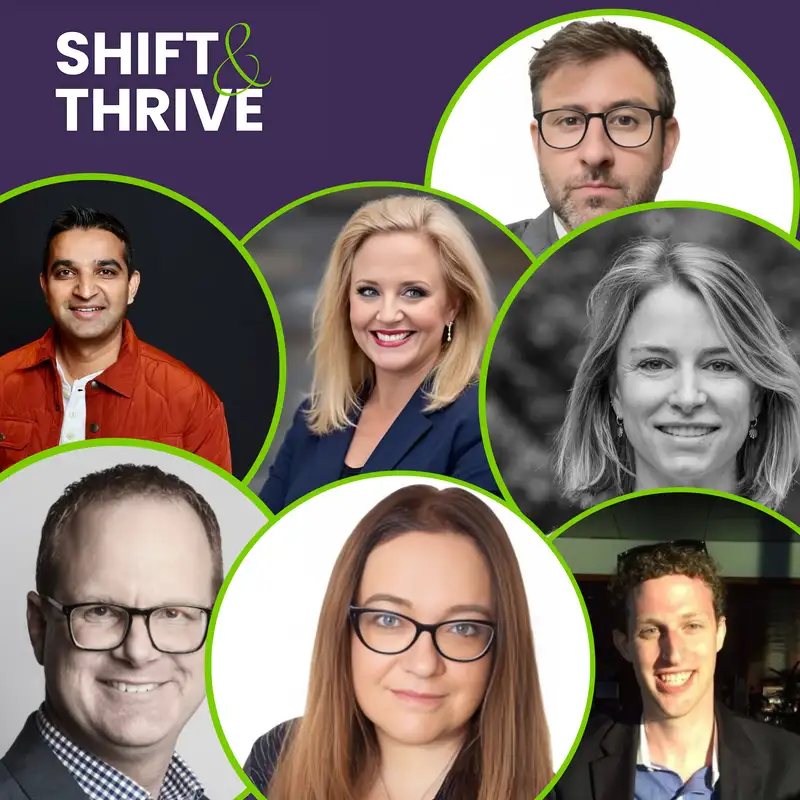
Today, we are bringing you a masterclass on modernizing your go-to-market strategy. We've pulled together brilliant operators, CMOs, and venture capitalists who have joined me on the show to explore how to ditch the cookie-cutter playbooks, uncover the real narrative behind your data, and use AI to scale leaner, smarter teams.
Let's jp right in.
before you can modernize your tactics, you have to get ruthlessly honest about your strategy. Who are you actually selling to, and what do they truly care about? First up is Sangram Vajre, Co-Founder of GTM Partners, who shares a cautionary tale about why an unclear ideal customer profile can ruin your pipeline.
Following him, David Axlr reminds us that big data only tells half the story and why you have to get out of the spreadsheets and talk directly to your free users to find the real narrative.
Natalie Nathanson: I'm curious if you have any stories that come to [00:02:00] mind from organizations, either where you've worked or advised, , of how, uh, how they've transformed their, their Go-to-market maybe for one of these. Uh, you know type of scenarios.
Sangram Vajre: Oh, I, I'll I'll
tell you a, , a sad story about it and then, uh, and then also heroic story around, it's a sad story about it and it's top of mind because, uh, and I posted about that a few, few weeks ago on LinkedIn was a CA CMO friend of mine. Uh, she posted on LinkedIn about three or three and a half months ago.
About four months ago, like she said, that hey, we, we, we, she generated about 20 million pipeline and she was writing about it on LinkedIn. Our team is kicking butt. We are doing incredible things. We are gonna have a blockbuster year and all that, right? Which, what you would expect, uh, you know, uh, uh, you know, and, and this is about a, you know, awesome startup company.
And two weeks later she dms me and says, Hey, I got laid off. And I'm like, well, wait. I just saw. And so [00:03:00] I called her up
like, Hey,
what's up? What happened? She said, yeah, we generated this 20 million pipeline. And, and it, it so happens that that pipeline was for the wrong ICP.
I'm like, wait, you are the
CMO of the company.
What do you mean wrong? ICP? And she's like,
well,
we have three product lines. The, uh, the ICP that was generating the highest amount of pipeline was for customers that were lower value customers, and they were churning much
faster.
And our goal is to actually focus on these other segments. I'm like, well, so the 20, how much of that 20 million pipeline was for that particular, she said almost 80% of it.
I'm like, so 80% of your pipeline was for a wrong ICP. How did it, how did you not see the red
flags with that? And
then she's very, very well, like, she's done. She said,
we
just never had that conversation. And the executive team, my executive team, my CEO, literally said, Hey, create pipeline. All pipeline is the same.
[00:04:00] And when we just didn't spend the time as an executive team on ICP, they just said, Hey, it's your job. You figured it out. And that. Maldi, I don't know how many times that kind of story comes across is, and it's unfortunate is that if you are an executive in the room, you have to understand ICP. It's not a marketing job or a sales job or a CS job.
It is an executive job understanding what are your top segments. Not all pipeline is same. The pipeline from the segment that actually drives the highest retention is a better pipeline than a pipeline that is, that's gonna turn over a period of time or experimental
or a tested
pipeline. All these questions are business questions.
These are not marketing or sales questions. And, and I think I see that. So it was a very sad story. And, and,
and, and,
and she's back and she's now running some fractional work right now. And now she's so much more business focused. She's like, I'm not gonna focus on campaigns. I'm not gonna focus on events.
And, and, , as the first thing I want to do, I'm gonna actually ask business questions. So I, [00:05:00] I say quite often is that every executive is a business leader. They happen to be in marketing or sales or CS for like 10, 20 years. That makes them really good at their craft. But ultimately, you're a business leader, so you have to take a step back, uh, from time to time to make, make those things.
So one is just understanding the business, the economics, uh, uh, and what works and what doesn't. Because some things could be shiny object or early success, but it's actually not true success. So that's, that's just a sad story. I, I can pause and get your thoughts on it if you hear things like that all the time or
it's is one off.
Uh, but that was like, that, that hurt me a little bit deeply because I know the person, I know the company and I'm like, it's, none of them are bad. It's just, just, you just missed something that is so obvious that.
Natalie Nathanson: Yeah, I think it makes me think of like the purview that different, uh,
kind of
functional owners are in, right?
Marketing if you're not looking enough from
the business side,
uh, but you're doing a great job
with what
you were chartered to do but then hadn't connected
the dots, which
I think is similar. [00:06:00] You know, on the sales side, someone could,
uh,
be a tremendous sales leader, but might not be thinking about you know, the long term viability of certain kind of paths to market or things like that.
So I think it does go back to, uh, what we were talking about earlier
of needing
to start, uh, from, from
the top
of the organization and the CEO needs
to have
that involvement. And then I know when we're working with, uh, with clients and really trying to understand all of the business kind of drivers and levers and including, like you talked about, the ICP.
is getting into the depth of the data and not just kinda what should be sold and to whom, but looking at right profitability across
the different
segments and lifetime value, and really like digging in to all of the data that impacts the Go-to-market in order
to make
those decisions. And then after you make those decisions, making sure everyone is kind of aligned and understands kinda all the different roles that need to come together around that.
David Axler: we spoke to many of our customers, many of our free customers, about the value of free, and we had [00:07:00] some very interesting findings.
Our
first assption was free for them is a deal. What actually was coming back was free, was perceived as risky for them. If I can't understand how you're making money off of this, I'm starting to have some real questions about quality.
But
what was interesting is. Our quality scores were off the chart.
And so when they couldn't find
something wrong
with quality, now they started to question intent.
If I'm not
paying for this and it's really good, you must be monetizing somewhere else. What are you
Natalie Nathanson: What am I missing?
Am I
missing? What are you doing with with the data? the answer was nothing.
We weren't doing anything with the data. We were monetizing on financial services to the point that that the unit
economics
worked out. But our customers are not thinking about that. They're thinking about the plber's, thinking about his next job. The interior designers thinking about our client, they're not thinking how does wave back money?
And so interestingly, when we [00:08:00] introduced
paid
offerings
that customers
could truly understand how we captured the value we create, it had the opposite effect that we had initially thought about. We're gonna see massive churn. And It gave customers comfort of there's now a value exchange that I completely understand and I'm, I'm
not
questioning the quality or whether there's anything nefarious here.
This makes sense to me and the alternatives don't.
And so
we saw an outsized amount of success than even our initial models
had had
shown. 'cause we anticipated churn. We just thought, okay, when you're charging for
something that
was once free, you're gonna see churn. And, You know, we did to, to some degree,
but far less
in
the growth, the
growth outpaced even our most aggressive model
based
on the, the han psychology that was going on, which is, I get this now and I trust this now and I gladly will exchange value with a company that is a cornerstone of how
I do
business. So a very interesting experience of [00:09:00] free to paid and doesn't always go the way you think for reasons other than you naturally think are occurring for the customer.
Right. Well, and I love that example because I think just by talking to the customer and talking to enough of them, you learn something that maybe kind of flew in the face of what the understanding would've been. Right.
David Axler: Totally.
absolutely.
Once you know exactly who you are targeting, you have to reach them in ways your competitors aren't. We asked our podcast guests, true experts in their fields, how they are breaking the mold. First, Scott Brown walks us through the power of the test and iterate model across the entire customer journey.
Next, Steven Ochs shares how he abandoned traditional digital media spend to build highly targeted influencer pods and free community tooling. Finally, Kat Vendelstadt reveals the exact framework she uses not just to enter a market, but to name, frame, and claim an entirely new category
Natalie Nathanson: And I know you talked about kind of data as, uh, kind [00:10:00] of the key signal that you.
Started you down that path. Uh, were there other things that you were thinking about as you were making that, uh, decision? Did you have any concerns about kinda was this the right move?
Uh, what was kind of, what else was going on for you in, in that
Scott Brown: You hopefully always
have concerns, right? Because you're always kind of trying to read the tea leaves and try to figure out with an imperfect view on what's happening, what your best path
GMT20250522-165949_Recording_1280x720: is. so
Scott Brown: for me, and I think
for the
rest of
the team,
it was really around a test and iterate model.
Like, let's come up with a hypothesis. Let's see what's happening. Let's run a, a rational controlled experiment to see if we get the results we expected. Right. And then if that plays out,
okay, great. Let's
add a little bit more. And at a certain point you can't just keep doing experiments. And then it was, okay, we're gonna go all in on this.
, and interestingly enough, in this situation, , this, that was
a situation
that the CRO, the existing CRO didn't really want to be part of. And so, uh, they ended up [00:11:00] exiting and we brought in a new CRO who is a little bit more, uh, focused on all the different. Lead Sources and the ability to kind of manage a portfolio versus a single go to market motion.
And that's when things really started to accelerate for the business.
GMT20250522-165949_Recording_1280x720: Yeah,
Natalie Nathanson: I would imagine that was a much more complex, uh, you know, go to market to, to manage between those different, uh, elements. Can you talk about kinda what went into the kind of product-led growth, uh, component? What were some of those early building blocks to put in place?
Scott Brown: Yeah, so we were lucky enough that our whole, , product or offering, , um, revolved around startups and small businesses uploading their financial and customer data into our system where we could then, , go through and kind of analyze and standardize all the information and essentially give them like almost like a credit score.
, But it was more for an investability, uh, uh, how investible the company was. So we had all that on the
back end. [00:12:00] That
was our core product. What we really did in conjunction with product
was exposing
some of that and making it easier for these companies
to put
bite-sized amounts of information in.
So
actually one of the first PLG kind
of things
we implemented was a simple kind of cost of equity calculator.
where People could go in and put in four or five data points and get a sense of what could I raise?
Right.
So it started the conversation with them where they didn't have
to go and
upload everything and, you know, do all of this work, but we could begin to, uh, answer small questions that led them to the final answer.
And it also, frankly, then gave us some insight on is this a qualified company or not?
And
that helped us with our lead scoring and prioritization. Then.
Natalie Nathanson: I
think things like that can be so helpful. I even think like more on the demand gen side, like ROI calculators and, and different things like. That which, you know, take longer to create than let's say, you know, a, a downloadable white paper or ebook or something like [00:13:00] that. But they can drive such a good engagement.
, and to your point, like also some of that early qualification that you're kind of hitting multiple birds with one stone with those kinds of thinking.
Scott Brown: Yeah, I mean, one of my personal philosophies is really the focus of marketing should be around creating
a conversation or a
dialogue with that customer, right?
And so those kinds of tools or calculators are great, give and get models where you're providing some value to them. It's not just like a static ebook or a white paper or something that does have value, but you're creating a conversation a back and forth. Where in our instance, you know, when the
company provided
some initial information, we could say, oh, looks like you might be qualified for these types of financing vehicles. Do you know anything about venture debt, venture capital? You know, and you kind of list out all the different financing vehicles for them because inevitably these folks are like, no, I had no idea there were all these options. Can you tell me more?
Well,
sure. [00:14:00] Like now here's your, your, your ebook, or would you like to talk to a salesperson to learn more?
So I really think it's how do you create those touch points that have the back and
GMT20250522-165949_Recording_1280x720: forth with the customer.
Natalie Nathonson: So, you know, we've previously talked about the importance of getting off the beaten path, especially when it comes
to go to market and,
you know, ditching some of those cookie cutter playbooks.
,
so could you share, uh, go to market example that really shifted how your team was able to engage with the market? And then we'll dive into some of the, the, the principles that emerged from that.
Stephen Ochs (2): Yeah, sure. So,
you know, as you mentioned, most of my
experience has been in, you know,
SaaS startups, right? You know,
anywhere
from Series A through
Series C. And you know, we, a lot of these companies are either starting marketing
for their
first time or evolving their marketing function, right?
And so they don't have these
expansive marketing budgets and they wanna do things
in a very cost effective way. . and The traditional channels have become very cost prohibitive, right? The buyer behavior has changed and [00:15:00] you know, the cost per lead us on LinkedIn is now over $200. a Lead AdWords
has
become very expensive.
You know, with the
evolution of AI search, you know. Now traditional SEO has
become a whole different game as
well. So the old playbooks that used to work
for everyone, you
know, have kind of changed and especially
through the
COVID
years. Right. You
know, we used to have traditional trade shows and experiential marketing and you know, that quite
drastically changed
and it started to come back, which is great.
So, you know, a whole niche started to cut out itself out over the last,
, I'd
say, you know, five to seven years. With influencer marketing started to pen, starting to penetrate B2B
SaaS. Right. You know, it's
very common in the B2C world where you see influencers on Instagram, TikTok, and you know, promoting conser brands, but you're starting to see a lot more of B2B brands start to come through that as well.
And ,
you know, I started
playing around with that [00:16:00] I'd say in early 2020. And the reason I started doing that was. Marketing to a technical buyer in general, they don't want to hear from a marketer, right? They want to hear from a, you know, a peer, someone who understands them, understands their pay,
their pains,
operates on their level, understands the technical depth, so you can't really fake
it with a bunch of
white papers and
things like that.
So
really what that leaves you with is with a few options. You either, you know. Hire someone to come in house and be that evangelism,
or you
start
working with external evangelists and
you start giving that show, don't tell experience so. Uh,
one of my previous companies, what we
started to do
is we reached out to this network of influencers and
started
to create a thought leadership pod.
And we would, you know, really tap their shoulders for webinars,
through,
for podcasts, and for,
you know, also demoing, you know, new features we were making to make sure we could bring
them to the community and their relevant [00:17:00] audience.
And
you know, what we really start to see is our cost per leads were much cheaper.
The amount of marketing work doesn't change, right? You still need your content marketing teams,
your
digital
teams, everything like that. But the distribution channels and change, right?
So what
you do is you end up spending less on, you know,
just these vanity clicks and you're spending more
for engagement and awareness.
And I
think that's the world we're really entering to. So. You know,
I started that playbook a couple, uh, companies
ago and it started to
really work and it's
starting to become
the norm
from what I've seen a lot. My other, you know, CMO peers are starting to do the same, right? They're
starting to really lean into the influencer model and, you know, I think there's just a lot there.
And also one of my old mentors, you know, I
think he really pioneered
the quote unquote, community
free tooling, ,
mechanism, you know? 10 plus years ago, and I've, uh, learned a lot from him. And we've started to bring that and [00:18:00] it becomes your nber one lead magnet, organically and paid because you're giving people
value right away.
And I think that's
really the importance. Whatever you do value has to be forefront and center. You have a couple minutes to capture their attention and their trust and give them reason to wanna learn more. It's gotta be value driven.
Kat Wendelstadt: we,
, what we did is we,
we had to define what the category
was,
You have
to be extremely clear
of how
you
name it.
And there's a framework, , from a, , a
group called, uh, the category Pirates, coincidentally, and, and
it's essentially naming, framing,
and claiming.
So those
are the three steps. So you first have to name it, what is the name?
That you, , can
get any sort of signal on
that people
are going to be searching for.
Sometimes there's nothing. , but sometimes you, You know,
from customer
conversations, uh,
from uh, ,
search data, you can already start like seeing emerging
patterns [00:19:00] about how things are being described. So
you name that category,
we named
it.
Gen AI and film and, , we, we saw
there was a very big opportunity for this category creation because CB Insights had done a very big market map.
And in
essentially that particular corner of
the market,
there wasn't very
much. So
we knew, okay, we don't have to go up against,
, companies
like Runway. , La, uh, uh, Hagen, were doing something slightly different. And so.
We started, , seeding those words in
PR because that, You know, as you have AI search engines,
, becoming more and more prevalent, they pick
up, , ,
high
intent
words
and, and high authority words from press releases, et cetera.
And, and, And so we started. Going Sort of a PR, , a PR first route so we
could get those
words out.
And the important
thing that [00:20:00] we did, it was we always had them in conjunction with a company name. So it was Gen AI and Film and Flawless.
And so that then
over time, started showing up when you type in what's the
best,
uh, journey AI company in in film.
And then we
still had like. Subcategories,
uh, dialogue editing, for example,
being one we always made sure, , apply those
principles. And if you now look for that in chapter BT or any,
any
search engine, the company will show up first. So
sort
of a pr , a PR led strategy. The other thing
that we, we, , we did, ,
again, like
going after
sort
of high
authority, .
, proof of of, uh, , what we were doing is, is submitting for awards. So part of our, , strategy was submitting for fast company awards time best inventions. , And so we ended up winning a lot of industry awards. , as well as, sort of venture backed, fast company and, those
types of
[00:21:00] awards that again,
started describing us in those particular terms.
what happens over time, if you do that correctly, the incumbent of a
category, they
end up, , taking about 75% of the entire value of that category. And it makes sense because if
you think about it,
when
you
think electric vehicles. What's the first brand you think of? You think of Tesla, right? You don't think of,
, I dunno, de you or, or, or something else.
And, and, and when you think about, , take away coffee. You think about Starbucks. So that's the first thing. you
start, basically owning, the category. The other thing that you want to
do is create your own language. So
Starbucks
again, they, did this, , they seeded venti.
and grande,
, their own particular, ,
language. And so that is also something that, we did, , [00:22:00] with for example, like describing dialogue
editing and,
and, and those, uh, those types of things. So, so over the course of
a year
through pr,
, led
essentially PR led initiatives and then going through, going further down, uh, , in terms
of.
, reach
in terms of events, et cetera. We
started emerging,
,
as
the kind of foremost and and
highest quality
player. We then were
able to add the relevant case studies with
customers like Netflix
and Amazon Prime, et cetera, who started using our product. And then by that point and then becomes a sort of, uh, machine that starts running on its own.
The tactics are evolving, but so is the way we build our teams. With AI reshaping productivity, we no longer need massive headcounts to drive massive growth. Kat Vendelstadt returns to explain how she is using AI and freelancers to do the work of a 35-person [00:23:00] team with just 10 people. Then Cheryl Jordan Aguilera shares why forcing your marketers to spend time in sales is the ultimate way to strip away the fluff.
Finally, we get the investor's perspective from Elena Gantvarg, principal at Flint Capital, on why venture capitalists now expect you to do, uh, significantly more with fewer highly essential people.
Natalie Nathanson: I'm curious, how are you thinking differently about n nurturing or growing or building out your marketing department now compared to, let's say. When you were CMO like five plus years ago.
Kat Wendelstadt: Yeah, that's, , I, I, I love that question. So, five years ago I worked for a company and, , and I had 35 people under me across sales and marketing. Now that probably would be, , at the same stage, probably would be about 10. So it's reduced by about a third. The way I like to, , build it out is, is I like to get freelancers in first.
, and then when they kind of hit the limit. Then kind [00:24:00] of either get them, , to convert them into a permanent employee or hire for that role permanently. The advantage of when you're starting building from scratch is a freelancer needs much less handholding. There's another emotion is involved if there's, if it doesn't work out, you can both part ways without, uh, any drama.
And they are subject matter experts at what they do. So they just come in and essentially solve the problem that you hire them for, and you can get them in really quickly. There's no, You know, massive time lag. I'm hiring somebody at the moment and they have an eight week, , , uh, what do you call it?
Like, uh, , before they can start an eight week, , I forgot the word, , period
Natalie Nathanson: A non-compete.
Kat Wendelstadt: Yeah, kind of like a non-comp compute eight, that's eight weeks. And that's, You know, , if I hired, You know, somebody as a, as a freelancer, they can start most of the time, You know, immediately. 'cause otherwise there wouldn't be, there wouldn't be market.
So, so that's [00:25:00] how I like to scale. And when, when we hit the limit, , of what is possible in terms of output and have built the system, then I think about adding the next person on.
So,
Natalie Nathanson: I
am a big advocate of the concept of like the
rotation programs and at small
companies. It doesn't have to be formal,
but like, especially coming from the marketing world,
that every marketer should have some experience, exposure
to selling in a way that
you don't get if you've only kind
of sat squarely in the marketing realm.
It
just makes you such a better
marketer.
Cheryl Jordan-Aguilera: Yes,
I completely agree with that because it, it kind of strips away. Some of the fluff
to
get to some of the practical, like rubber hits the road
needs
that, , that if you understand as a marketer, a sales loves you.
Natalie Nathanson: Yes.
Uh, I,
you know, I also think about the, the common language and, you know, marketers
can have the frustration of, you know, why isn't sales following up diligently on all of my leads? But then
from the sales
hat,
it's, well,
maybe they weren't necessarily [00:26:00] good leads to begin with. And so it's one of those cases where there's often no, uh, right
or wrong, but each person's
coming from
their own purview.
And once
you can see the other person's perspective,
you have more understanding, more empathy, and
ultimately can work better together.
Cheryl Jordan-Aguilera: I completely agree,
and I've been fortunate now to work
on both
sides of that sales and marketing fence. , and I have a lot more empathy for both
sides and a lot more understanding
of what's driving certain behaviors.
And those behaviors are what
drive sales and marketing crazy about each other. , so that was insightful when
I pieced that together
and I was like, aha, okay, I get this now
Natalie Nathanson: for sure. Yes.
So would love to hear from your perspective, like how do you advise founders to think about, , about hiring in general, hiring in-house versus other models. , what do, what do you see in, in the current landscape there?
Elena Gantvarg: You know, it's, it's , , . [00:27:00] I can give you like one answer, like, I advise this or I advise that because it all depends on, on, , , what the company's, , building and their, , their needs. , , many of our companies have, , , , teams, , overseas. You know, like programmers, , et cetera, not like, not in the US because it is expensive, right?
So, , if, , , if they can, , have, , , , some of their people overseas, great. You know, especially if they know the culture and, , , yeah, why not? . Whether you have to outsource the whole product, , like to the third parties, like, I don't think so, You know, like other, otherwise, what is your, , what, what, what is your mold and, and, , , , how, how much, , [00:28:00] ownership of a product, , do you have?
But, , , but we do see that the companies, You know, like, , where they have like five. People in their marketing department, they can now have one person or two people. And ai, You know, and, and generally, , like based on what I see with other companies, AI can do many things now. Like, , I, I think at some point, , I will be replaceable too.
Natalie Nathanson: Alon changing in all nber of different functions.
Elena Gantvarg: Yes. Like, totally. So, so, , so yes, so, , it's, , , You know, , my, , my eldest son, he, he studies like robotics, , computer science, they don't, , write code from, , from scratch. , You know, so, and, and because of that, of course, the expectation of the companies [00:29:00] to build faster. And scale faster. , that, that, this has expectations that we already discussed previously, but, , , because you can do Alon more work with fewer people.
So you, you, you should hire only those people who you, who are absolutely essential. You know, like, do you need, , a marketing person? , probably. Do you need five of them? Probably not.
Natalie Nathanson: Right. And to your point, making sure that it is an AI forward person, , and that knows enough about all the different facets of marketing to be dangerous. I mean, when we work with. Startups sometimes. We are kind of the outsourced marketing department, and we've started talking about this, , kind of dynamic duo combo of like, you need the, the strategist and then you need the doer.
And both of them need to be AI enabled and kind of have, You know, processes and frameworks for, , for working effectively. I'm curious when you're seeing on the marketing side specifically, like when you're [00:30:00] seeing these smaller teams, what's kind of the, the profile or the, the roles that are, that are kept.
Elena Gantvarg: , in, in startups,
Natalie Nathanson: Yeah.
Elena Gantvarg: it, You know, it really depends on the stage because, , , obviously startups don't hire many marketing people like when they're proceed.
Natalie Nathanson: Yeah. So I guess maybe a bit later when they would have otherwise grown a grown a small team.
Elena Gantvarg: I, I, I, I think that a couple of people, You know, 1, 1, 1 person who oversees a strategy and one person who can work with AI tools, You know, like something like that, , that, that makes sense. , , depending of course, so this like size organization and what they're doing, but, but, , , generally I, I, I see that many people have, , , these days, You know, like a couple of people in their marketing teams.
What an incredible lineup of insights. The big takeaway here is that you cannot run a modern business on a legacy go-to-market engine. As leaders, we have to demand a deeper understanding of our customers, [00:31:00] embrace untraditional channels, and be willing to radically rethink how we structure our teams in the age of AI.
A massive thank you to all the brilliant executives and investors featured in today's compilation, and thank you to everyone listening. If this episode sparked a new idea for you, and I am sure that it did, please share it with another founder, CEO, or a go-to-market leader in your network. It's conversations like these that help us all scale smarter, build stronger, and create more resilient organizations.
I'm Natalie Nathanson, and this has been a special video compilation of Shift and Thrive. See you next time.
That's a wrap for this week's episode. For show notes and more visit Shift and thrive podcast.com. A special thank you to our sponsor, magnitude Consulting, bringing you the thinking power of a growth consultancy and the getting it done Power of a full service marketing [00:32:00] agency to help B2B companies fuel their growth.
For more information on magnitude and to get your complimentary transformation readiness assessment, visit magnitude consulting.com/. Get ready. Thank you so much for listening. We'll see you next week.