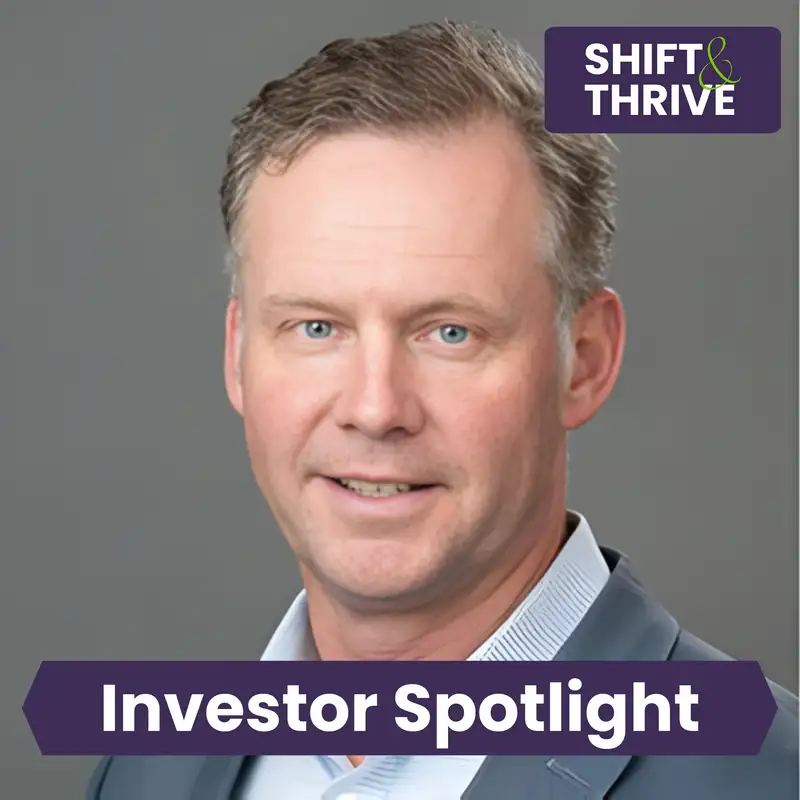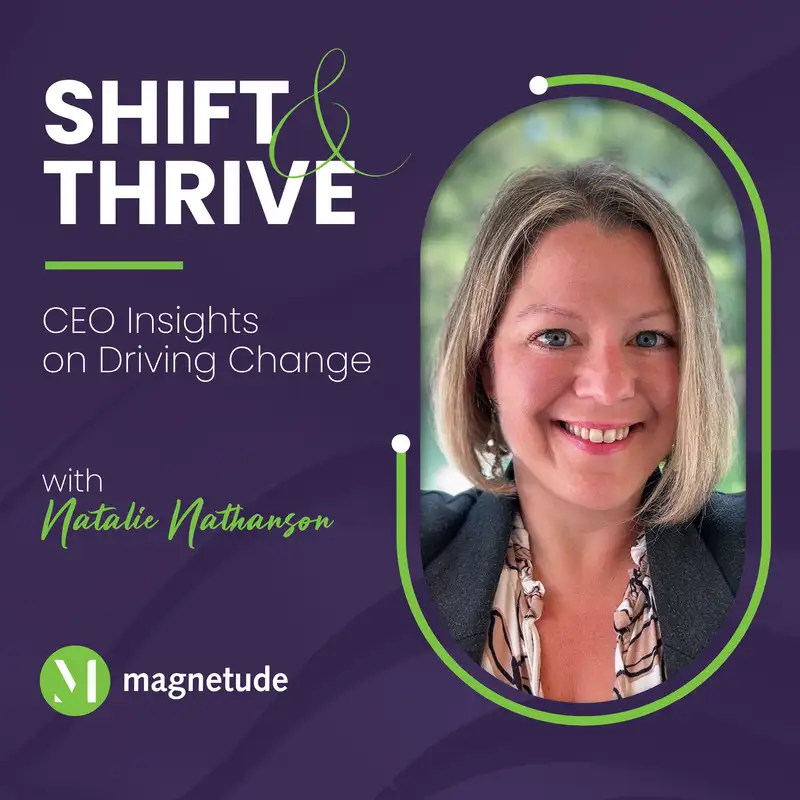
Funding National Tech - Derek Willis - Shift & Thrive - Investor Spotlight - Episode # 088
S&T_Derek Willis
===
[00:00:00] In today's business world, change is the only constant, and mastering transformation is the ultimate key to success. Welcome to Shift and Thrive. I'm your host, Natalie Nathanson.
Each week we'll bring you conversations with CEOs who delve into how they successfully drove critical change in their organization. This show is sponsored by Magnitude Consulting, bringing you the thinking power of a growth consult. And the getting it done, power of a full service B2B marketing agency.
Natalie Nathanson: Welcome to another special edition episode of our Investor Spotlight series on Shift and Thrive.
If you're a founder or CEO navigating today's capital environment, especially for those of you in technology and selling or exploring, selling into the federal government, this episode is for you. I'm so excited to introduce today's guest. He's an investor and entrepreneur who's spent more than three decades [00:01:00] working at the intersection of startups, technology commercialization, and federal government innovation.
He started his career in early stage startups during the initial rise of Silicon Valley. He went on to build and scale technology commercialization efforts with the South Carolina Research Authority, and he has directed over $35 million in early stage investments that attracted billions in follow on capital.
Today he focuses on investing in dual use and national security technologies, helping companies bridge the gap between what he calls the Valley of Death between proven technology and full scale. He's the founder and managing partner of Atoa Capital Partners. Derek Willis, welcome to the show.
Derek Willis: Thank you for having me, Natalie.
Natalie Nathanson: Very good to have you. And I wanna start by asking you, I know you have spent your career at the intersection of, You know, early stage innovation, federal funding and investing. And so I'm sure you've seen firsthand, uh, You know, how often a, a breakthrough in technology proves that it works, but then can still struggle to [00:02:00] become a quote unquote real business.
So wondering if there was a specific, like example or moment that shifted, uh, how you think about, You know, this kind of, uh, evolution for a company, for an organization.
Derek Willis: Yeah,
that's, uh, uh, the. that's, that's kind of where I've lived. My life is in the Valley of death for the past 30 years. Uh, it's, it's interesting.
I enjoy the startups. I enjoy kind of navigating that, uh, in technology readiness levels. The, uh, picking them up maybe at a three, uh, getting them, uh, or de-risking
them
to a. Maybe a six or seven, and then finding follow on funding to get 'em nine into, You know, uh, program, a record. But, uh, the, the, the trick for me, uh, where, where we really see.
Transition or, and, and we know
if a, a product's going to
make it or not is, You know, number one is product to market fit. Uh, if you've got a good product to market fit, uh, the navigating is a lot easier. Uh, and, and an 80% solution in a white hot market, [00:03:00] uh, is better than a, You know, an over-engineered market, uh, owes an engineered product in a market
that just doesn't fit. But typically
where we can
see things
that break through. Is around readiness
level six, and
that's a minimal viable product. You're kind of at the middle. What typically happens is, You know, the, the perception of when you raise money is you're going in a trajectory up. The reality is you're taking a deep dive into the valley of death.
You're raising money, you're deluding yourself, you're adding staff. You're, you're, you're building out your tech. You're getting yourself to minimal viable product, and all of a sudden one day you're like, wow, we've got it.
We've
got a customer that thinks they want it, we're outta money. And so you're typically at readiness level of six and um, then you gotta figure out how to get out of it.
So in my work on the federal side. Um,
we
see a lot
of the
federal money, SBIR money, federal [00:04:00] funds coming from different sources. Uh, they're addressed to threats. And what we found out several years ago in these conversations with, You know, the federal groups and the way they fund, You know, they're after the industry guys and saying, Hey guys, you just don't get it.
We've got all this cool stuff on our shelves. You need to invest alongside of us. You just need to give us money and we'll get the job done. And we were like, no, no time out here guys. You know, y'all are, you, you, would you fund threats?
Uh,
and when that threat's neutralized, where does the revenue come from?
And they're like, oh, that's an interesting question. Like
we
look at Tam SAML. And so total addressable service, addressable and service attainable market. And if that doesn't line up, we're not gonna
put money
into your, your grants. You know, we're not gonna follow your non-dilutive money, so we gotta figure out how to build in dual use.
Readiness level six. And so that's become the challenge, You know, in the, in the world working with, um. Federal authorities, [00:05:00] uh, coming in, investing after phase two, phase three, SBI or any type of research money, uh, we're looking for dual use and that's that inflection point, uh, that we're talking about here is where do You know if you're gonna make it or, or not?
And, and these days, if you can't create additional revenue streams,
uh, typically at readiness level of six, it's hard to raise money So that, that's, uh, in my career.
Uh, it
took a while to figure that out, but that's kind of the magic inflection point is readiness level six,
and then
being able to create additional revenue channels at that point.
Natalie Nathanson: And how much here are you talking about? Right. Starting in government and then kind of the additional revenue streams in commercial, uh, versus, versus the other direction. You talk through that a bit.
Derek Willis: Yeah. Um,
You know, my, my,
I like to tell people.
You
gotta watch your cap table from day one.
That that's where it's, it's easy to get outta whack.[00:06:00]
Early stage technologies, the
tendency is, is, is the desperation of the funds take the money. But, um, You know, we've, we spend a lot of our, our time unwinding what we call big dumb checks, uh, that come up the cap table. Management of
the cap
table is very important through that readiness level.
3, 2, 6. If you don't manage your cap table and you end up on six and you've given away your company, you're not gonna raise any more money. So managing that cap table, uh, is most important. And if it's life science or uh, anything that, that, that, any, any technology where you can go get non-diluted funding.
Rule of thumb is. Get all you can, uh, with as little dilution as possible. Uh, if you have to raise money, uh, do it in the form of
a safe
or convertible note. Uh, get to readiness level of six. Now, if you dilute yourself at six, then your valuation's not, not gonna be very good. But if you take [00:07:00] non-dilutive funds and you use Good debt to
raise this
level of six. Once you have your product figured out, you have
your market
figured out, then you don't have to wrestle with investors about your, your valuation. Uh, that conversation becomes easy and you
can defend that
valuation moving forward. So rule of thumb is use use debt, use safe notes, use convertible notes, and use, uh, uh, non-dilutive money to get you the readiness level
of six.
And that makes that six to nine journey a lot easier.
Natalie Nathanson: Yeah. Yeah, I think that's really helpful. And I'm curious, um, You know, thinking about the, uh, building in the dual use, can you talk a bit about where you see those inflection points happening?
Derek Willis: Yeah. Uh, there, there's, there's, there's a lot of ways that happens and it's usually, it's, it's not within the strategy out of the gate.
Um,
and.
uh, it's, it's a lot of fun to work with companies
that come
outta the gate with commercial use and they
[00:08:00] figure out that they've got, You
know, uh,
a dent, uh, You
know, defense related, uh, You know, uh,
revenue channel.
Um,
You gotta really stick with your guns when you're coming out of the gate with your funding sources.
You gotta be laser focused on executing your strategy the way
you. You've
positioned it with your investors. But there's gonna be a time where the investors are gonna say, where do we, where do we hit the clutch? And where do we, where do we find more revenue channels? And, and there are companies that'll.
You know, that will help you do that, help you find additional channels. We, we have one, uh, here in our markets. called Marion
Square, that I use a lot. Their job is to find you dual use
to find you
other channels of revenue within your technologies. And, uh, they, they do it really well. Uh, but, um, yeah, the, the, the the board, the initial money, the risk capital.
Uh, the seed stage money is
gonna be
laser focused on the strategy of execution, but once you start executing and you find a market, then [00:09:00] uh, if you are raising equity, uh, the board's gonna, you're, you're, whoever uh, funds, you is probably gonna have a board position
and they're gonna start
pushing you.
How do you find additional revenue channels? And, um, and, and you're gonna go down dirt roads
and burn
up tires. and Some will work, some won't work. But when they do, You know, you, You know it and you have to go with it and you have to allocate funds and it becomes a new strategy. But that's how you scale. The company is constantly finding and re reiterations of revenue channels, new things.
So in, in our world. Gosh, in, in, in the startup world, um, when I was with SCRA, you really didn't know who you were until about six
or
eight years in, and you would pivot almost every two years and then you would find your glide path. And then that was
like, alright,
let's lock in. We've got something here and let's go.
But, uh, yeah, anybody tells you, you come outta the gate and you're ex executing
your strategy
and goes all the way to the end. Uh, there's, you, you, you, you need to [00:10:00] question that, that, that process.
Natalie Nathanson: Yeah, yeah, for sure. Well, and I can understand what you're saying and, You know, we know, uh, Marion Square as well and have supported, uh, their work on the, the federal marketing side to augment, uh, what they're doing. Um, and I think the, You know, a lot of companies entering, uh, for the first time, uh, don't realize too, kind of what opportunities are available.
And I think the, the government is trying to make it easier to bring commercial technologies, uh, into government as long as kind of doing it the right way with the proven pilots and or kinda measurable impact and things like that. So I think there's more opportunities than there were before. Um, but
Derek Willis: There are.
Natalie Nathanson: where you need the experts.
Derek Willis: We
had, uh,
was on
a panel at ea, uh, in North Carolina, uh,
a couple
of weeks ago.
One of the
questions was, if you got a, uh, if, if you had $10 million of investment, how much t time and resources would, would you spend chasing an Army contract And.
Easy answer.
The
answer is you spend the majority [00:11:00] of your time. You spend three quarters of your time and resources with that money, uh, aimed at your, at scaling your initial strategy. You spend one quarter of your time chasing that. Army contract and, and, and you find somebody outside to do that. You pay somebody outside, don't burn your
resources, chasing
things that you don't know anything about, and you put that pressure on somebody else.
And if you have to fire 'em, you can. But if you try to do that in-house, you're stuck with, You know, g and a that you can't. You know,
you can't validate it and you're like, why? It, it becomes, it, it becomes a hard question
in a board meeting.
Natalie Nathanson: Yeah.
that's great advice. I wanna talk a little bit more, uh, about kind of when you're investing in a, in a company, kind of what are those things that you, uh, that you, you look for, uh, in a founder and a team? Um, because I know you've also been on the other side of the table previously, so I think you do have a unique purview there.
Derek Willis: Yeah. Yeah. It, it's, uh, [00:12:00] You know, the, the, uh, you, you look inside, of, you look at
the people.
um, and, uh, the, uh, you got to, I'm, I'm from the south. Uh, it's kind of the old adage, you got to get to know their mama and them.
Uh, so you, it's, it's a lot of. Corporate anthropology, uh, you need to know who your,
you you gotta really
know these guys. You gotta be able to
play golf
with them. You gotta be able to get in the boat with them, You know? You, you, you gotta know, uh, how to, You know, to talk to your investors. Uh,
in,
in, in the stage of where we are in investor relations are all you have.
Uh, if you don't have good investor relations, you can't talk to your investors. When things are good and bad, uh, it's not gonna work. Uh, And so out of the investor relations 1 0 1 is got, is paramount. Uh, yeah. The, the founders, they, they've got to have some credentials. Um, uh,
or
they surround themselves with good credentials.
First thing I [00:13:00] do is when I get a deck, if it's unsolicited, I go straight to who's around this, where did this thing come from? Did it, did it spin out of a company that had some success? What, what caused somebody to say, Hey, this may, this looks like a business. And then when, when I find that person, I want to go deeper.
And I, what was that minute where you said you gotta do something? Was this in response to a problem that you had in another company? Uh, was this a bad dream
you
had? What's going on? And so, we'll, I'll go, I'll go there. Um, but, um. Then as we kind of fill each other out throughout the process, uh, You know, you, you, I like guys who've, You know, success.
I, I define success as if you've, uh, if you've not known where your checks next checks coming from, don't know where your funds are coming from. Uh, if you've dealt with the tax man, that means you've, you've had some successes, uh, if you've been shot at, or if you've been a combination of three of those, then you're ready to go in this market.
But, uh, just, just having creds coming outta [00:14:00] corporate. I'm not really a, a big
fan of
that. 'cause you really haven't experienced, You know, what it's like to make payroll, uh, You know, and, and it's hard. And these,
You know,
guys that come out of, of corporate thinking this thing works,
and six
or eight years later they've spent all of their, You know, their, their retirement
funds getting
it going.
Then I would say, Hey, okay, now you're about ready for it. But, uh, yeah, it, it, it, it, it, it's, it's a different ride. Uh,
you
accept a lot of risk, you lose a lot of sleep. Uh, and,
and when
You know it,
it's
even worse. You'll, you'll wake up in the middle of the night in a cold sweat and you're like, I've gotta deliver this product that I've been telling everybody that's so great.
So I call that, You know, what happens when the dog catches the car? Uh. What are you gonna do? So those, those are, those are strategies that
You know, that you,
that I look for. I look for people who have had that moment in the middle of the night when they woke up in a cold sweat. Like, oh
my gosh,
I,
I've [00:15:00] have, I've
sold this thing.
Now I have to deliver it to
the masses.
Natalie Nathanson: Yeah, so I'm hearing, uh, experience, grit, resilience, uh, battle wounds, all, all, all of that.
Derek Willis: Yeah. Yeah, yeah.
Natalie Nathanson: I'm curious if any of this is changing, like what you look for now or how you look at it, uh, today versus let's say five or 10 years previous, or is this kind of, You know, tried and true over time?
Derek Willis: It's,
it's, it's an evolution. Uh, You know, in, in the risk capital
stage, we
didn't have a whole lot of data to make decisions on. So, uh, and, and I'd been the route I'd been, I've burned a few things up. I've gone down some, some bad trails with some bad folks. Uh, and, and, but you, you, you, you, you can feel this, uh, it's, you can't teach it.
I've had people say, you need to train people to do what you do. You can't
train 'em unless they've
been there. Uh, this isn't, this is not trainable unless you've been under the fire, You know, had to make [00:16:00] payroll. Uh, You know, those types of things
are,
are what you have to have. But when you have, there's a, you can tell a person that has the demeanor to get through.
The Hard times. They're gonna be way more hard times than there are good times. Nobody's gonna come to you and tell you what a good job, what a great job you're doing, uh, until, You know, after the fact they're not gonna see all
this other
stuff. So, the demeanor of the person, you gotta figure out, You know, you'll figure it out pretty quickly.
And I, and
I still look for that, You know, the, the, You know, have they done this before? Have they burned things up? Have, or have they been the guy that has to
come in
and fix things? I like those guys.
So it, it,
it depends on the situation, it depends on the technology and kind of where the
readiness level
is.
'cause a lot of guys come in later stage and are really good at scaling. They're the revenue guys. We love revenue
guys.
Natalie Nathanson: Yep. I would say that like is aligns for entrepreneurship in general, right? There's no one patting you on the back telling you what a good, great job you're doing, right? So you need to either be okay doing that for [00:17:00] yourself or not needing it and pushing
Derek Willis: You really don't want this thing to ring. I mean, I have,
I've
known days where like I do not even want to see that phone, so.
Natalie Nathanson: Yep. Yep. Um,
Hey, this is Natalie, your Shift and Thrive host. After chatting with lots of CEOs, one thing is crystal clear. Leveling up your company means having a killer Go-to-market strategy. That's what my crew at Magnitude Consulting does every day. If you're trying to step up your marketing game, whether it's strategizing, accelerating your pipeline, expanding into new markets, or getting into AI and automation, let's talk.
No pitch, no pressure. Just good conversation. Visit shift and thrive podcast.com/natalie to schedule a time. Can't wait to connect.
Natalie Nathanson: so I know we were just talking about kind of what it takes to kind of fund a company at the inflection point and what you're looking for. And I wanna talk a little bit. Uh, more about, uh, the Go-to-market side of things. And so when you are kind of [00:18:00] moving, uh, kind of into more of that, like real or predictable revenue, what are the things that that matter most in the Go-to-market?
Derek Willis: I'll go back to every product to market
fit. Uh, it's, you'll know when you have it, everybody will be barking.
Then you have to figure out how to raise
enough money
to get it there fastest.
and
you're, it's, it's a burning
platform.
Uh, and, and the Go-to-market, uh, it's
a one
strike deal too. You, You,
you
don't get, You know, you don't get to foul a couple off and then, and then go,
you have
one pitch, uh, and you gotta hit it and you gotta be ready for it.
Um, and that is usually, You know, what you're thinking about in our world readiness level eight, nine.
Uh,
you can feel it, it starts getting tense. Um. You're, uh,
you're
questioning yourself a lot. Uh, you and, and you have to, uh, you have to be strong in your convictions. Uh, you gotta hold
the team
together.
Everybody's
gotta be laser
[00:19:00] focused, uh, no chasing shiny objects. And, and, and you gotta deliver, um, because you, your, your money's burning too.
Uh,
at, at a, at a, at a hot rate. And as you're delivering and everything's riding on this, this, this Go-to-market. Uh,
so the, You
know, everything's gotta be in sync. Uh, you gotta have a really cool captain, uh,
a good
CEO that knows how to lead these things.
Uh. A lot of emotions that that need to be, You know, uh, controlled. Uh, but, uh, it's, it's, it's fun. It's, it's a cool ride. Uh, but it's scary. Uh, you're not gonna get immediate feedback from your, your customer. Um.
It's a new
product, you're gonna wonder if it works. Uh, and and and that's, that's a, that's years of, alright, is it working the way, why is it, why isn't nobody calling me back?
Is it working great or is it not working at all? So that, that [00:20:00] Go-to-market is a, uh, is
a tense situation.
Um, and then it, it really doesn't back off. Uh, for a long time. And, uh, if you think, if, if, and
you can't
get complacent, uh, you gotta, you gotta push, push, push. And then at the same time you gotta be, You know, recognized that don't, don't push too much.
So it's a, uh,
going to
market is, is not for the weary.
Natalie Nathanson: Certainly not for the faint of heart. I'm curious if you have an example that comes to mind from, uh, uh, a company or a leader, uh, You know, that you were impressed by how they approach this.
Derek Willis: Uh, I've got one that I can talk about openly. I'm on the, the board of a company called Integrated Biometrics.
And,
um.
we, uh, and, and, and, and it was, it, it was, it's been a fun ride because we have a, we've actually, uh, been part of a changing an industry standard. We have a biometric reader. If you go through clear and you hit the, uh, uh, it, it's, a, uh, the, uh,
the, [00:21:00] the
Kojak device. It's
a a a a.
Biometric reader that comes from integrated biometrics out of Spartanburg, South Carolina.
They have a thin film. It's a film reader. And what makes them different is, uh, the standard reader used to be an optical reader. Gimble's Lights, this reads on heat and film. And uh, so I know for a fact that it takes 12 years to change an industry standard because
we've spent six
years. Telling everybody that our product was better than everybody else all the competitors that knew we had a great product would sue us.
Um, and, And so we
get, we
through legal and
through product
development, we finally got to the point where, You know, the industry standard was set by Special operations command and the
FBI
and, uh, they said, You know, we think our non optical reader is better than the standard optical reader. And it took six years for them to say, huh, it
is
better.
You don't have gimbals. You can work in [00:22:00] harsh environments. Let's give this thing a shot. So when they changed the standard, then we said to prove I had another
six years,
but we had to prove everybody that we were, we, we we're there, we gotta
Go-to-market again.
So when, when you have something that that's truly unique, um, and, and,
you
have some adoption, it, it takes a a lot of time, You know, to get through that, prove everybody wrong and then.
Prove everybody right? Uh, and it takes a lot of money. You got, and but, but when you'll know it, when you're at the bottom and you're outta money again, you have to go raise money. But that, those, that's when it's really fun as You know, you've got something there and, and, and you can change
the standard.
We had another one with a company called Terra sent you here in Charleston.
Um. Raw distillate into liquors. Uh, the, the, the, the bourbon folks in, in Kentucky didn't like it. And, You know, they, they thought it was, You know, snake oil and then they've had
some issues
where they needed that process and they're like, this [00:23:00] is really cool. So, and then we had, um, a company outta Lake City called Carbon Conversions.
And,
uh. They were, uh, recycling carbon fiber off the, the, the 7 87 built here in Charleston. And we realized there were no standards for recycled carbon fiber
after we had
already invested. So we had to go set those standards. So find it, it, it, it's fun to find tech technologies where.
You
have enough runway to change these standards and you can see these inflection points.
Uh, but it does take, You know, six years to prove everybody wrong and six years at least to prove everybody. Right.
Natalie Nathanson: Right, right. So certainly doesn't happen overnight, but the
impact, uh, can be tremendous.
And before we move off of Go-to-market, uh, you mentioned kinda investing in a, a white hot market. Um, how do you think about, uh, You know, white hot versus hyped? How does, uh, how do you think about the distinction?
Derek Willis: Uh, height Well, you'll have off-take agreements, you'll [00:24:00] have orders, you'll have a lot of pen up demand saying, go, go, go in a white hot market. Uh, I don't, I don't, I don't just, just deliver me something. Right Now, I have, I've, I've got a, I've gotta fix this problem.
Uh.
Pipe is typically a manufactured, uh, market that's maybe not there yet. That the, the buyers, the off tech agreements aren't there, but, uh, maybe Wall Street or maybe the numbers are lining up that it might be there in the next five or six years, but it's not there yet.
Natalie Nathanson: Yeah, I heard that on a, uh, event recently. We were talking about, um. Why we're not in an AI bubble. And really when you look at the demand, the demand is truly there, right? Or it's kinda outpacing, uh, what, what's being able to be produced. So it's a
Derek Willis: yeah.
The, the, the, the the drone sector is where I'm seeing a lot of it right now is like, You know, we're wanting a million drones.
Well, China makes a couple
of million.
We made at least a hundred thousand in the United States last year. Um. Ukraine made
a million, um,
[00:25:00] China made probably 30 million. So we're asking for 2 million and we only made, You know, domestically probably a hundred thousand. That's a stretch, but it's also a white hot market.
Um,
problem is China controls all the parts and components that go into these drones. So the trick is NDAA compliance stuff and being able to source the materials to build those drones domestically. That's the white market. because there's demand there and there's orders.
Natalie Nathanson: Yeah, that's a great example. Um, I'm curious to hear, You know, how you personally made the, the transition into investing and kind of what did that shape about how, uh, how you think about things
today?
Derek Willis: uh. I didn't do
it intentionally. Uh, I, I spent the last 17 years, or, or 16 and a half years or so at SCRA doing early stage, uh, work in, uh, and, and when I left SCRA, uh, I've, I, I do some part-time work for the Navy as a subject matter expert for the new Rapid [00:26:00] Capabilities office.
And what became apparent is, uh. There's a lack of committed capital in later for, for later stage for growth equity around, uh, You know, around technologies impacting national security. Uh, a lot of funds out there, but dedicated to this cause there's not a lot. So, uh, in our market, um, I'm in Charleston, there's, there's not a lot and in fact there's very little growth equity part of the.
You know, the problems that I had when back with SCRA is, You know, in my portfolio when I would get
a company passed an
A round into a B round, we'd have to go outta market for, You know, a B round. And the OUTTA market funding sources would always say, Hey, love what you're doing there in South Carolina,
You
know, who's your local lead on this round?
Well, there's not
one. Well, then we'll have to price it. So all that work that we had done starts getting diluted. And so everybody said, Derek, why don't you go start a fund?
I've
never [00:27:00] started a fund four. This is fund one for me. Well go do it. Uh, because there's a demand. So that's, that's where, where, where I've gotten and, and
it's it's been
well received.
Uh, it is hard to raise money right now. Um. I Structured
a $50
million fund, uh, centered around dual use technologies impacting national security. Uh. The, uh, the sweet spot for check size is three to 5 million, uh, at a later stage. Uh, typically during, in the scale stage. So, uh, I
like to
call it red zone money and, uh, with the clear line of sight to an exit within uh. three to five years.
Term of funds, five to seven years, first fund. Uh, but uh, we think we have
some pathways
to get it out, but, um, be the local lead, um, build syndicates around. That is is what we're trying to do, but. It was, uh, I, I, I did it, Natalie, because we didn't have it here, not because of this. something that
I thought.
uh, You know, was going to [00:28:00] be,
been an overnight success
because it's,
it's, it's hard to raise money in this market.
There's a lot of opportunity. We have a ton of deal flow, uh, but we are in a, in a market here. Uh, the wealth comes from real estate and, uh, we've got an educational gap. Uh, a lot of people, You know, have done direct investments, taken Schedule Ks, that's good, but the later stage investments, there's there's no knowledge.
Or there hasn't needed to be any knowledge of how to get into venture capital. So we're, we're, we're working our way through that right now.
Natalie Nathanson: Yeah. Well that has spoken like a true entrepreneur, right? Just like you were talking about earlier, you saw a problem that needed solving and putting in the hard work to, to help solve it,
help address it. Um, I'm curious, You know, you'd, you'd mentioned when we spoke previously of, You know, being in Silicon Valley and in the early days, um, and I know we have a lot of listeners that are in and around that ecosystem.
So just
curious, is there any kinda stories or anecdotes or perspectives you have to
share there?
Derek Willis: [00:29:00] I had no idea what was going on. I was there from 89 to 95 and I actually worked for an East coast company, uh, and job was, You know, in, in textiles
and, uh.
All these companies around me, You know, were, You know, these tech companies, uh, I won't name any names, but there
was one
Mountain View company that, uh, used to, used to run around with the guys.
And, uh, they would
tell
me, Hey, You know, You know,
you
we're gonna be, You
know.
You need to come work with us because what you're doing right now in, in the, in the distribution, sales and all that, we're gonna be putting that in a browser in the next couple of years. And I look at it, I'm like, y'all are
smoking dope.
What is a browser? This would've been 1991. I said, I'll keep my job with the textile company and, uh. I did, You know, with some of those stupid mistakes. It's a, it's a big name that sold out several years ago. Uh, sold out a couple of times. [00:30:00] Uh, but uh, yeah, it's one of those things you do when you don't know, uh.
You know, I was in Woodside, I lived on Woodside Road, all the stuff, bucks and all the guys that were up in Woodside were doing deals around me. Uh, wife worked at, uh, in, at at
at Stanford. And so there was this culture out there that I had no idea that existed, You know, park well. I rode by it every day. Um, and, and its Palo Alto Research Center and, uh, gosh, learned how to play golf on the polo field behind Stanford.
And, and there had no clue all that was going on around me, but, um, left there, uh, moved back to Atlanta. Had a startup in the, uh, Uh, in, uh, 9 6 9 6 9, 7 time period. Uh, and we didn't know what we were doing there either. Venture capital was new, we were taking money from anybody. And, uh, the, uh, private equity groups
kind of
kicked us out, but, uh, yeah, uh,
hung
around Atlanta and, uh, Georgia Tech was there, uh, had a lot of [00:31:00] stuff going and kind of got into the early stage startups.
Uh, and uh, I had a, I had a, uh, a stomach for the early stage risk. Uh, started doing
some defense
contract work and, uh, and it was there that I kinda learned how to get around the federal acquisitions requirements. before, um.
Georgia
Tech Research Institute, GTRI was doing a lot of really cool work in the defense area.
Uh, I got to see
some things
that were going on there and,
uh,
there was a NASA contract called the 8 45 OTA, that if you had a technology and a prototype, uh, that was a contract vehicle, you could get it done range for the boys and, um, started doing that And, uh. Kind of made
a little business out of it and, uh, not a whole lot of money there, but it was, we
dealt with some
really cool people and some really cool stuff, but I, I knew how to go look for, uh, things of value communication devices, um, uh, [00:32:00] uh, You know, optics, stuff like that, that the warfighter was needing.
And then,
You know,
nine 11 hit and, uh. It went crazy. And, uh, that's when I moved to, to Charleston. And then, uh, in oh seven started working with, uh, uh, a group, uh, here in Charleston, uh, SCR and a TI, uh, a TI is still around there. Uh, they managed the, uh, 8 45 OTAs. And so within SCRA, it was a small group performed called SC Launch.
So I was in the, one of the, You know, founding guys of, uh, of SC Launch. Uh, we had a lot of fun. We got to play our, our job was to work with the research universities, the entrepreneurs and the federal lab to, uh, to license technologies, get it down range, uh, and help the entrepreneurs within South Carolina, You know, build out, scale these technologies with, with, with the expectations of it impacting our, our, uh, tax base.
Here in
South [00:33:00] Carolina. So that was a lot of fun. So that was my trajectory. But yeah, the days in California, they paid off. I look back at it a lot and like, wow,
that
that's where it happened. So
Natalie Nathanson: Yeah. Yeah.
Very
cool.
Derek Willis: If there's anybody that watches your podcast, and knows where Woodside Drive is and knows where Chuck's Donuts is, that's, I was in the middle of that.
I was right behind Chuck's donuts,
Natalie Nathanson: All right. Well, I'll have to check that out. I'll be in that area, uh, next week. So I'll, uh, see what's, what's there. Uh, but it must have been rewarding to see kind of the maturation of the industry, like both tech and
Derek Willis: Well, one of the things that was pretty cool, Natalie, when I was out there.
Uh, it was a, there was a Safeway on Woodside
Road and
it had a little, uh, center block, uh, service station out front, one gas pump. And one day the guy that owned that, I went by there, this would've been probably 91 or
92.
and the guy, uh, had a, uh, um, a, a, a Verifone, uh, terminal, uh, duct [00:34:00] taped to a, uh. To a gas pump.
He
had a
phone line coming to it and he had a, a power line come to it. And, uh, he said, use your credit card. I'm like, I don't have a credit card. And he goes, you gotta use your credit card. And so in 91. I took my Wells
Fargo
card and I thought I was buying a service station.
I
run it through that and I buy gas.
So I had to
wait
next month to see if I bought the service station, like what in the world is that is going on there? And I found out that Verifone was at the end of the road in Redwood Shores, and that was a beta psych for pay at the pump in 91. And I'm like, whoa. I says, that was pretty cool. So how long did it take?
It took 20 years. To get pay at the pump, You know, uh, to be pervasive across all, You know, the gas industry, the petroleum industry. But yeah, that was a, that was the, uh, the beta site for, for Verifone, uh, at, at, on Woodside Road.
Natalie Nathanson: Yeah, that's pretty cool. Well, now you don't even need a credit [00:35:00] card, right? I just bring my, uh, my Apple watch everywhere and 95% of the time, that's all I need.
Derek Willis: I tell that story to my kids and grandkids about, and they're like, what?
And they, they, they've never seen a,
a drive up pump before.
Natalie Nathanson: Yeah. Um, so I know, uh, Derek, we don't have too much time left. Um, but as we're wrapping up today's conversation, I'm curious if there's any piece of advice, um, that you've been given that's, uh, stayed with you over the years that kinda still shaped how you think or operate.
Derek Willis: Gosh, uh, yeah, you, you, this is, You know, um,
it's a
long road and, You know, the tech business, you think about it moving fast, but in, in the career paths it moves really slow.
and.
And it, and it's easy to jump around in today's environment. Um, but You know, the, the, the thing I would tell somebody that's starting out, You know, find, find something that, that's number one, that that's fun, uh, that, that
you can
get into that you understand, uh, [00:36:00] that, that nobody can
dispute your
knowledge of the product.
Uh, and if, if you can carry that product out. And, and make a a, a business side of it. It's very rewarding. A lot of people give up. Uh, it's in today's environment, it it, it's hard
to take
things all the way through. It's hard to
find people that
believe in you. Uh, you gotta put yourself in an environment.
But the, the thing is, um, it's a marathon. It's not a sprint. Um, you, you. Everything is an, Every person that you meet, uh, get to know them. And one of my, my fears, I always tell my wife this, and she goes, why do you talk to everybody? Everybody you see? You have to talk
to 'em all. Like,
because that person could have the answer.
to one of my problems that I'm, I'm working on right now and my biggest fear is to be in line at the grocery store, and that person's that could answer my questions right there, and I have no way of getting to him. And then a year later, I'm sitting around the table [00:37:00] negotiating a deal and I'm like, I recognize that
guy. That's
the dude at the grocery store.
If I had just, You know, engaged this guy and figured out what he did and then just engaged him a little bit, we might, and might not have taken this long to get there. So. Uh,
use your resources is the biggest thing I would say. And, and, and don't give up early.
Natalie Nathanson: Yeah, I love that. I love that. Well, and I think it's just such a good example of, You know, you never know, uh, where relationships will take you. I was just talking to somebody yesterday that, uh, was at the gym and started talking to the, the guy next to him and, You know, one thing led to another, and that was his next, uh, CEO role.
They were, they had a interim CEO and were looking for their next one and right. So you really never know where you're gonna make those connections. It's not just the, uh, the business events.
Derek Willis: Yep. It's, it's always outside of those business events. It, I've never had a, a really good, You know,
You you, kind
of fill each other out in, in business events. A
lot of cocktail
parties in our industry. I, I hate 'em, but they're
kind of
a [00:38:00] necessary evil. But, You know, you always find somebody,
You know,
outside of that, in a family event, at a horse show playing golf, hunting, fishing
or something like
that.
And you, you start, You know, you tend to open up a little bit more and you find out who You know, you find out, You know, their real character and then if
they can
help. So you get a lot of.
Natalie Nathanson: Yeah, for sure. And as we wrap up today's conversation, if listeners wanna get in touch, what's the best way to do that?
Derek Willis: Uh, I've
got a website. It's, uh, awa. It's an old Cherokee name. I'm from North Georgia originally, so, uh, it's a, it's a river in, uh, it comes through Rome, Georgia, and Carterville, Georgia. But Awa, ETO. WH capital.com. Uh, I'm there. And then, uh, uh, dWillis@etowahcapital.com is my email. Uh, and uh.
love to speak
with anybody out there to ask questions in, in this world I advice.
I'm, uh, I'm, I'm still taking as much advice as I possibly can. This new journey, [00:39:00] raising this fund is, is rough. So anybody out there in, in your world that would offer advice, I'd love to hear it.
Natalie Nathanson: Well, that's wonderful. Well, thank you Derek. Uh, this was a great conversation and I loved hearing your perspective on, You know, what it takes, uh, and the expectations for moving beyond your, your valley of death. You know, what you look for in a founder and what you've seen successful and some of, some of the stories about Silicon Valley's early days.
So. So many valuable takeaways here. So thank you so much for
Derek Willis: Thank you for having me, Natalie. This has been a pleasure.
Natalie Nathanson: Yeah, wonderful. Wonderful to have you. And to our listeners, if today's conversation sparked something for you, please pass this along to another founder, executive, or operator in your network because we know that these are the kind of conversations that help all of us scale smarter, build stronger, and create more successful and resilient organizations.
So thank you again, Derek, and this has been another amazing conversation on Shift and Thrive. I'll see you all next time.
That's a wrap for this week's episode. For show notes and more visit [00:40:00] Shift and thrive podcast.com. A special thank you to our sponsor, magnitude Consulting, bringing you the thinking power of a growth consultancy and the getting it done Power of a full service marketing agency to help B2B companies fuel their growth.
For more information on magnitude and to get your complimentary transformation readiness assessment, visit magnitude consulting.com/. Get ready. Thank you so much for listening. We'll see you next week.
Creators and Guests