From Solo Founder to Investor - Paul Oggelsby - Shift & Thrive - Investor Spotlight - Episode # 101
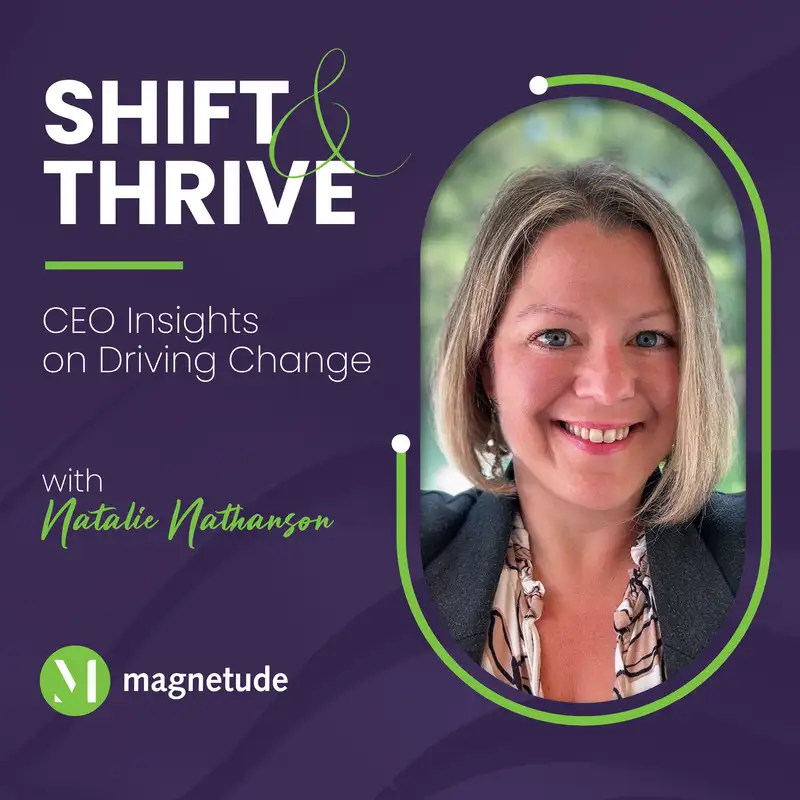
Natalie: [00:00:00] Welcome to another special edition episode on our investor miniseries on Shift and Thrive. This series is designed to help CEOs and founders explore what drives conviction, creates value, and helps companies scale through candid conversations with the people deploying capital behind today and tomorrow's market-leading organizations.
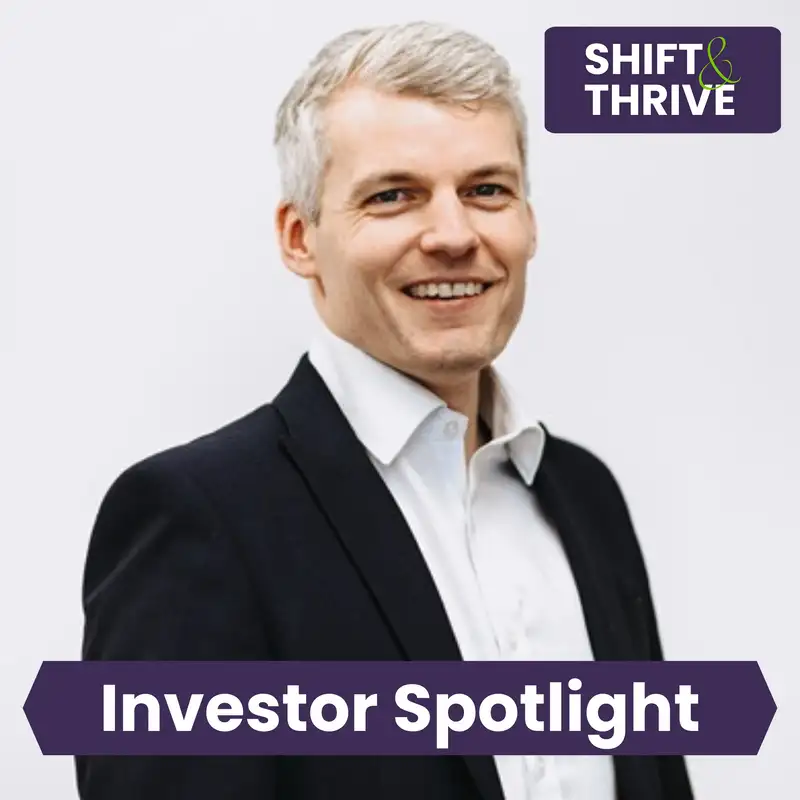
Today's guest is a founder turned investor who has spent more than a decade building and scaling his own IT services company before successfully exiting the business in 2022. Since then, he's become a trusted advisor, chairman, and investor across a portfolio of ventures, helping founders turn strong products and services into scalable businesses.
He's known for his practical approach to business building, drawing heavily on principles from EOS and Traction to help leadership teams improve their execution, profitability, and long-term value creation. His investments span areas including SaaS, cybersecurity, advanced manufacturing, technology services, and more, partnering closely with founders as they navigate growth, scale, and strategic [00:01:00] decision-making.
He's the founder and director of his private investment firm and holding company, Smith Born. And hot off the press, he couldn't stay away too long from being an operator himself and is launching a new venture next week, Maturable.io. So I'm very excited to talk to him about that. Paul Oglesby, welcome to the show
Paul: Thank you very much. Thanks for inviting me. Really appreciate it
Natalie: Yeah, it's great to have you. Uh, and I'd like to start with something, uh, that happened soon after you sold your, your last company. And you had shared, uh, I know some of your entrepreneurial journey online, and then got an overwhelming, uh, response from other founders around the world. So I wanted to hear, you know, can you t- walk us through what did you post and, and, you know, what, what ensued after that?
Paul: Yeah. So one day I was, um, I was just bored, as you are, and I just decided to, um, uh, log into Reddit, which I never really use that much. You know, never really understood it, but I decided to put- write a post, uh, on one of their popular [00:02:00] communities just saying, um, you know, "I built my, I built a business. Um, I, I, I achieved this amount of MRR.
Um, ask me anything." And, um, yeah, within about half an hour I had, like, half a million hits. Um, and it just kept going and going and going, and I forget the exact numbers now, but for, like, the next three days it was just nonstop messages in- into my inbox. I never quite appreciated, um ... You don't really appreciate what you've achieved until it's, you're, you're in front of it and it's behind you.
Um, and it was just really apparent to me just the vast volume of people that are trying desperately to scale a business and just hit issues and don't really know what, what the solutions are. Uh, but yeah, I was just overwhelmed by the amount that, that, that was coming back from one simple post[00:03:00]
Natalie: Yeah. I'm curious, like why do you think it struck such a nerve, and were there certain themes, uh, in what you were hearing?
Paul: Yeah, I think, um, just that, uh, the, the age-old thing of, you know, businesses are genuinely set up by people that are really good technically in one, one particular area. Um, and you know, I was the same in, on, on the same boat, you know. I knew I was really good at what I did, but it's only once you start running the business that, that you realize you have absolutely no clue how to scale a business.
Um, I was one of those people, and I think, you know, the world is just full of business operators that are brilliant at what they do, that don't really know how to scale. You know, they don't, they don't really understand how to be, uh, a CEO, which is in it- you know, a skill set in itself. So most of the questions, you know, were, you know, how did you build your sales team?
How did you build your marketing function? [00:04:00] You know, um, how did you cope with the stress? It was just... Yeah, it, it was overwhelming to the point where I think I d- I just put the phone down actually and, and just stopped reading it all.
Natalie: Yeah, it's amazing. I mean, I think of, um, uh, my own experience, right? I launched my, my consulting firm 14 years ago similarly, right? With the expertise in the discipline, but a lot of, uh, a lot of learning on the job. And I always say, like, in the early years had to, uh, reinvented the wheel unnecessarily too many times and things that I could have learned from others.
Um, and then, uh, over time learned there are times when you wanna reinvent the wheel deliberately because you wanna do things a different way and kind of your vision for the, for the company. Um, but don't, don't spend your time, uh, kinda getting bogged down by the things that other people have already figured out that can work just, just as well, uh, for your organization.
And I think we talked, uh, in the past about, uh, both having used EOS, uh, in our businesses. So wondering if you can talk a [00:05:00] little bit about that.
Paul: Yeah. So just to go back a point, so I, I started in Angar in 2007, and then, um, I was very much ... Although I built the team, built, built the business, the business was doing well, I was completely isolated and I, I had absolutely, you know, no real advisors, you know, no one, um, no one that was helping me through the problems.
And it wasn't until 2014 when, uh, one of my customers said to me, "This is what you want to do," and it was, it was go to a particular business school in our, uh, in our, i- in England, um, that's designed for people like me, and it just opened up my world, um, that everyone's fundamentally got the same issues.
You know, no matter the, the market they're in, everyone's pretty much fighting the same battle, and it's just so much easier if you can surround yourself with people that are on the same, uh, you know, on the same journey. Uh, but then [00:06:00] fast-forward, so I, I, I went on this journey where I exposed myself heavily to lots of CEO peer groups, um, big American organization called Vistage, uh, you know, I was part of their, their, uh, one of their UK groups.
And I went on this journey, and it was only once someone had introduced me to a peer group specific to my industry where we all shared our financials every quarter and we, they benchmarked everyone against each other. Someone sent me, in the post, they sent ... This book just arrived on my desk called Traction, and I had, I had no idea who sent it, where it come from, but the note just said, "Paul, read this.
It'll all make sense." And I read this book, and I think I downloaded the audiobook and I just listened to the thing, like, five times in a row. Probably more than that, because I was, you know, just so taken with this thing. And it, to, for me, it just all the pieces of the jigsaw just fell in, [00:07:00] into place, you know, and it, and it matched my, my approach to business, which is keep things really, really simple, get the fundamentals in place, and then continually marginally improve towards, um, a set end goal.
So Traction was eye-opening for me, and we combined Traction with the benchmarking data in our industry, but also some other tools in our, our industry that helped us self-assess our business and then we could overlay the, the Traction operating system, um, to improve every pillar of our organization. And ultimately I, I, I, um, I, that book was fundamental to me and I absolutely preach it now.
Everyone that I work with, whether, whether or not they realize, sometimes I don't even mention the word Traction, I just get on and apply the th- you know, the theory
Natalie: Yeah. Um, sounds like we've had some, some similarities in that, in that journey [00:08:00] as well, uh, because I started joining peer groups I think around 2015, and Vistage, and now Entrepreneurs' Organization, and, uh, you don't know what you don't know until you're in it, and then you see kind of all the value that comes from that kind of sharing and, and best practice learning.
Um, and I personally love whenever I hear that a, a client is, uh, an EOS, uh, believer as well, because it gives us a shared language and alignment on kind of how, how we're, uh, kind of building our businesses, uh, that makes for, for a really great and successful relationship often
Paul: Yeah. And where, where... It's been interesting where I've, since I exited my business and I've gone to help other, other owner-operators, the ones that maybe don't read the book, you ask them to read the book, they don't read it, um, they don't really want to implement it, but they have nothing similar in their organization.
You know, they're not looking at key metrics frequently. They're not meeting with the leadership team. They don't really know which direction the business is pointing in. [00:09:00] Uh, they're just constantly firefighting. Um, it's, it's such a, it's such a important book to read is my honest view for everyone. You know, even if you only take a few things from it, like, you know, any business book, uh, Traction is brilliant
Natalie: Yeah, yeah. Uh, I'm curious with your, uh, with your investor hat on and the companies that you've been advis- advising the last, uh, handful of years, are there certain fundamentals that you feel are kind of the biggest blind spots, uh, for founders?
Paul: Um, I think, um, the, the common problem I see, uh, and in the last four and a half years I've, I've had exposure to completely different sectors. You know, manufacturing as you, as you mentioned. Um, you know, s- certainly a number of SaaS companies. Um, and the, the key theme is nearly all of [00:10:00] them just don't have that fundamental objective or goal in mind.
And un- unless you do, you don't know where you go. You know? So pretty much everyone I, I, I work with... So I, I, I, I, um, I'm a non-exec for, uh, an international recruitment firm that, that's, um, significant in size and they've done amazingly well, but the owner-operator was never clear where it, where it was going, so he never had a clear plan in mind.
It was just, "Let's just keep growing, let's keep scaling." Um, but it was only after, um, he actually decided, "This is exactly where I want the business to go," that he put all of his energy and focus into hitting that goal. And all of a sudden, part of that fundamental goal was making, uh, a decent profit in the business and that focus [00:11:00] and energy all of a sudden they started making really, really good money because they were making all of the right decisions around, "Okay, we're gonna, we're gonna obviously deliver a great service but we are gonna make money." So I think the common theme across all of them is just have a cr- just have a, um, a really clear plan of what the end goal looks like
Natalie: Yeah. We often talk about starting with the end goal in mind, and that can be kind of what you're looking for for the ven- the venture, right? If y- you know you're looking for a near-term exit, for example, what you do on the go-to-market side looks very different than if you're kind of in it for the, the long haul and, uh, plan to launch kind of different kind of services or, or products, uh, along the way.
Um, and you know, of course, the best laid plans can change and evolve as the m- the, the market shifts and new opportunities present themselves. Um, but giving the team that, that clarity and alignment is so, so critical.
Paul: Yeah. And I think just to extend the answer, I think [00:12:00] the, the other thing as well is, as I mentioned earlier, people genuinely set business up 'cause they're really good at what they do, and then they're fairly isolated, as I was. So you don't really know what you don't know unless you go looking for it, and that's, you know, that's definitely a, a trait across the board.
People genuinely really excel in a few areas of their business, but there's other b- areas of their business that's quite weak. Um, so getting people to understand, uh, where they're really strong at and where they're weak at, and then focusing on making gains in the weak areas, you know, that's, that's, that's really, um, been important in the success the, the companies I've been involved with have, have had.
Um, and sometimes it just takes that external, external view. And I was the same when I ran my own business. It wasn't until I had a very experienced chair, you know, come in and point out some pretty obvious flaws, um, that I [00:13:00] knew that, you know, I had to make some improvements
Natalie: Yeah. I'm curious if you, uh, kind of the companies you advise, do you ever get, uh, resistance to the things that kind of to you, uh, feel obvious? Um, and if so, kind of how do you navigate them and kind of what, what works?
Paul: Yeah, that's, that, that's been the biggest, um, biggest area, the unexpected area, I think, since I exited my business working with business owners. The, the common theme is, you know, we- you, you've ... obviously familiar with you can lead a horse to water, but you can't, can't make it drink. Um, you know, very often in my mind the solution is really, really obvious, and it's taken me a long time now to actually a- adapt my own expectations on taking someone on a journey.
Natalie: Mm-hmm.
Paul: You know, and [00:14:00] sometimes it does take repeating the same message every week, maybe in a different way, um, because genuinely, you know, and I, and I, I was the same, you're so stuck in your own ways and your own ways of doing things. Sometimes people have to realize or think that the idea is their own. And if, if you just repeat the message to them in different ways subtly, eventually they'll get it.
And then, you know, what I find is that, um, I've had to, you know, learn what, what... you know, a decision that I would make or I think is obvious, let's make the decision now, you know, and we'll start seeing results in a few weeks. It doesn't work like that when you're advising other people. You know, it might take a year, it might take 18 months, it might not happen.
Some people just, you know, um, have their own, own views of doing business. Um, and obviously, you know, in these different [00:15:00] sectors, people have, have got, um, far more knowledge on me on what, what works and what, what doesn't work. But yeah, I think learning my own, um, reset my own expectations on working with others has, has, has, has taken a long time
Natalie: Yeah. Yeah, for sure. I mean, I think there's, um... You know, when I think about some of the work that, uh, that my firm does around some of the go-to-market, uh, foundations, you know, if you're talking about new, new messaging or changes to how you're going to market, um, that's like a very personal thing often for founders of, you know, the messaging is what they pour their blood, sweat, and tears on, like if it's an early-stage company, uh, often themselves.
Um, and so it is kind of bringing f- folks through a journey, and then I think the more you can point to, uh, you know, what customers say, what the market is saying, um, which I think goes back to your kind of benchmark data too. It's like, "Here, here's what your, your peers are doing. Let's, let's look at what this, what this means for you."
Paul: Yeah. One, one of the business, [00:16:00] the brilliant businesses that I've invested in and work with is called ReportURI, which, um, is how I met you guys. So, um, you know, I've worked with Scott, the founder operator now for the last, um, last 18 months, and that's, that's an absolutely phenomenal cybersecurity SaaS business that Scott's done a brilliant job of building up over a number of years.
Um, and essentially, you know, Scott's always been brilliant at finding new customers by essentially blogging and putting himself out there as a, uh, as the expert he is. But to accelerate growth, you know, I knew that we needed, um, external help to take a full refresh view of our go-to-market strategy. Um, I spent months trying to find the right people, came across you guys, and we're, what, three months now into our engagement and, you know, the, the optics look, look really [00:17:00] good.
But I had to take Scott on that journey, um, and his, his partner Nick, taking those guys on the, on the journey of this is the right thing that we need to do. Um, and the critical piece there is just looking at the metrics. So, you know, with particularly a, a, a technical operator that Scott is, you know, he's making all of his decisions purely on, on data, which is great.
So, you know, any decision that, that needs to be made, it's just got... If we can underpin it in data, then, you know, that type of operator understands and agrees.
Natalie: Right.
Paul: yeah.
Natalie: Yeah. It, which goes back to, I think, speaking the language of the, the person or kinda team that you're, that you're advising and what will resonate with them. And I think especially in areas like marketing, it can feel very, uh, soft and squishy, especially to technical leaders. And so br- bringing the data and, you know, the, the market validation, I think can, can [00:18:00] make a big difference
Paul: Yeah, 100%.
Natalie: Yeah.
Um, I'm curious if there, you know, in your shift, uh, from, uh, operator to investor, are there any, uh, areas that your perspective, uh, really shift- shifted in, in how you think about certain facets of the business, just having a little more distance from the day-to-day?
Paul: Um, I think, um This is no good for your edit, but I can't think of an answer
Natalie: That's okay. We can, we can always edit that out. We can skip over that.
Paul: Did I give you an answer to that before?
Natalie: Um, I, I don't know.
Paul: No, sorry.
Natalie: No, that's okay. Shh. Um, so let me take us, um, okay. Um, so Paul, I'd love [00:19:00] to, uh, hear a bit, you know, once you exited your company, I know you've, uh, moved into investing, but you also spent some time, uh, pursuing some other passions. I wanted to hear what that journey's been for you
Paul: Yeah. So, um, when I had my business... So I, I ran an IT managed services business, which, you know, basically customers are paying for you to deal with their problems, and it's an exceptionally stressful industry to be in. Um, and I found that, uh, I need a way to, to have an outlet, and there's nothing better than, uh, race cars for that.
So it turns out that, you know, when you're doing 130 mile an hour on a racetrack, you just can't think about any of your business problems. Um, so yeah. When I, um, when I was running my business, I decided to invest in a race car and invest in coaching. Um, and then I [00:20:00] spent, I spent a number of years at a racetrack, um, entertaining clients.
You know, so, um, uh, I used it as a, as a business tool, uh, plus, uh, my own mental health tool. And then once I sold the business, after a year, I thought, "All right, I need another challenge." So I decided to start racing, you know, properly in, in, uh, in the UK in, uh, in a championship over here. Um, but racing, like business, it's just become all, all-consuming for me.
So I've spent, you know, huge amounts of the last three years just purely focused on being a better driver. And, you know, most of the people that I race against are 25 years younger than me. Um, but it's been absolutely brilliant. It's such a, it's such a good thing, uh, to do, and there's so many parallels between getting good at racing [00:21:00] and business.
You know, that sort of focus on attention to detail, constant, you know, uh, micro gains. Um, and it's so rewarding. And also, it's been brilliant for business as well, 'cause you find that racetracks are genuinely people that, uh, own or operate businesses. So I've ended up investing in companies o- off of the back, like Scott.
So s- you know, I mentioned Scott earlier. Him and I competed in our first season together, and then we just kick, kick- kicked off a, a really, really good friendship and rivalry since then. So yeah, I recommend it. If anyone, um, if anyone's struggling with business stress and they've got, got a little bit of money in the bank, then I'd recommend racing
Natalie: Yeah. I love that. I love that. I'm sure it's not for everyone, but I can certainly see the, the appeal of kind of when you're, when you're in the zone and you don't have the luxury to think about anything else. Um, I'm, I'm a big snowboarder, which not quite the, definitely not the speeds of, uh, of racing. Um, but [00:22:00] when you're, you know, you're going down, you can't really think about anything else.
You're just focusing on kind of what's immediately in front of you, and there's something very freeing about that
Paul: Yeah. It's interesting. I, the, the concept of snowboarding scares the hell out of me, but, uh, you know, crashing in a race car like I did two weeks ago, yeah, doesn't,
Natalie: and vice versa. So that would, that would scare the hell out of me. To each our own. Um, and you know, Paul, I know, um, you know, you've made the move to becoming an investor and pursuing other passions, uh, but you also couldn't stay away from, uh, from, you know, venture, uh, you know, starting a new venture for too long, and you're working on a new venture now that's actually launching next week.
Can you talk a little bit about, uh, what's behind that?
Paul: Yeah. So I, I mentioned that, uh, the, the thing that, that was eye-opening for me was when I ran my business, it was w- w- once we had the ability to upload our financial data to a benchmarking platform that was specific in our industry, [00:23:00] we got to see how we compared against all of our peers. Um, and parts of our business were brilliant, and parts of it we were lacking i- you know, uh, we were a long way behind.
So it gave the team and I a clear understanding of where we need to get better. Um, and then I mentioned earlier, you know, traction. We then combined it with a, um, platform that enabled us to self-assess our business and, and, and im- uh, improve and understand where we are across all pillars. So, you know, finance, marketing, sales, uh, operations.
Um, that was game-changing for us, and it, it enabled me... In the last three, four years of the business, it enabled me to take the business from what was an operational s- uh, maturity score of one, we took it to an operational maturity score of four out of five. Um, and then at the point of exit, we were [00:24:00] ready.
You know? So once we knew that we were gonna sell, we could approach due diligence, for example, knowing that the business, uh, was in a brilliant shape in every department. But by focusing on all of those, um, maturing all of those pillars, it really helped accelerate the growth of the company. So, um, what I've been working on in the background is a, is a, a, a new, uh, business called, um- Uh, maturable.io.
Um, Maturable is for SaaS businesses, Sa- SaaS business owner operators in particular, and it's off of the work that, that I've done subsequently since I exited my business and worked with various operators. It's the same theme. Every, every organization I work with, you know, they, they're isolated. They don't know, uh, what they're weak at, they don't know what they're strong at.
So with Maturable, [00:25:00] uh, what we're launching is the ability for people to benchmark themselves against others with some key financials. Uh, the system, um, asks a fundamental set of questions about your business across all the pillars, and it tells you, based on my own, uh, methodology and everything I've learned over the last 20 years, it, it tells you what the value is of your business, current market values, how you compare, and the steps that you need to take to improve the business based on your specific end goal, whatever that is.
It might be sale, it might not be. Um, so I've been working on this now in the background for some time, and we're launching it next week. Uh, so key, a key thing to mention, if you don't mind, is, um, um, we've had a number of SaaS owner operators testing it. Uh, feedback's really positive so far, but I'm looking for some more, uh, SaaS owner [00:26:00] operators to, um, to, uh, help trial the platform and give me some feedback to m- improve it as we l- look to launch.
But as you said, you know, I couldn't, you know, I couldn't sit on the sidelines for much longer and, uh, you know, I knew, I know that at some point I'm gonna stop racing, so I needed something else to focus on. And this, this had such a powerful impact on, you know, my business and the s- the, the exit I had that I'm now effectively...
I've wrapped up everything, and I've, I'm ma- making it available on one platform
Natalie: Yeah. Yeah. I love that, and it does seem like a really nice, uh, combination of all the things that kind of you've learned both as an operator, uh, experience as an investor, and the things that helped you, and now be able to bring that, uh, to others. I'm curious if you're, if you have a specific type of, uh, customer in mind.
Like, is it for kind of the early stage? Is it across the life cycle? Where are you thinking kind of the, the best value comes in?
Paul: Ori- originally we... [00:27:00] It was quite a large window, so we were looking at, uh, operators that were between a 1 million ARR and, um, 20 million ARR. But what we've ended up happening is we've ended up having people test the platform that are pre-revenue. We've had people test the platform that are, like, $60 million ARR.
Um, so we've ended up broadening, uh, the audience, the target audience, and we've actually removed all the references to the types of the size of organization that, that will benefit, and we've tailored all of the advice. So we, we now... It now asks you, you know, how, how, how large your organization is, how many people work there, you know, what your revenue is.
And once it learns about your organization, the advice that it gives you is now very specific to your size and your ambitions. So w- we've actually... You know, [00:28:00] I know that, you know, you're supposed to specialize obviously, you know, in, in, you know, w- in business, you know, the quicker you specialize, the quicker you, um, you can become an expert in that field.
But what, what we found is that the advice at the top and the bottom and the middle of the market is... We've had really good feedback from everyone so, you know. But, you know, it is, it is very much at that, you know, beta stage test at the moment. So we're gonna learn, and we're gonna, you know, keep learning and, and keep tweaking and improving the platform over the coming weeks
Natalie: Yeah, yeah. Well, and there is, you know, always so much learning to be had in those, uh, early stages. And I know we do have, uh, SaaS founders and CEOs in our, in our audience. So if you're hearing this, uh, please, uh, go check out Paul. We'll add the information in, uh, when we, when the episode, uh, launches. Um, I'm curious, Paul, if there are things that you're approaching differently in how you're building this business, uh, after [00:29:00] kind of with the experience that you're coming in with?
Paul: Yeah. So I knew... We- You know, I was, I was running an, an IT managed services business, and you've got exceptionally long sale cycles. So, you know, some of them are maybe two, three-year sale cycles. Um, huge amount of competition for what, what, what we did. Um, it was very expensive winning a customer. It was then, you know, you then realized that once you'd won a customer, winning them was the easy bit.
You've then got to keep them happy and retain their services. Um, so it- it's like rolling a, you know, a snowball uphill. It's just really hard to do. And it was only after I left the business that, you know, I, I had exposure to various different sectors, and I just absolutely fell in love with the s- the, the SaaS market.
You know, w- we had, [00:30:00] um, maybe 50 customers that were... All of them were, w- w- were, were a lot of value. Um, and the top 10 customers were exceptionally, you know, a big chunk of our revenue. Um, but what I love about, uh, the SaaS market in particular is, is simply how, you know, you can scale rapidly o- on a relatively low cost base. Um, and all of the same lessons that, you know, I learned from the IT managed service space, they're all applicable to SaaS. It's just SaaS, you can turn the dials much quicker up and down. Um, so it's really taken all of the, the lessons from my career and, and trying to execute, uh, in a way that is highly valuable to the customer base.
Um, and, you know, if... I think [00:31:00] as it worked for me, there's no reason why it shouldn't work for, for others.
Natalie: Yeah. Yeah, for sure. Um, well, and I think there are so many, like, important metrics and benchmarks for SaaS companies to keep an eye on, especially these days with AI where there's so much opportunity, uh, to kind of build and scale fast. But also because of that, and maybe this is, can bring it back to your race car analogy, you know, a quick move in the wrong direction, uh, can send you on kind of a very bad trajectory as well
Paul: Yeah, and what I found with, uh, with Report Your ROI in particular, we were trying to compare ourselves. I was looking for industry benchmarks, and there are, there are two or three big organizations that, that do, you know, surveys, quarterly surveys or annual surveys. But, um, there just isn't enough data in there for me.
Um, not the data that we had in the IT managed service space. So I'm trying to build a database of, you know, benchmark data that we can then... people can then compare themselves against a much larger volume [00:32:00] of other SaaS organizations, you know, anonymously. Um, 'cause to me that is so much more valuable than, than just getting a report off of online that's from 30 companies
Natalie: Yeah, yeah, for sure. Uh, well, I can't wait to see, uh, see that, uh, come to life with the launch. So we'll be, we'll be rooting for you. Um, Paul, we only have a, a few minutes left. I would love to ask, uh, if you think back throughout your career, what's the best piece of advice that you've received or the one that's maybe stuck with you the most?
Paul: Um, uh, the one thing that always comes back to for me was someone said to me that even if you're not planning on selling the thing, you've got to build a business with the exit in mind. know, even if you're planning on running this business until, you know, you die of old age, you need [00:33:00] to have a, an objective of exiting, 'cause if you do that, all of the decisions that you make, you make, you know, operationally you make...
You, you, you automatically tick key boxes. You know, you, you remove yourself from all the day-to-day detail. You know, you're, you're not... You know, one of the risks is having too much concentration in your customer base on, you know, too small a few customers. You know, you solve that problem. You, you know, build a management team.
You, um, you, you essentially just make all the decisions like one day you're gonna step out because you're gonna exit. And if, if you, if you're gonna exit a business, obviously to maximize value, you need to make sure that, um, the buyer thinks that they can just take you out the business and the thing keeps running without you.
So even if you're not planning on [00:34:00] selling the business, pretending that you are will force you to make much better decisions
Natalie: Yeah. Yeah. That's great advice. I've definitely, uh, seen that, uh, internally and, uh, with, with other companies, and so I, uh, I'm, I'm glad you brought it back to that. Um, so thank you for that. And, uh, as we wrap up the conversation, if someone wants to get in touch with you, what's the best way to do that?
Paul: Um, probably through maturable.io. Um, so feel, feel free to, uh, message me through there. Um, and then, uh, I'll receive every email. So yeah. Thank you
Natalie: Perfect. Perfect. And hopefully you'll be, uh, getting some, some good feedback as you, as you launch that from other, uh, SaaS executives. Um, thank you so much, uh, Paul. I really loved hearing so much of what you shared and the discussion around the importance of fundamentals, the importance of learning from, from peers, whether that's benchmark data or in a peer groups.
[00:35:00] Um, and very excited to, uh, to see the launch of Maturable. So thank you for everything you shared with us
Paul: Thank you. Thanks a lot. Appreciate the invite, Natalie
Natalie: My pleasure. Uh, and to our listeners, if today's episode, uh, sparked something for you, and I'm sure that it did, please pass this along to another leader in your network. We know that these are the kinds of conversations that help all of us scale smarter, build stronger, and create, uh, more, uh, resilient and scalable companies.
So thanks again, Paul, and this has been another amazing conversation on Shift and Thrive. I'll see you all next time
Creators and Guests