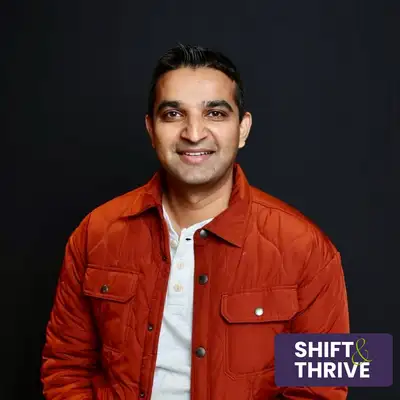
Clarity, Alignment, Trust - Sangram Vajre - Shift & Thrive - Go-To-Market Deep Dive - Episode # 078
S&T_Sangram Vajre
===
[00:00:00] In today's business world, change is the only constant, and mastering transformation is the ultimate key to success. Welcome to Shift and Thrive. I'm your host, Natalie Nathanson.
Each week we'll bring you conversations with CEOs who delve into how they successfully drove critical change in their organization. This show is sponsored by Magnitude Consulting, bringing you the thinking power of a growth consult. And the getting it done, power of a full service B2B marketing agency.
Natalie Nathanson: Welcome to another special edition on Shift and Thrive as part of our go-to-market spotlight series. If you're a CEO or business leader wondering how your go-to-market strategy needs
to evolve right
now to
meet today's market
realities, this episode is for you. And I can say you are in for quite a treat today with a very special guest I'm so excited to introduce to you.
He's one
of the most [00:01:00] influential voices in modern B2B Go-to-market strategy. He's built companies at the forefront of GTM innovation
from helping to
pioneer account-based marketing as a co-founder of Terminus to leading marketing as
the CMO of
Pardot during critical growth stages for the organization.
He
is also an acclaimed bestselling author of Move The Four Question Go-to-market Framework,
and he's the
creator of the
Flip My
Funnel movement, reshaping how
companies think about
their buyers revenue, alignment and growth. Today, he leads a company that helps B2B
and SaaS
companies, uh, really think about how to invest in their go-to-market as a company-wide operating system.
He is the co-founder and CEO of GTM Partners, Sangram Vare, welcome to the show.
Sangram Vajre: Thank you, Natalie. Excited, and I know this, you've been doing, you've been at it for a while. Your experience at Forrester and all of those things make a lot of sense and, uh, I, I think. Go-to-market is evolving as, as we think about it. I remember you talked about the book. That book [00:02:00] was written in 2021. We, we sell more copies of it now than 21, which tells that Go-to-market is just continued to be more and more important.
But what's interesting is, is that I personally believe that having written the book, I've become a student of Go-to-market. It has evolved so much. So I'm excited for this conversation.
Natalie Nathanson: Thank you. Thank you.
I am as well. And I think you mentioned an important point, right? Go-to-market is evolving, it's getting more attention. Um, I think, you know, with that, one of the
things that, um, I've
really noticed is depending on who you're talking to, Go-to-market can mean very different things.
And I was in a room. Uh, with a, a client, CEO and a number of other executives, and, uh, realized each was looking at it from a different vantage point. And so even aligning on like what is Go-to-market, I think is an important starting point. Um, so would love to start there. Uh, kind of critical, but, but, uh, but basic, um, how do you define Go-to-market?
And then would love to talk about,
you know,
how you think CEOs and other executives should be [00:03:00] thinking about it in today's market.
Sangram Vajre: You got it. I, I think this year I've done about 18 keynotes and every keynote. That is my favorite question to
ask because
it's so fun. It breaks the ice, it gets people thinking about it. And I, I would go around the room. I love to just jump in, just have conversations with people. So I would jump around and ask people a question and I'll get like three people, you get five different answers, right?
Because you are just building upon each other. And, and that is a tough question also, uh, before I answer that question, is off the 51 or 2 52, I think we had about 52, 2 questions that we asked. CEOs, executives, um, uh, we CPE form leaders as part of writing the book. Two questions that were the most debated, Natalie and the most contested
were Who owns Go-to-market and how do you define Go-to-market So both of them are by far, still today, the most contested and debated questions in, conversations that people have. So there's a bigger definition in [00:04:00] the book, and, I won't go through all of it, but I can help people think through that and define it in two words.
And it is, Go-to-market is a transformational process. That's it. Everything else I can add. Well, marketing, sales, and everybody needs to be aligned. Customer success and rev ops should be part of it. It is in the, in the benefit of your customer, you should have frictionless experience. But ultimately, I think the best, biggest place where people get it wrong is they look at that as a project or a SA or a one offsite where you go and write something on whiteboard and that becomes your go-to market, quote, unquote plan or strategy.
But it's not, and that is very important to understand because once you start looking at go-to-market as a transformational process, what it demands of you is, okay, every time you're making a decision, in Go-to-market It is gonna transform your business one way or the other. And it's a process. It's not a, [00:05:00] there's no finality in it.
You, you have to go through and say, well that tried, I launched that and that worked, but that didn't work. Every day, every organization makes our research shows about 20 to 30 Go-to-market decisions. They just don't know that they're making Go-to-market decisions. And we can go through examples of it, but at the core of it, it's a transformational process.
Yeah.
Natalie Nathanson: I love that definition, right? Simple and, uh, so impactful and, uh, simple in its words, but then putting that into practice is, is far from that, right? Because there are so many, uh, moving pieces, and I like that
you talked
about it as an ongoing process. Um, I think there's a lot of different implications as far as the approach that
different companies
take that at the outset.
They're not necessarily thinking about that. So
I wanna ask you,
um, you know, what, how do you see. The process of figuring out
a company's
go-to market in today's environment. If you were sitting in a room with [00:06:00] a CEO,
what
would you tell them to start?
Sangram Vajre: Well, first and foremost, the question will be who owns Go-to-market? And Natalie, I want to get your thoughts on it. You've been at Forrester, you obviously have been working with a lot of CEOs and not just doing interviews, but you practically are working with lots and lots of companies to help them. I wonder what you think about who owns Go-to-market.
Natalie Nathanson: Yeah, I think it needs to come from the top.
So, uh, the CEO ultimately needs to be the driver of that. And as I said, the implications of which approach you take and kind of how you Go-to-market, I think has so many implications of how you
structure an organization, but
then I do think it really needs to be, you know, sales, marketing, product, customer success, like all these pieces, uh, coming together.
So, uh, tell me what you think about that.
Sangram Vajre: It is true, it is the high, the most contested question, right? One of the twos, and it is you, you're absolutely right. The CEO has to own, Go-to-market. And when we sit in a room, like you mentioned, we do [00:07:00] that several times through our advisory work. We have, uh, 70 plus certified partners who do that, and we teach the process of doing it.
One of the things that you, we have learned in the process of sitting in a room with the CE in the room is, first of all, if you're running a Go-to-market. If the CEO, especially if you're in the early stage or less than 50, a hundred million dollar business, the CEO has to be in the room. There is no GoTo market process, ICP conversations or what pricing packaging or what product positioning without the CEO in the room.
I think a lot of people miss that they don't have the CE in the room. So that's number one. If the ceo e if you're listening to this and you're a CEO, or if you are someone who's helping you, gotta make sure that the CEO e recognizes that they truly, as an Natalie said, owns Go-to-market. And the first thing we ask, typically, as part of our process and advisory work is what stage of the business are you in?
And we help define that. We have an assessment, [00:08:00] we have them do this, but practically speaking it is, are you in a problem market fit? Are you in a product
market fit
You're in a platform market fit. We call it the three Ps in the book. And the reason it's so important, Natalie, because if you don't know what stage of the business you are in and the executive team doesn't align on it, you are in for big trouble.
For
example,
we have done over, I would say, over 10,000 companies that have gone through our assessment now and not once. And in the rooms that I've been in, not once it has happened, where everybody's on the same page. Not once. I wish I could say like, oh, that one company. not once. And, at that moment, you realize that the problem is not figuring out your ICP or whatever the problem is that at the highest level, as you said, you do not have the three most important things that you need in order to drive your business, which [00:09:00] is clarity, alignment, and trust. Those things stay above every tactic, every strategy that you can build as a business. So if I'm in a room with the executive team, the CEO has to be part of it. And in order to build clarity, alignment, and trust, we all have to understand and agree on what stage of the business we are in and start making decisions from that perspective.
Natalie Nathanson: Yeah, I think that's so true, and
I think
a mistake I often see companies making is when they do, uh, you know, assign it to sales, assign it to marketing, and you're not getting that full picture, um, you're, you're doing that organization a disservice. I really like what you're saying about thinking of the different stages because it does need to look different.
And I know a lot of our listeners on the podcast are, Um, not all necessarily like early stage, um, but often are, uh, kind of newer at that full Go-to-market motion, even if organization has been around for a while. [00:10:00] Um, don't necessarily have kind of all of that like alignment and like programmatic approach across marketing, sales, and then the other departments involved.
Um, I'm curious if you have any stories that come to mind from organizations, either where you've worked or advised, um, of how, uh, how they've transformed their, their Go-to-market maybe for one of these. Uh, you know type of scenarios.
Sangram Vajre: Oh, I, I'll I'll
tell you a, um, a sad story about it and then, uh, and then also heroic story around, it's a sad story about it and it's top of mind because, uh, and I posted about that a few, few weeks ago on LinkedIn was a CA CMO friend of mine. Uh, she posted on LinkedIn about three or three and a half months ago.
About four months ago, like she said, that hey, we, we, we, she generated about 20 million pipeline and she was writing about it on LinkedIn. Our team is kicking butt. We are doing incredible things. We are gonna have a blockbuster year and all that, right? Which, what you would expect, uh, you know, uh, uh, you know, and, [00:11:00] and this is about a, you know, awesome startup company.
And two weeks later she dms me and says, Hey, I got laid off. And I'm like, well, wait. I just saw. And so I called her up
like, Hey,
what's up? What happened? She said, yeah, we generated this 20 million pipeline. And, and it, it so happens that that pipeline was for the wrong ICP.
I'm like, wait, you are the
CMO of the company.
What do you mean wrong? ICP? And she's like,
well,
we have three product lines. The, uh, the ICP that was generating the highest amount of pipeline was for customers that were lower value customers, and they were churning much
faster.
And our goal is to actually focus on these other segments. I'm like, well, so the 20, how much of that 20 million pipeline was for that particular, she said almost 80% of it.
I'm like, so 80% of your pipeline was for a wrong ICP. How did it, how did you not see the red
flags with that? And
then she's very, very well, like, she's done. [00:12:00] She said,
we
just never had that conversation. And the executive team, my executive team, my CEO, literally said, Hey, create pipeline. All pipeline is the same.
And when we just didn't spend the time as an executive team on ICP, they just said, Hey, it's your job. You figured it out. And that. Maldi, I don't know how many times that kind of story comes across is, and it's unfortunate is that if you are an executive in the room, you have to understand ICP. It's not a marketing job or a sales job or a CS job.
It is an executive job understanding what are your top segments. Not all pipeline is same. The pipeline from the segment that actually drives the highest retention is a better pipeline than a pipeline that is, that's gonna turn over a period of time or experimental
or a tested
pipeline. All these questions are business questions.
These are not marketing or sales questions. And, and I think I see that. So it was a very sad story. And, and,
and, and,
and she's back and she's now running some fractional work right now. And [00:13:00] now she's so much more business focused. She's like, I'm not gonna focus on campaigns. I'm not gonna focus on events.
And, and, um, as the first thing I want to do, I'm gonna actually ask business questions. So I, I say quite often is that every executive is a business leader. They happen to be in marketing or sales or CS for like 10, 20 years. That makes them really good at their craft. But ultimately, you're a business leader, so you have to take a step back, uh, from time to time to make, make those things.
So one is just understanding the business, the economics, uh, uh, and what works and what doesn't. Because some things could be shiny object or early success, but it's actually not true success. So that's, that's just a sad story. I, I can pause and get your thoughts on it if you hear things like that all the time or
it's is one off.
Uh, but that was like, that, that hurt me a little bit deeply because I know the person, I know the company and I'm like, it's, none of them are bad. It's just, just, you just missed something that is so obvious that.
Natalie Nathanson: Yeah, I think it makes me think of like the [00:14:00] purview that different, uh,
kind of
functional owners are in, right?
Marketing if you're not looking enough from
the business side,
uh, but you're doing a great job
with what
you were chartered to do but then hadn't connected
the dots, which
I think is similar. You know, on the sales side, someone could,
uh,
be a tremendous sales leader, but might not be thinking about you know, the long term viability of certain kind of paths to market or things like that.
So I think it does go back to, uh, what we were talking about earlier
of needing
to start, uh, from, from
the top
of the organization and the CEO needs
to have
that involvement. And then I know when we're working with, uh, with clients and really trying to understand all of the business kind of drivers and levers and including, like you talked about, the ICP.
is getting into the depth of the data and not just kinda what should be sold and to whom, but looking at right profitability across
the different
segments and lifetime value, and really like digging in to all of the data that impacts the Go-to-market in order
to make
those decisions. And then after you make those decisions, making sure [00:15:00] everyone is kind of aligned and understands kinda all the different roles that need to come together around that.
Sangram Vajre: it's, it's hard. It's, it's, it, this, this is hard work. I, I don't think
that
in 2026 people are gonna be like, well, we kind of figured it out. Now AI is gonna solve all my problems. Like, I was literally, it's two weeks ago, Natalie. I was in a room where I said to, this is about 300 people. And um, um, and asked the question like, well, how many of you guys are using ai?
Everybody raising their hand, right? And then I asked, okay, how many of you are using AI for productivity? Everybody's raising their hand. And I'm like, okay, well how many of you're productive?
Nobody
raised their hand. And I'm like, wait, like, doesn't that sound like a problem over here? Like, we're using AI every restoring product to be productive and nobody feels like productive.
What's missing? The missing is
we are so ingrained
over the period of time. Somehow we are like programmed to start with projects. Start with actually the, the, the last part of it. Like, okay, I wanna write [00:16:00] copy. I wanna create my LinkedIn post, or I want to do an event summary. Or, I like all the things we are using AI for, which I think is very rudimentary in from where we are gonna be in in the next six, 12 months.
And nobody's lab, not a lot of folks starts with what's my strategy? Where are we trying to go? And yes, these things might help me get better, but if I don't know where I'm trying to go, I would never prioritize. I would never be able to, to focus on the things that actually ends becoming the best. Result and best pipeline if I haven't spent enough time.
So it's the hard work
of 2026
for most executive teams is gonna be sitting in a room or a virtual room consistently. And as an example of that, Henry Shucks, the CEO of ZoomInfo, he's a client, of ours. I asked him like how often he is a publicly
traded company?
right? Um,
and I asked him like, how
often do you meet as an executive
team?
Do you want to guess Natalie? Like how often do you think a CEO of a publicly traded company meets [00:17:00] his executive team?
Natalie Nathanson: Uh, I would hope weekly, but
at least, but I'm
guessing that may not be the answer.
Sangram Vajre: It's not the answer.
I
was shocked. He says, daily. And I'm like, wait, what? Like, I mean, you must have a hundred things to do. Like how, do you meet daily and how your group, he's like, look, I want my executive
team to know
how I think. So when I meet with them every week, I'm actually talking real time.
What's going through my brain. And they're also, we are all discussing, and some days are more, hard than the others, some and slowly the meetings become less and less intense
and they become more and
more conversational decision making. And we are slow. Almost every day you make a decision as opposed to on a Friday, you have to make a decision.
By that time you get to Friday, people almost know 80, 90% where they're gonna land if there was a decision
to be made because they're talking
every single day. So it meets with this executive team every day. And I said, when did you change it? I think you changed it like a [00:18:00] year ago or something. And he is been a CEO for 10 years now.
And he said, we used to do monthly, we used to do biweekly, we used to do weekly, and now he does one. So by the time, if I'm letting somebody go on the executive team, everybody knows he doesn't have to create a whole agenda and talk eight meetings behind. Now everybody knows that, oh, we're meeting and seeing this person every day of the week.
And after two months, if things are not clicking, that person won't be sitting there. Like something is gonna change. So the, the transparency goes back to the three things that most teams crave for is clarity, alignment, and trust.
Can we be clear about
the
bets
we are taking? Doesn't matter if it's right or wrong.
Is it clear? Is it, is, is is it aligned with what the CEO and, and w why we are doing what, what we're doing? Are we aligned that If it works, great. If it doesn't work, we'll we'll figure something out. But are we aligned that everybody got each other's back for a period of time for that particular thing?
And do we have, do we trust each other that everybody's gonna do their best job in it? [00:19:00] That is not an AI answer. That is literally psychology.
Um, that is, that
is needed. So I was shocked by that, and that's why Go-to-market
is even
more important now than ever before in the way we think about it.
Natalie Nathanson: Yeah.
Yeah, so true.
I mean, I think those are like the ingredients and the foundations that you need, uh, at that executive level to then kind of push through like the different facets of the organization. And you talked about kind of ICP
as one
of the core foundational areas. I feel like I'm often talking about like the strategic and the operational foundations that an organization needs to have in place and how much more important that is.
Uh, in this, in these days. And with kind of AI and automation, like you said, the temptation is to jump straight into kind of how do we drive efficiencies? What are the latest tactics? And I think foundations can sound very, uh, like the non-sexy side of, uh, of the business. Um, but I think they're more important than ever.
And we talk often about, right, not just ICP,
but then your
positioning,
your [00:20:00] differentiation.
What are your organization's unique assets at your disposal? So I'm curious, like, how do you think about that in, uh, in your work? And are there kind of, what are the core areas that you wanna make sure an organization is kind of working through as they're
building this?
Sangram Vajre: we, uh, so we write a research note. It's called GTM Monday, uh, about 175,000 leaders read it every Monday. Like CEOs like I, I I think we have pretty much have the most CEOs of B2B. We are focused very heavily on B2B, um, but across the board, manufacturing, supply chain services, all
that.
And we invented,
uh, about three years
ago after the book was written in 2021, Natalie, about 22, 23.
As we were helping companies, we realized that they needed a more operating model of running this thing. So we created the GTM operating system, uh, in 2022. And that, that's where we have 10,000 plus people, uh, have gone through over 70,000. Um, companies have gone through the program and the process. And what's [00:21:00] interesting about the operating system is it's only eight questions.
That's it. It, it, it, it, it's not, I wish, I wish in the process would come up with some brilliant thing that would, it, it's not, it's actually eight questions, but eight, the most intentional question they can be. And I'll, I'll just give you an example of one or two of them. Um, and if somebody wants to look,
it's on
Substack GTM Monday, people can look it up. The first question is, where can you grow the most?
That's
the first question.
And If you think
about it, it sounds very simpler, a simple question. But for the most history of go-to market and business world, when growth at all cost was the thing, the question that we asked was, where can we grow? We didn't have the intentionality of the most in it.
And that's one of the key questions. So we have surveyed and researched as a research formed so many companies and we find that. Companies that have clarity on these eight questions are the ones they end up [00:22:00] becoming really, really huge.
I've done that with
Snowflake, I've done that
with HubSpot,
all of these companies, right? And what's interesting, they're not perfect. They don't have the right data all the time. They don't have the right mechanisms and all the stuff, but the clarity on these eight questions is phenomenal. Every time I ask the CEOs of the, they, they just know the executive team is just aligned all at that level.
So that's my biggest ask of people. If you can do anything as part of your planning and everything is get aligned on these eight questions. And the reason the, the first question I'm, I'm using is, is a really interesting one. Where can you grow the most? The most really invites debate. That's what you really want.
You want a healthy debate, edit. What does that mean? What? What do you mean by the most? That's what the norm natural question will come. And you want that? Not just where can we grow. So the most will say, well. In the case of that, uh, CMO I was talking to, she would've asked
like,
well, is that the, the, is that the, the,
people who would buy that
product, do they stay longer?
Can it, should we grow the most because we have a higher gross margin [00:23:00] on that one? Do we have a better NRR, um, on that particular thing? Or do we have enough people to, to sell in that particular segment in the marketplace? You'll start debating all these questions. Do we have a point of view that positions and supports that kind of growth that we are talking about in that particular sector?
Do we have customer success or any kind of process or system to support people? We, when we grow the most in this particular area, do we even have reps who can actually talk to that particular segment? So all these things that are actually the most worthy way of looking at it. I'm not even debated in.
Most
time people
go at it, stumble around and they jump around and like a ping pong from problem to product to platform because they haven't answered these eight questions and they, the, the, what what we found in our research, Natalie, which was fascinating, was these eight questions are the same no matter what stage of the business you're in, problem, product or platform.
But the answers could be dramatically different. As an early stage founder, as you can imagine, [00:24:00] where can you grow the most? Well, anywhere where there's a pulse and, and then you know, I
just want new clients, right, because you're
trying to figure it out. So you don't need to be elaborate about that. You just. Need to answer that. As you become a product market fit, you would say, okay, well we are doing really good in the health sector and in healthcare, and we need to, to continue to grow in that, but let's try this. And now you're in the experimentation to move into platform. In a platform you could say, whoa, 80% of our customers are in this particular segment with these integrations.
So we know we need to be healthy and grow in that. And can we grow the most in that? Can we do more? There can, and now we need to really start adding because we are too concentrated in one area. We need to diversify and do other things. So now the answers are so different based on what stage of the business you are in, but the questions remain absolutely the same.
And I, I, I think it's been one of the most fascinating revelations in the process of our research for the last two years.
Natalie Nathanson: Yeah. Yeah. I love that. And I love the simplicity of the question and then just how much complexity there [00:25:00] is in Answering and like you said, healthy debate. Is it the audience, is it the offering?
Is it geographic? Is it, where do you play strongest against competitors? Um, and like facilitating that discussion at the kind of executive team level is what the teams need in order to all be rowing in the same direction.
Sangram Vajre: It, it, it is. I'm, I'm, I'm curious, Natalie, in your experience, the do, when you talk to CEOs, do you see them wanting, inviting these healthy debates, or
do you think that they're
el trying to get to decision and, and
saying marketing,
you go do the sales, you go do that?
Natalie Nathanson: Uh, so I would say I'm a, a bit biased in what I see because we aren't kind of the, the typical, uh, marketing firm where, okay, tell us, you know, you, you
need leads
or you need help with that campaign and then go execute. we do start at the same level that you're talking about of let's make sure we have the right strategy in place.
And
so it
is CEOs that I think have a, an openness, either they recognize they need to revisit their strategy, [00:26:00] something they were doing before, uh,
isn't working the
same way or looking to kind of, uh, accelerate growth
or something
like that. Or in some cases, uh,
kind of technical,
uh, founder that is fantastic
at what
they do.
Uh, But Go-to-market is newer for
them. And so
I would say, um, the openness to having these conversations and being, uh, you know, open to thinking differently and exploring different directions and
let's look at
the data and let's look at, you know, what are our competitors
not doing,
where we might
be able to
focus.
Um, I would say there's a very healthy openness to it. And then when you see those and the first mo uh, first elements being put in place and some early kind of traction
or positive
response from the market, then the light bulbs really go off. And then it is kind of a. Uh, uh, a cycle that continues to foster more and more of that inside the organization.
Um, but it's a new motion, I would say for a lot of organizations and, uh, functions that maybe are not typically as [00:27:00] exposed to it, right? Like
HR might get
involved in some ways finance might get involved in different ways.
Um,
so I do think you kind of, it opens, uh, opens the eyes of some of the other executives that are not typically or historically as close to it.
Hey, this is Natalie, your Shift and Thrive host. After chatting with lots of CEOs, one thing is crystal clear. Leveling up your company means having a killer Go-to-market strategy. That's what my crew at Magnitude Consulting does every day. If you're trying to step up your marketing game, whether it's strategizing, accelerating your pipeline, expanding into new markets, or getting into AI and automation, let's talk.
No pitch, no pressure. Just good conversation. Visit shift and thrive podcast.com/natalie to schedule a time. Can't wait to connect.
Sangram Vajre: Yeah, and
you know what, what's interesting as you're talking to us, thinking about this as, as a CEO myself now, and as we build a $7 million business now doing [00:28:00] advisory work and helping other people build their own business, one of the most fascinating things for me as part of the, I was A CML for, for a number of years, that Pardot, you know, as you said earlier, with Salesforce and then, um, then building Terminus, uh, then I still a CML co-founder and this will be my first fully going into the CEO for the last five years.
And I think as I moved in from, um, a functional role to a co-founder role to a CEO role, the biggest. Shift for me is just, just, just like, just like when I think about marketing is that I wish I would've learned the business of marketing more than the marketing, the
business.
I
was so, I'm
so,
I was so infatuated, if you will, with the idea of leads and campaigns and, uh, direct mail and SEO and pay-per-click and all of those things that I was in love [00:29:00] with marketing and so I did, I understood I was just marketing the business in every area, in every way.
And then as I gradually grew in my life and my career and, and, and build, starting to think more on the operating side of it, I started to understand the
business.
of marketing, the business of sales, the business of Go-to-market at large. And the stark difference between people who do really, really well is that there.
Incredibly curious about the business of it. It's like, well, how does that work? Like what works and how, how they, they're always asking questions and knowing questions to a point where you and the, you have to simplify it. You have to dumb it down, and that's when the, the clarity comes. That's when the alignment comes.
That's when like, oh yeah, let's, so that, those are the aha moments that have, so as a, so I, my encouragement to everyone around when they start thinking about is like, man, just learn the business. Whatever industry you are in, whatever stage you're in, if you can understand the business, things are lot [00:30:00] more simpler when you start making decisions.
Natalie Nathanson: Yeah,
I love that. And the other thing
you made
me think of, if I
can add
onto
that, is understanding the other functions that you work with most closely. Like, I think in hindsight
and my
own career, I started in marketing and have spent most
of my
time there. Starting my marketing
consultancy 13
years ago was
my first
time really in a sales capacity.
You know, but that said, I had led sales enablement initiatives. I led a built in of a
sales enablement,
uh, department that didn't exist before, but I'd never been in sales. Like At the time I was super excited and appreciative of the opportunity. But now as a, as a leader of an organization, I wouldn't put someone in that kind of a role.
So having these
kind of
rotations where, okay, spend three months in sales if you're a marketer and vice versa, I think gives that kind of an appreciation that makes everyone better for it.
Sangram Vajre: No doubt it is. So it is like, just a complete sidebar personal story here. Um, my son, he's [00:31:00] 15 and he plays tennis. He is out doing his
tennis thing
right now. And I'm like, dude, you gotta get a job. You gotta, you gotta go get a job because
you can't.
He's like, he's like, and he's virtual school because he does four hours, five hours of tennis.
And I'm like,
so there's nobody
like Chick-fil-A, nobody would hire somebody for like, inconsistently coming. You, they need somebody who can consistently come for four hours or three hours a day.
Uh,
did, I don't know. You just need to figure out a job. And so he's been like online trying to figure out what kind online jobs he can do.
And he just found this, this idea that, hey, you actually can call local businesses around where you are and ask them who don't have a website or, and a virtual assistant to get bookings. He, you know, you can call them. And now, because it's so easy to build a website, it's easy to add a virtual assistant, like basic stuff, 10, $20 a month, you could actually charge $500 to them.
So he and his friends for the last two weeks have been like, literally cold calling. Literally, I, I can watch them cold calling [00:32:00] and he, you know, and they're like getting shut down couple of times. Cursed at call and he is like, nobody gives money. I'm like, yeah, you
understand that.
You know, like money doesn't grow in trees.
And what's, what's inspiring for me to just see that is that he has probably made that he and
his group
has made about a hundred calls in the last two weeks. And they are constantly pivoting and I can see them. They started talking about websites. They're like, well, they don't care. The restaurants don't even care about websites anymore.
They care about, they're all on these affiliate places. So that's how they get business, not from Google. Uh, as such, we need to just sell virtual assistant then. They look at, well, you know, they don't even understand virtual assistant. It's too, too cryptic for business owners. They're busy. So they're using different words now.
Instead of saying virtuous AI assistant, they're saying that, Hey, would you like to make sure that anytime anybody, so they're dumbing it down their sales pitch as opposed to a virtual AI assistant, like the business owner at a [00:33:00] restaurant who's just trying to keep the lights on. He, he, he or she's thinking like, I don't want anything that I don't understand, right?
And then they're trying to figure out the pricing and offering and they're like, well, should we do this free? And I'm thinking, they're literally going through problem product platform, like phases as we
speak and every day.
And
it's so fun to watch that experience. And the reason I brought that all up is because I think there is a huge advantage on experimentation that, that we don't really do.
We have to experiment. We have to. Be the one. So as you are talking about like well try to be and and understand other roles. Actually I would maybe take it one step further and like do other roles. Be an S big if you're a marketer, become an SDR R for a day and start picking up the phone and get some empathy around how it is.
And you will learn very quickly
that the pitch, whatever
you created that sounds
fancy, actually doesn't work
because when you're on a cold call and the person doesn't understand what you're talking about, your fancy [00:34:00] marketing spiel is not gonna work. You have to dumb it down. So stuff that is absolutely 2026, I feel more people will need to become more raw and simple and clear and actually do the work as opposed to coming up with a beautiful slide deck with all those things to really understand what works, what doesn't.
Natalie Nathanson: Right, right.
I love
that story. I think everyone
has the tools
right now to make things sound good and to quickly, uh, kind of make those kind of tweaks, but sound very polished and professional and all
of that.
What I love about your story is, you know, the interaction is what actually drives the, the impact and the improvements, right? You learn or you're tweaking the language,
the pricing,
the targeting, um, and
the fact that
a teenager, uh, is, is learning. Learning that lesson means all the rest of us can definitely, uh, can definitely embody that.
Sangram Vajre: Yeah. I told him like, dude, if you can take the hit for a hundred calls now, you're gonna be just fine. You don't need to [00:35:00] worry about anything in life because if you can take rejection well, and he's like, why did that person curse me out? And he is 15, and I, it hurts me, but it's also like, yeah, that's just real life.
Yeah. You're annoying to them. Like, why am I annoying? Because I don't think you are. You're doing a, how long are you talking? He's like, well, I'm telling everything about us and what we are doing. Like, well, you never did you ask. Then what do they want? What will create the business? So now he's shortening the amount of time he speaks to, the time he's asking question, but not just generic.
Like, Hey, tell me more about your business. Like, not that, saying that, Hey, well, well if he, if I can add two more, uh, uh, two more appointments every day, will that change how like he is, he's learning to add elements that will get that conversation that creates that, okay, well what are you talking about again?
And then, then that's a good, if somebody says that now you gotta call.
Natalie Nathanson: Yes. Uh, I
love
that story. I.
I was in, um, my son a couple years ago, so he is in sixth grade now. He was in
fourth grade.
And I did, uh, it was like a [00:36:00] parent, uh, you know, career, career day. And I said, what am I gonna teach fourth
graders about
B2B marketing consulting, and how do I make it interesting for them?
And I actually took them through an exercise of kind of, here's a, a product. Let's think about kind of the audience, the messaging, the, you know, and I was so impressed with.
even what, you
know, nine year olds could do. Um, I, we definitely need, need more of that in the
Sangram Vajre: And they don't have jargons, like, you know, they would just say it as is and, and,
I think we all need to learn from that. So when I look
at, and as a exercise that we have our clients sometimes do, is we will literally pull up their website in three of their clients' website or competitor's website. And if they all say the same thing, I'm like, you already lost the plot.
Like is, is, is, that's like the highest level. There is nothing that is everybody's saying. Faster revenue. I'm like, who else wants, is there a website that says lower revenue? Like people get you less leaves and less volume and less sales and less
capacity. And
they, all those words don't mean anything. [00:37:00] So what does it mean?
And then sometimes, because I've been on G two board and I, I know the backend and all of them, I'm like, let's go and look at your reviews and we'll look at re oh, that's a, a real sentence. Somebody wrote and said, you, why
don't you use
that sentence? Well, it's not proper like perfect you. I'm like, doesn't really matter.
It it that he or she's speaking and it's said eight different times in your a hundred reviews. That phrasing is coming so don't polish it. Actually use the same exact phrasing the way your client actu the people who love your
per say, so
we have to, in many ways, Ali, I wonder, we have to humble ourselves to realize that we probably don't have the best answers.
Probably don't even have the best words.
If
you are blessed enough to have clients and customers, your clients are gonna tell you exactly what works and why they hired you and whatnot. We just need to go back into,
stop being in the box of
Zoom where we are telling and having internal meetings. It's, it, it like [00:38:00] one of the best things that I've, I feel like I got to do, and I learned that from Scott Dorsey, um, who was the CEO of ExactTarget when they acquired Pardot, and then ExactTarget got acquired by Salesforce.
So that's how I got into Salesforce ecosystem. And he said his head of product and him, they committed in their, what they call V two Mom, their, their OKRs, the, the way they looked
at metrics
that they will have a, they will talk to a customer every single day.
They would never not
talk to a customer even a day when they're working.
Sometimes it's 2, 3, 4 times. So the head of product prom is that I would talk to a customer every single day. He said, uh, and, and it came about because we asked like, what made you so successful? And we are just going through all our conversation.
Every day.
we, our product was never too far or too little.
Our messaging was never too far, too little. It was, you're talking every single day. That was part of every single executive's role. It not to your team. You talk to a customer, a real customer, every single [00:39:00] day. This is game changer for me.
Natalie Nathanson: Yeah.
Well, and it's the way to make sure that what you're putting out there resonates.
You're getting away from
that buzzword.
Bingo and Uh, right. All of that. Um, you know, I wanna talk a little bit more about what's changing in Go-to-market right now. And while we're on the customer, an area that I feel I'm, uh, you know, beating the drumbeat, but not always, uh, I don't know, not always breaking through, is what's changing with the buyers and how they want to buy and, and all of that.
So, wanted to hear like, how are you thinking and talking about that?
Sangram Vajre: Buyers are still buying the same thing. Uh, I think it's not changing. They want faster, cheaper, better, uh, whatever version of whatever you're selling. So I think to simplify it, it's still exactly the same. Um, but we are in a really interesting place where we are very,
almost everyone has
probably 80 tools that they're testing and playing around with, and therefore it
creates this.
Uh, [00:40:00] this arbitrary, not truthful version of the future for these 80 companies that, that people may be trying, that they're all gonna be successful and in reality, only one or two of them are gonna be successful. They all, the rest 78, are gonna fail because people are gonna test it and they will go somewhere else.
Um, great example of that is, uh, superhuman. I, I use the superhuman email. They got acquired by Grammarly, and now Grammarly, uh, actually renamed their company to Superhuman. Really interesting. The company you acquired, you actually turned the name of the, the acquired company's name as the main company name.
And I look at that, I was listening to their, uh, their press release and all the details. And I, I, I think what's changing Go-to-market is, is really how do you position yourself in your clients and your customer's mind is gonna be incredibly, incredibly important if you do not make them in their client's minds that you're better.
Faster or cheaper version of whatever they're trying to [00:41:00] get to is
just not
gonna work. So I would actually focus on not what's changing, but what is unchangeable. And if we, and that's a much shorter list. It's really a list of three. Um, because the changing world is drowning us, it's actually making us paralyzed for decision making.
It's, it's making us overworked and we always feel behind. But if you think about better, faster, cheaper, I think it, it would be be phenomenal. Uh, an example of that one, Natalie, I, I
remember
an interview that, uh, I didn't do it, but I heard that interview. I was very close when that interview was happening with Simon Sinek, who, who wrote, um, you know,
the Why book,
right?
And, and he was, he spoke the same year at the Microsoft Conference, and this is before Microsoft actually became cool again. But he spoke at the Microsoft conference and, and then he spoke at
this, the Apple Conference.
And at the Microsoft Conference, um, when he was with their executive team, they [00:42:00] were asking, well, you're speed at Apple.
What are they doing? What's changed? What's different? They're asking that question all the time, like, what is Apple doing? And then when he goes to the Apple Conference and the executives that they were in, he, they never asked about Microsoft. And then Simon being Simon, he's like, Hey, uh, do you know what Microsoft is building?
They're actually, tooling is actually much better than yours and the, the way it's all. And they're like, oh, I'm sure it is. And they moved on. They never focused on the competitor. And he's like, well, why didn't you ask me more questions? And they said, well, because we are building for the customer. We know for a given time, they may have a few more features, and we may have less, and we may have a few more that it's, we are not, we, we are paying the long game in, in this whole thing.
So if we all can in Go-to-market, we can go through very specific pricing, packaging tactics to ai usage tactics, to all of these things. Ultimately, I think if you can't play the long game in it, I think that's, that's the winner. And nobody's [00:43:00] talking as much as I can see about that. Everybody's talking about a new
tool that
can solve all worlds hunger.
And then when I go in a room and ask questions, how many of you productive? Nobody raises their their hand, which tells me that we are focused on the wrong things. Go back to what's
unchangeable. How can you provide
incredible value to your customers by making it better? Faster or cheaper. Those three things have never changed from the beginning of time that we can, we can now
go
to market.
Natalie Nathanson: Yeah. I think it's a great thing to anchor around. And I'm curious to ask you for the things that, you know, some of the things that will
not
change, what are the things that you do believe will look very different a few years from now in Go-to-market than what they, where they are today?
Sangram Vajre: Yeah. I, I think some of it, and I'm curious your thoughts because you're, you're in it as well. I think, I think I would, uh, I imagine that, um, instead of the software rise that we have seen, we wrote a research on this, uh, instead of Rise of Software as a service, I think the
flip is
gonna be Rise of services [00:44:00] as a software.
People are gonna say, give me the outcome. I don't care what tool you use, because there are too many tools. I I'm not trying to be an expert at tools. I'm trying to be expert at my business. So the rise of services as a software, the software is on the back end, not the front end is we believe is where the future is moving.
There's just too much. The product by itself is no longer the moat. That's the number sec, like the top research, Adam, that we, we found out because everybody and anybody can build a product tomorrow. Um, even if you have the best product today, tomorrow, somebody can white coat it and copy the whole thing and build that product.
So if product is no longer your moat, then it has to be your go-to market better, faster, cheaper. Like that has to be a version of it. The number three part of, uh, of the, the really interesting research, uh, around go-to market showed us that people
are, there is
a very near term. There is gonna be a future where we all will be.
Laughing [00:45:00] about username and passwords that you have to log in into 20 different systems to do what you need to do. Every company is gonna have their own chat, G-P-T-L-L-M version of it. But at 2:00 AM in the morning, if the CEO is waking up and saying, I wonder what our pipeline looks like in London right now, he or she will be able to do that without logging into a CRM or a marketing automation or emailing, um, annoyingly to another sales leader.
And because AI doesn't have emotions, AI doesn't really have all of these, these versions of like departments and all that stuff. They're just, it's just gonna help you figure out whatever the answer is over there. So those are like some of the top things and changes that we see in the future.
Natalie Nathanson: Yeah. Yeah.
I think that like the interface for the user that you're
talking about,
right? Like all the data, all the software sits there behind the scenes. I think for all of us using these kinds of, like the current tool set, you can already see what's [00:46:00] possible. And so like filling that gap from what
we don't
have today, like just a very simple example, right?
I mean chat,
GPT have
it connected
to our HubSpot. The ability to like chat, to ask questions instead
of having to
go in and build reports and click around. The tool is great, but the functionality is still so limited compared to where I believe it will be
in, you
know, a year or two ahead. And, um, so companies right now getting
kind of
their data capture, right, their data strategy, right?
So that you're fueling, uh, the, the possibility for all of
Sangram Vajre: Yeah,
I, I really do believe, I wonder what you think about this, Natalie, but I think we're in the stone age of AI and what's possible. So we are all just happy campers doing little bitty things and still know that there's all these loose ends all over the place. Six months a year from now. If you do this web, uh, this recording again, oh my gosh, the world is gonna be so much more different.
And we're like, remember we talked about that and, and what's possible
now?
Natalie Nathanson: Yeah. Completely, completely agree. Um, Sangram, I know we don't have too much time left. I would love to hear maybe a [00:47:00] bit about you, uh, from the personal side Uh, with the time we have left and, um, knowing the amazing career, uh, you've built for yourself. Would love to hear like who were you as a child, were there any kind of moments
or stories
that gave you, kind of were indicative of, uh, you know, where your career would head?
Sangram Vajre: Probably not, you
know, probably not a whole lot. Well, I, all I could think about, I was,
I was,
we we lived in a joint family, so we had like 20 people around all the time. And I was the youngest of all the kids, so I was the fifth. Um, and as a result of that, I think. I, I do, I do wonder, maybe it is because if you're a fifth in the family, I don't know if you have any experience
of of that,
but like if you're fifth in the last, in the family, you, you are, you are always trying to be heard.
You're always trying to. Get attention and figure out because, and you're always learning a little bit faster than anybody else have learned [00:48:00] in that age range because you got four other people telling you all kinds of stuff and you have to, can't do it. So, uh, I I, I, I remember very early on that one of the most important thing that I was starting to do was just trying to try something different than all my four brothers and sisters did.
So if they were in sports, I did not go in sports. If they were good at academics, I sucked at academics. If they were, I, I just wanted to have my own path because I'm like, what am I gonna do? Every time I'd go, they was, oh, you're so and so brother like this. I lived in a small town. Everybody knew if they were in theater, I'm not doing theater, right.
So, ended up being a Boy Scouts version of it, which really made me outdoors kind of person, which really helped me think about how to think about, uh, just different things. And I was
very,
I was always. Trying to try, I was trying to be around other people a lot more than my own family as such, because I was like, man, what all these [00:49:00] brothers, they're gonna just beat me up.
So that allowed me to really think about community and be part of community and that's why I flipped my funnel and all I think about all those communities that I got to build or be part of it. It just became a natural way. Anywhere and everything I would do, I'll always build a community around
it.
Natalie Nathanson: That's.
And hear I do hear kind of ha making sure your,
your voice is heard,
uh, the differentiation and then as you were just talking about the community. Um, I think my last question for you, uh,
for today is
really like, where do you invest in your own personal growth and development?
Like, how do you stay sharp
and current?
Like
where do you go for information? Uh, I'd love to hear.
Sangram Vajre: Yeah, I mean, just, I, I, I wrote about a few days ago, I have personally, I have these, these four quadrants. I do this with my family as
well. I don't know if it,
oh, it's here. Uh, I, I actually
shared that
with a couple of folks and, and it's really this, uh, I don't know if you, you can see it. I'll just read it out in 2026.
It's four quadrants of how [00:50:00] I've learned, and this is
since last four years or so. Um, spiritual,
family, personal and business. And, and there's a reason for the order too. And I do this, I have my wife and my kids do this. All four of us do it. We are actually about to next this weekend, about to do our 2026 together.
Um, and like, you know, from faith perspective, just focusing and making sure that my, my faith is in Christ and how I think about that is so important and
everything around it. So it's,
I start my day from that perspective, uh, and then come back to family. Like there, there are a couple of things. I'm just making sure I do it on a very regular basis.
As a personal growth perspective, I'm probably, every month I'm in
at least one,
uh, book club, um, with with friends of mine who are also entrepreneurs and that forces us to talk. Guys are really bad at this in general. So that book club really helps us. And a lot of times you won't even talk about the book, we'll talk about business and other things.
So it helps you personally [00:51:00] grow. Um, and then from a business perspective, um, uh, if there's only one goal I want to take, um, most Fridays I want do what I want to do. So like this recording we are doing on Fridays, because my Friday's always blocked. Um, so I could do what I want to do. I can be on it, give all my energy
to it, or go on a tennis tournament thing with my
son if he has.
So I, I feel like that's what I want to, I wanna create a business that allows me to do that in a big way. So the spiritual, family, personal business is how I look at
it.
Natalie Nathanson: I love
that. I love that. Well, thank you for sharing it and this has been a wonderful conversation. So as we wrap it up, can you let listeners know how
they can
reach you if they wanna get in touch?
Sangram Vajre: Yeah,
I, I,
I post,
uh, a
few,
few times on LinkedIn. So LinkedIn is like the
best way to look at it.
Um, if you're looking into GTM, um, you should look at Go-to-market Monday. Uh, there are 175,000 amazing people who, who read it. Um, yeah. And those are two, two ways.
Natalie Nathanson: That's great. That's great. Well, I can, uh, attest.
Your content is fantastic. [00:52:00] And so I definitely encourage our readers to check it out. Um, and thank you so much for this conversation. I really loved hearing so much about your experience. Some of these
kind of core questions
executives should be asking and kinda where Go-to-market needs to sit in the organization.
So thank you so much for the conversation,
Sangram Vajre: Natalie. This was fantastic. Thank you for letting
me be part of
this.
Natalie Nathanson: Thank
you and thank you too to everyone who's listening, and if ~today's spark, ~today's conversation sparked something for you and
I'm sure
that it did, please pass
this along
to another leader in your network because we know that these kinds
of conversations
really help all of us scale smarter, build stronger, and create more resilient go-to-market engines.
So thank you again Sangram, and this has been another wonderful conversation on Shift and Thrive. I'll see you all next time.
That's a wrap for this week's episode. For show notes and more visit Shift and thrive podcast.com. A special thank you to our sponsor, magnitude Consulting, bringing you the thinking power of a growth [00:53:00] consultancy and the getting it done Power of a full service marketing agency to help B2B companies fuel their growth.
For more information on magnitude and to get your complimentary transformation readiness assessment, visit magnitude consulting.com/. Get ready. Thank you so much for listening. We'll see you next week.
Creators and Guests