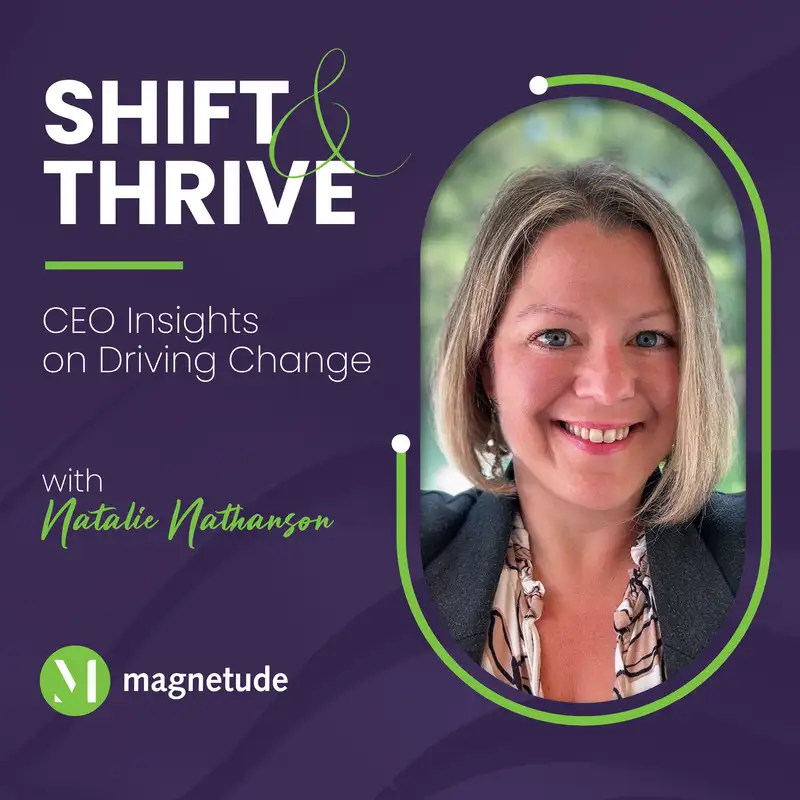
Lead Your Industry With Data and Emerging Tech - Don Berchoff - Shift & Thrive - Episode # 117
S&T_Don Berchoff
===
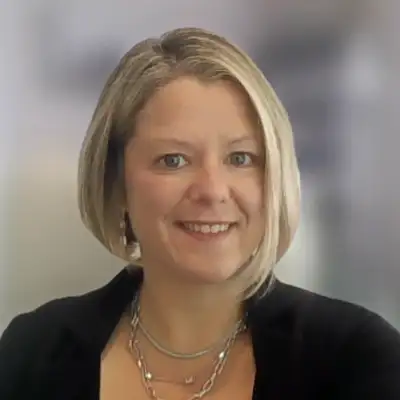
Natalie Nathanson: [00:00:00] I am here with
today's guest, who
has one of those careers
that gives
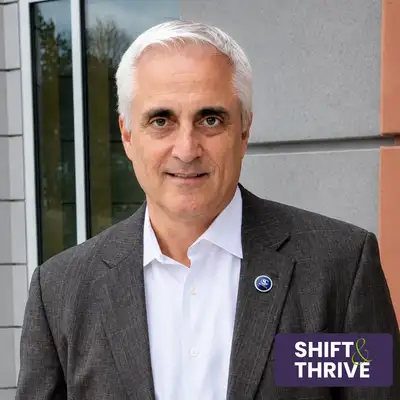
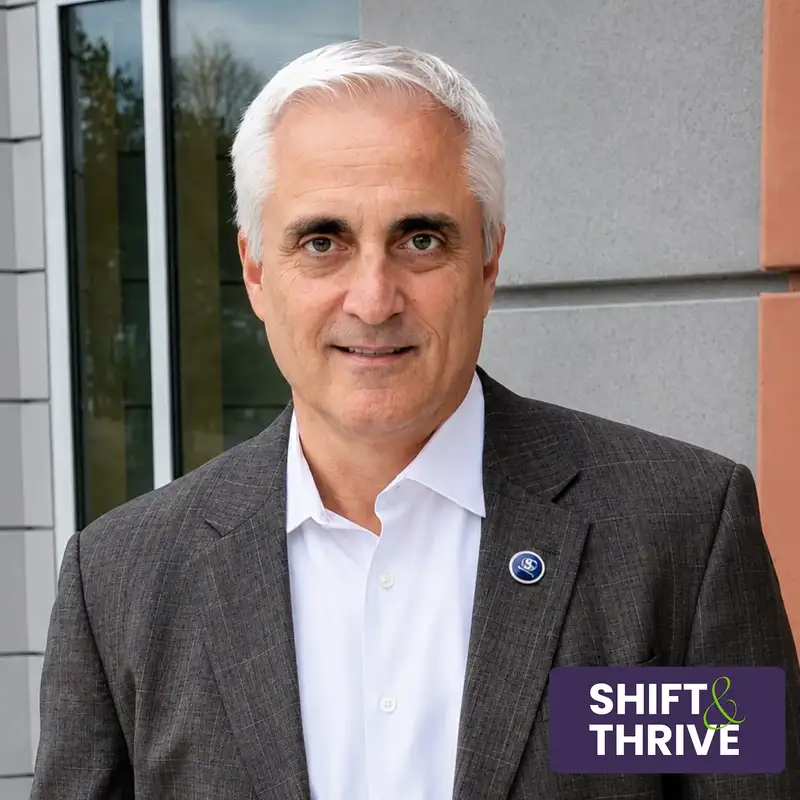
us a lot of interesting areas to unpack. He is
a technology
entrepreneur and pioneer in the weather industry who has spent more than four decades at the intersection of meteorology, technology, and leadership.
He started his career in the US Air Force, where he served for 24 years before leading science and technology initiatives at the National Weather Service, and later helped shape
the future
of weather innovation across both government and private industry. Throughout that journey, he has continually reinvented himself from forecasting with paper maps and typewriters back in the day to building AI-enabled technologies and pioneering a new approach to hyperlocal weather intelligence.
Today, he's helping transform the future of autonomous aviation by building infrastructure that enables drones and air taxis to operate more safely through precision micro weather data. He is the founder and CEO of TruWeather Solutions. Don Berchoff welcome to the show.
Don Berchoff: Wow, Natalie, you're making me sound [00:01:00] old, but I guess that's the purpose of this, to show how somebody old can still maintain
relevancy, right?
Natalie Nathanson: And h- highly, uh, highly seasoned and expert in your field, so
Don Berchoff: Oh, thank you. Thank you very much for that.
Natalie Nathanson: I'm,
uh, excited to dive in, and I really did wanna start the conversation talking about some of the, your personal pivots and transformations as the wender- weather industry and kind of the associated tech has evolved.
So can you start us off by just kind of taking us back to some of those earlier stages of your career and kind of then walk us through how you've adapted alongside the tech?
Don Berchoff: Well, it's really amazing 'cause
it, the adapt- adoption really was also a cultural or a, uh, a mindset on my part. You know, I came out of school, I wanted to be a weather person. This was, you know, 1980s. I had my degree in meteorology, and I went to the Air Force, and I just wanted to forecast. I just wanted to forecast.
And, you know, when technology was a nuisance, you know, for me because I got used to, you know, becoming really good at doing what I [00:02:00] did with just paper maps, as you said, and, and having this imagination of how the atmosphere flows. And, you know, I had really good instincts for weather. And so, you know, now they were starting to say, "Well, we want you to use this.
We want you to use that." Now, keep in mind, I didn't... You know, we used a typewriter when I came in, right? There was no Word. There was no any of that, right? We didn't even have really good satellite imagery. Um, and so my first challenge was they put me in charge of testing out a new satellite, uh, uh, digital satellite display, and we...
I was used to using paper, and I could see the, the... It just didn't have the same quality, this digital display. And I said, "I can't use this. This is not giving... I can't see the detail I
need,"
just like they did on D-Day, you know, in the movie Pressure. I had to see my detail. And so my boss came in and said, "Well, then tell us
what it is that's not right about this,
and write it up, and we'll get it back."
And it was at that moment I realized I could do that. Yeah, [00:03:00] you could do that. You're, you know, you're allowed to do that. And I think that was the first wake-up call that this was gonna be a, a, a, a big change coming up in the years, and I, I could influence it, and I just had to lean in and not be, you know, thinking old school but thinking, "How am I gonna impact and help this technology accelerate in a way that's really gonna help forecasters?"
And I think that was my aha moment
Natalie Nathanson: You're making me think of, um, different examples in society today, and I think, like, I think of my, my kids in school and kind of teachers with, like, AI adoption. Um, and I know some are latching on, and others are, hey, like, the the nuisance kind of sentiment of, "We don't need this."
And I'm curious to hear from you, like, what's helped change your view of, uh, kind of tech adoption? Like, you talked about leaning in. Like, how do you decide when a new technology, um, or market shift is, you know, been significant enough that you should kind of change your behaviors?
Don Berchoff: Yeah, it's a really good question. Uh, you know, [00:04:00] I think I'm the kind of person that doesn't like things done to me. I like to do things to others. So therefore, uh, you know, I like to lead, right? Because then I can control the environment by which that adoption is gonna occur. And I think, you know, that's a personality problem I have.
You might say that's a, a control problem, but, but really it's about trying to not make my life disruptive. Let me get ahead and, you know, be the leader. And I think when I see that coming, when I see something coming, I'm always sensing and paying attention to what's happening in the industry. I, I do a lot of reading.
I stay up on top of new technologies. I meet with a lot of small businesses that are doing new technologies, especially if they're applying to, like, NASA for what we call the small business innovation research grants. And I keep my ear on it. And if I see something that I say, A, is relevant to my company and what I'm trying to accomplish, which is building this crowdsource, low altitude weather shared [00:05:00] awareness using lots of different types of sensors, which are much different than it was back in the day when I was, you know, looking at that digital picture that was upsetting me 'cause it wasn't, you know, it wasn't good enough, um, I'll, I'll start pushing, pulling that, that rope.
And then the next question I ask myself is, what, what technical readiness level is it? Is it something that, you know, is at the point where I could grab it and help them integrate that into a system in a way that we can get it out to use in production or in operations? 'Cause that's the hardest thing is research to operations.
It's the valley of death we call it in science. There's so many great ideas, and then they never get across the valley of death. And so that also comes back to my weather service days where I watched all this great technology that was being built, and we could not get it into weather forecasting. And it's a bigger problem than people understand.
Our [00:06:00] technology is really more advanced than what we're seeing today in our daily weather systems. And that lag is significant because, you know, time is speeding up now, and we wanna stay ahead of the societal problems of weather, and it, it's impacting our ability to do that. And that's what really got me thinking about the drone and air taxi industry, which we'll talk about why am I focusing on that, because there is no good weather system today to support those.
And new science and technology and getting that integrated quickly, and new data sets, and new sensor types, and new data fusion, and even AI and ML are gonna be the solution. But it's not gonna happen quickly by the government because they can't pivot that fast. It's gonna have to come from the private sector.
So that's the kind of signals I look for in deciding I'm gonna go all in and, and learn something and make it happen
Natalie Nathanson: Yeah. That's really helpful, and I like your kind of sentiment of, uh, kind of be the leader versus kind of be led. Um, it makes me think of a quote that my colleague and I have kind of [00:07:00] passed around and kind of have plaques on our desks with, uh, saying, "The only way to predict the future is to create it," right?
Don Berchoff: Exactly. And I don't like chaos. I mean, I'm actually, for a guy who's a risk-taker and an innovator, I actually like, you know, I like n- I don't like chaos. I like to try to control chaos if I can. Now, that's stupid. Obviously, I can't control all chaos. But
i- if I'm in the wake of
somebody else who's leading, and they're doing things that are kind of dumb, and then I'm forced to follow that, that's chaos, right?
So when I was, uh, you know, three years in the military, I went to a colonel's house for dinner with three other lieutenants. And I remember this. I said to him, "Ah, I'll be happy if I'm just a major, and I could just do my forecasting."
And he looked at me and said, "No, you're not, because you're gonna have idiots leading you, and it's gonna drive you nuts." And again, I, at that time, I was like, "Ah, you know, I don't really understand that. I can't relate to it." But, you know, that is, not idiots, but, you know, [00:08:00] having other types of people leading that maybe don't share the same passion, value, technology savvy that you have.
And, you know, you wanna shape it, right? You wanna be doing the future, not being done to you and then being in that chaos.
Natalie Nathanson: Yeah, yeah, which I think is one of the beauties of entrepreneurship. I've always said,
like, success
or failure, like, rests on me in my business. Well, obviously other team members as well- but, um, there's, you know, responsibility but also a feeling of control, right?
That, uh, you have nobody to blame but yourself if things
Don Berchoff: Yeah, and it's a lot of risk with that. And you gotta, you know, I always tell people, if you wanna be an entrepreneur, you better make sure that you're comfortable with not having all the answers, and you gotta... And there's gonna be times when it's gonna get really challenging, and you're gonna have to phone a friend.
And I would say if you don't have the networks to be an entrepreneur, think about that because you are gonna need help, right, along the way. There's
always [00:09:00] gonna be challenges- that are gonna
come up, and you gotta know it's gonna happen. There's gonna be things you just don't know, and, and, and things are gonna happen to you that you can't control 'cause I can't control everything.
I can't control the geopolitical situation. I can't control if Congress is gonna cut budgets on programs and projects. I, you know, I can't control the economy.
So, you know, there's always a lot of things that
you can't control, that you have to have the resources and the tools and the ingenuity to figure out how to get out of it, right?
So,
Natalie Nathanson: yeah. for sure. Uh, you mentioned, uh, kind of your military, uh, service, and I know you'd kind of spent a while, uh, before coming into entrepreneurship. So I'm curious if there were any parts of kind of moving into private sector or kind of specifically becoming
a founder that was kind of hardest for you to kind of learn or shed
your military
background because, because of that time, or did it just feel very natural?
Don Berchoff: You know, the one thing about me, I guess
now that I think back, I was always an entrepreneur, right, in the military. [00:10:00] And, and folks who don't maybe understand how the military works, it's, you know, it's really centralized command control, decentralized execution, right? So they give you a lot of room to solve problems at the local level.
And so I was kind of an entrepreneur. So I actually had enough room to practice some, uh, some, some clever techniques and things to try to figure out how to do things better in the weather business. Um, because, you know, I was under a lot of pressure to match,
you know,
try to inform how weapon systems and all this is gonna be impacted by weather, and we didn't wanna miss opportunities.
We didn't wanna use more assets. We didn't want weather to cut de- make delays, miss targets. So you had to be a little entrepreneurial unless you like getting yelled at all the time for not making good forecasts. And so I don't like getting yelled at, so it makes you work harder. But, um, I think the biggest change...
So I think when I... You know, my military experience, my weather service [00:11:00] experience, my program management experience, my knowledge of systems, my knowledge of sensors, my knowledge of models all served me, of course, very well when I started the company in 2015. But the one thing you don't realize how, um, difficult it is, is, is either raising money or, or, or getting clients.
Because in the weather service and in Air Force, I always... My clients had no choice. They had to use me, right? Um, I mean, we were the only game in town, and you could be very entrepreneurial, and plus there was money to do research and test and fail and not really hold... The consequences aren't on your bottom line, right?
It wasn't like they took the money out of my paycheck. I mean, sometimes I wonder
if we should
do some of that. But bottom line is, is that once you really get into the entrepreneurial world, a lot of ideas are good ideas. Um, you have to be [00:12:00] very careful about the risks you take, and you gotta figure out the business models there, and you've gotta make sure you can deliver because it's your money, and then you wanna be able to take care of your people that work for you, give them raises.
You have a lot of responsibility. And I think I used to take care of people in the military, but I didn't have to worry about
giving them their paycheck out of my bank account, right? So that's the big thing I think that took time for me to adjust to.
Natalie Nathanson: Yeah. Yeah. That is a shift. And I think I wanted to talk a little bit about your leadership style, and I think about something that we touched on, uh, when
we've spoken
previously, um, was around kind of your, your conviction around a vision and how that's, like,
helped you
recognize, uh, when there's something new and kinda how that fits, uh, where you're trying to go, how that fits kinda
how you
bring the team along.
Um, I'm curious to ask kinda how do you develop that vision and, you
know, specifically
with the, an underpinning of kind of knowing when to shift your vision or, like, when to, to hold strong regardless of kinda [00:13:00] what you see around you.
Don Berchoff: , Vision is something, you know, that I developed over my time because I was a ground, on the ground weather person. I have really deep operational experience. Um, and I really been very fortunate that I've sat in a lot of different positions where, um, you know, I, I do understand how my decisions impact everyone in the organization, but also I understand, um, the weather business pretty well, and I know what, what the challenges are.
And I've developed, you know, my, my, my, my guiding principles about what I think is important. And I think new
data's important.
You know, with all the modeling we have, uh, models are just models. They're just simulations of what we think's happening. We can't validate them all. We don't have enough data. But yet we do things to validate them without enough data, and we s- we call that ground truth in, in the weather business, and it's not ground truth.
And, and [00:14:00] so these are values that I've developed that I'm not, you know, we're not gonna allow- The limitations of our system of modeling to allow, to have us articulate a value proposition to an end user, that's not true because the uncertainty's high. We gotta get better data. So that was my vision, is that we have to continuously work at the data because it's the hardest thing to do, and everyone likes shiny objects, and people try to find the easy way to make money, right?
And so I'm kind
of the antibody there. Now,
so now I'm taking on a really hard challenge
and,
you know,
it's difficult to sell weather, and we'll talk about that more later, right? But if you have people working for you and, you know, they're nervous, like, "Man, this guy, you know, he's really... How's he gonna do...
How we gonna do this," right?
What I've learned
is you've got to tap
the strengths
of every people in your organization. I don't, I don't [00:15:00] lead pe- every person I lead is led differently by me because I'm trying to understand their interests, their concerns, their risk-taking, uh, their personal situation, and their knowledge and, you know, how they're made up as a person.
You know, some- everyone's different, right? Some people are really good rule followers. Some people are, you know, wanna be entrepreneurial. Some people are curious. Some people, you know, they just wanna follow an SOP. And, you know, they're all valuable, right? I mean, you need the SOP person to keep you from going, you know, off into the deep end somewhere, right?
But you also need the other people to push the innovation. So I respect that, and,
and
so that's my approach.
Natalie Nathanson: I, I think that makes a lot of sense, and I do think especially in kinda smaller companies or startups, um, where every person's role is so important, figuring out kind of what
each person can
bring and kinda how to best work together does make such a difference. Um, and it can [00:16:00] take time to do that if it's someone you haven't worked with before.
Um, I'm curious if you have any approaches that you use to kinda figure people out or or if that just kinda happens organically over time for you.
Don Berchoff: I like to tell people I grew up in New York City, in Queens, and I... And you have to learn pretty quickly how to read people, uh, 'cause sometimes it could be, you know, losing your lunch money versus, you know, having a friend. Um, you know, and I think that, you know, you, you pick up some instincts about people.
I like to think that, you know, I, I kinda like to understand people at a deep lay- level, and I can see things in, in when I'm having conversations. Um, I can look at people's backgrounds. I can see how they approach problems in an interview, um, that tells me, you
know,
if they're gonna be a good fit or not, right?
I think I'm- I've been wrong, you know. Uh, I've been right. Um, but I think the key is, is, um, I, I hire [00:17:00] for aptitude and, and, and talent and passion to learn, right, before I'll worry about somebody's resume. Now, they... Obviously, the person you hire has to meet the basic requirements, right? But, you know, you're looking f- I, I always...
It's al- it's kinda like in football, you know. Do you, do you draft based on a position need or do you draft based on talent, right? And I'm... And I have a tendency, I will... I think I can... You know, I have a confidence that
if I, if
somebody has aptitude, passion, and ability to learn, I can move them into another position if I need to.
I could train them in another position. Um, but it's hard to find talent, right? So, you know, I, I... That's how I've kind of approached, you
know,
the way I look at things, right? And it's interesting 'cause when sometimes we'll put out a job prof- you know, description for a specific job and everybody's working feverishly to find the right person for that job.
And then I know I frustrate them at times 'cause [00:18:00] I'll say, "Well, you
know,
yeah, but, you
know, I think
this guy over here really has more potential as a well-rounded person," and I prefer to bring them in and, and help them, uh, get them up to speed on that job rather than getting this person who has a good resume but may not have that ability to expand.
And when you're a small business, as you know, you need to have, as in baseball we call it five tool players. You know, a player that can hit for power, hit for average, run fast, field, and throw well, right? The more five tool players you have in your s- your business, um,
the better you'll
be. You can always go out and get the expertise if you need it through contracting, right?
But you can't find... It's hard to find the, you know, somebody that's a, is an all-around athlete. And I... So I'll grab that generally first
Natalie Nathanson: I think that's a great analogy.
I
wanna shift gears and, uh, talk about AI a bit because I know, um, when we spoke
previously, you
[00:19:00] described it a bit less as a tool and and a bit of an extension...
It's become an extension of how you think. And so
I wanted
to hear, um, like, what are the things that have changed most in, in how you work, uh, kinda leveraging these technologies?
Don Berchoff: So there's really in, in my business, there's two aspects to AI. There's two different streams
of,
of, um, thought and capability that I have to keep in mind. The first one is how is weather AI gonna be used in weather, right? How is it gonna be used to improve weather forecasts and modeling? That's a different question than how do I use AI to operate efficiently in my company, right?
To operate the business, to put in proposals, to, you know, develop presentations, to develop marketing materials, right? Um, and so... Or more advanced, how do I use it to help me identify my [00:20:00] opportunities in the market and, you know, things like that. So there's two aspects to it, right? Um, the business side, um, it's been pretty amazing because, you know, we, we've been in business now for 10 years, but I've written a lot of stuff, a lot of things about my philosophies about weather and, and the business and how to, you know, sell weather and go to market have been developed.
And now the tools for AI, what it does for us is it allows us to take- This, this l- this amazing amount of in- good information and, and quickly turn it into something that could be executable. And, you know, you gotta check it, you gotta work on it, and I think, um, but for an experienced person like me who's been around a long time, I've never had enough time to write everything I wanted to write.
I never had enough time to articulate everything I wanna articulate. It's never happened, but now I can. And I... And so, and then I can also bring my team along a [00:21:00] little faster, right, on some of this. So that to me is a, it's a very powerful... And I think if you're younger it's not the same because,
you know, you
only know what you know, right?
And,
you know,
I'm not big about, like, using the chat to tell me how to solve a problem, uh,
or, or,
or Claude. Um, I'm more around get me the references to help me articulate how to solve this problem this way, right? 'Cause that's the way I operate. And now that... You see the difference, right? And that, that's powerful for me and for people that work with me.
On the weather side, the challenge is, you know, you can, you know, there's a lot of people are using AI and say, "Oh, we can improve, you
know, our resolution.
We can run these models five times faster." You know, blah, blah, blah. The problem is you have a limited data set. Y- you can't make AI do something magical if there's no data.
I mean, you know, imagine you wanted to run, you [00:22:00] know, your financial analytics on your house, but you had no data on your bank account, right? Or you had, you know, you had data every other month
and
it, you know, it was only two bank accounts and you had five. That's what we're trying to do with these models in AI.
You can't, you know, you just can't get there from here. You can't validate it. You can't quantify the uncertainty. And I think there's a certain amount of AI we can use in, in what we're doing for like a global model forecast or even a regional, and we have a lot of good satellite data, and we... But we still have these gaps in the low altitude, and that's where weather happens the most and affects people and affects businesses.
And, you know, you just can't know what you can't know. So we do a lot of, in weather, we do a lot of building a, a map of what we think happened historically with ver- with the data that we have, and then we use physics to say, "Well, if it's like that here, it's like this here." The problem is it's like this here may never have had a weather [00:23:00] observation ever.
So how do you know it's ever happened there? And we know weather changes based on mountains and hills and water. So these are the things that bother me about AI. It's moving very fast. I think there's a lot of value to it, uh, for weather, but if you don't, it still comes down to the data and the historical data set.
So that's, that's my pet peeve on that side.
Natalie Nathanson: Yeah. Um, and this maybe is a good point to talk about kinda your approach, uh, for your company because I'm assuming a little bit here, so correct me if I'm wrong, but the crowdsourced approach, is that- kind of part of kinda the ability to access kinda more data?
Or kinda talk, talk me through your approach and how, and how you're- addressing that data challenge.
Don Berchoff: Sure.
So crowdsourcing's good if you know what you have, you
know, uh,
you have... You know how uncertain it is. You know, uh, if it's not been spoofed or
by a, by
a cyber warrior trying to throw you off. And that's the problem is, you know, because [00:24:00] I've worked in the military and I've been in aviation my whole career, these are mission critical applications, and we know that data, you know, I know how weather data could be, uh, degraded.
I know how sensors could be degraded. I know how they can drift and, and, and
so
the reason aviation has been very, very s- has been a stickler for only using approved weather sources, you can't just use any weather station that's, you
know,
somebody puts up on their house to make an aviation
decision.
You have to go through, you know, it has to go through a process.
It had to be certified instruments at airports. It had to be models that were certified. It had to be assured data, because you can spoof it. You can really throw people off. 'Cause if I, if I spoof the weather data a little bit, you would just think I'm a bad forecaster, and a bad guy knows how to work in that.
I can make it spoofed enough that you just, you just blame it on me as a bad weather forecaster, but really I'm screwing up your whole plan, right? [00:25:00] 'Cause you're building a plan based on that information, right? And that, and that's the stuff that I think about. Unfortunately, I'm cursed. I went to National War College, so I have a degree in national military strategy, and I think about all the bad things people do, uh, to data, and that's just the way I'm built.
And then I, I understand all the shortfalls of our weather system and our sensors. And
so,
um, what I've done is w- I helped write a new weather standard, uh, for an international body for low altitude weather, and it's been,
it's been
published and it, it does open up the spigot in using crowdsourced data, but you have to know what you're getting.
You have to go through some, uh, quantification. You have to self-declare that you went, you know, you, you followed ISO standards,
you know.
And that way we're not... There's a lot of garbage weather data collected on these instruments today, and you can't assume it's all good. Like the temperature on your car
may,
may have crud on it, you know?
Have you ever driven around, uh, [00:26:00] with your, uh, radar d- telling or lidar telling you, you know, you're getting too close to something, but then a little thing comes on and, and says you can't use it now 'cause, you know, it's, it's obstructed?
Well-
Natalie Nathanson: yes. Just because of bad weather this past weekend, in fact.
Don Berchoff: Exactly. So that's my point. So people don't think of these things.
I do, right? So are, my, so what I'm trying to do is build networks and build a class of data where we could crowdsource, right? But we would have to understand how it's being treated and being d- it's being used, and then we would then get it in our system, follow that standard,
And then
we would then have the FAA approval to use it.
'Cause the FAA is gonna clamp down on this for drones. It, people that use just any weather data, they're not gonna be allowed to do that when the drones start flying beyond visual line of sight when the new rule comes out. So that's how I approach it, but I think crowdsourcing's important. I always tell people all data's good data, as long as you know where it came from, what's the uncertainty, and it hasn't been messed with, right?
There's a chain of custody. [00:27:00] And I'll give you an example. So when I was in Korea in, uh, 1991, I ran the weather station, and our big challenge was knowing whether there was fog out over the water. Anyone who lives on the West Coast knows that the fog can come in any time. And we used to have the aircraft go out and fly in the middle of the day, and sometimes they'd come back, and they couldn't land, and they'd have to go to a, another base.
They'd have to go to a Korean base, and it would cost us a lot of money and a lot of... We'd lose the next day flying. So I used to get yelled at if that happened. I g- I became so desperate of knowing whether fog was out there, because it would come in when the winds came off the water, and we wouldn't even know it's out there, and surprise everyone.
I got so desperate, one day I was watching a Korean forecaster talk in Korean, and I heard him just see- keep saying the word foggy. And I looked at him, and I said, "Mr. An, who are you talking to?" And he said, "Oh, the islands." I go, "Oh, there's islands out there?" He goes, "Yeah." This is 1991. He goes, "Yeah." I go, "Who you talking to?"
"My family." I go, "Oh, really? What's your [00:28:00] fam- y- your family's telling you if it's foggy out there?" He goes, "Yes." I go, so I made a quick determination. Could that data be trusted? What's the uncertainty? And, and I, I went back in and said, "Well, the guy has eyeballs, so y- you know, Mr. An trained him, and Mr. An knows him."
It met all my criteria, and we changed the SOP. Mr. An will call the islands every hour to make sure when that fog showed up there, we would bring it in the forecast. So it just shows you, I'm not a stickler. I just wanna be able to validate the principles of data
Natalie Nathanson: I love that example, and it kind of brings home the point you just made, uh, with today's s- sophisticated technology, but how you can apply those same principles
Don Berchoff: they always say military, the nature of war doesn't change, it's just the technology changes, but still the same principles. And you're right, I use the same principles of determining whether that person's eyeball... Now, if Mr. Ahn told me, I didn't ask him if he was blind, but, you know, and if he had been, then I would've dismissed that
[00:29:00] data.
Natalie Nathanson: For sure. Um, I want to talk a bit about kind of the ecosystem in which you operate, and we're kind of moving a bit more into the go-to-market side of things now. Um, but you talked about kind of regulatory and, uh, legislation, all of that, because I know your business depends on more than just kind
of the,
your own product succeeding.
Um, but there is kind of, you know, regulations and infrastructure and customer behavior shifts and all of that. So can you talk a little bit about what it's been like to build a company when you kind of really do have a lot of these, uh, kind of ecosystem components that need to kind of move somewhat in lockstep?
Don Berchoff: Anybody will tell you selling weather is hard because you're competing against the government Um, free data. And what I always tell people is it's free for a reason. It, you know, it,
it's,
it's good data, but it's not gonna solve your business problem at the local scale, right? So there is a market for value to buy weather data.
The challenge then, the next [00:30:00] challenge is how do you get through all the noise of all the hype in weather, right? And, and there's a lot of hype in weather, and there's a lot of misinformation,
and, and,
and some of the weather companies are guilty of it themselves, you know. And some of it is now we have amateur meteorologists that aren't really meteorologists, and they...
You know? And so there's that aspect of it, right? And how do you tru- who do you trust? Who do you believe, right? Who... Why are you better than this person? I've heard this story 50 times, you know? And so, um, that's the challenges, right? So there's... I like to say there was four levels of complexity for me to be successful, and hopefully be successful, 'cause we're still growing, to hit that, you know, that, that inflection point, uh, for recurring revenue sales.
Um, it's, you know, I had to deal with the regulatory complexity, which check. We had to deal with the technical complexity, which, you
know, it's
taking weather data and putting sensors in the field and getting that data in and [00:31:00] monitoring it and making sure it's reliable and fusing it. Not an easy thing to do, 'cause weather data comes in all shapes and sizes, right?
The next is the science problem, which is how do you demonstrate that you're doing something better than the competitor? Because there's a billion ways to measure weather, and I bet you every company out there is using their best metric. It's called cherry-picking, and, uh, it doesn't necessarily represent the whole picture of what they're offering.
And even, you know, we... I'm not gonna say we wouldn't be guilty of that, right? But, but I'm conscious of it. But I think we've solved that problem. So the last one is the business complexity, and that's the, you know, go-to-market, and how do you, how do you demonstrate the value of what you're doing
for somebody
beyond just it's good to have, it's nice to have? No, you wanna make it like it's important to have, and I'm willing to pay for it. And my... I've landed on I gotta be able to show a four-to-one return on [00:32:00] investment. And, and that means really getting out and understanding if you're using this data today, how are you operating, and how many flights are you not flying because of the uncertainty that caused but you could have flown, right?
And I know through my experience about 30% of flights in aviation, especially helicopters and others, about 30% of the time when they cancel or delay, they could have flown, which means your dispatch rates are lower, which means you're not generating revenue when you can generate revenue, right? And then there's cost also that you're, you're assuming.
Um, and I did this in the Air Force, and I proved in the Air Force. We cut the weather delays, uh, at the Air Operations Center for all the airlift and tanker aircraft around the world. In one year, we cut it from five thousand to eighteen hundred without any new weather data. It was all how you communicated risk [00:33:00] to the decision maker.
And,
and so I'm implementing that in my system. That's one aspect of it. And then the second a- and we saved them two hundred million dollars. It was validated that we got them two C-five equivalent extra. Two C-fives mean we had two more airplanes worth of cargo we can move without having two real airplanes because we just got more use out of all the other airplanes.
And so this is what I'm trying to, you know, bring into the aviation business, is articulate there's real ROI, and it's gonna be your client reliability, your schedule. I mean, do you wanna go out to a vertiport to get an electric taxi maybe in your local town to take you to your main airport instead of driving because traffic would take you...
You know, you have to leave two and a half hours in advance because you don't know what traffic's gonna be like, so you're willing to pay $200 for a flight to get you there in, in, in a third of the time? But then you show up at the [00:34:00] vertiport and we say, "Ah, weather, we have to cancel, and
we, we're not sure we have to
cancel, but we think we have to," and then you miss your flight.
That's not gonna go over well. So that's the value I have to keep pulling together and make that business case, and it's hard in weather to make that business case 'cause it's... Weather's a act of God, right? Uh, you
know, it's,
it's the price of doing business. I've been doing it this way for years. Uh, but the problem is when you fly in an airline, they're already charging you the weather tax, the 30% weather tax I talked about.
Uh, it's in your ticket. You know, you're paying for the times that weather caused you to get delayed and blah, blah, blah, and it cost... Everyone pays it. And in the drone industry and the eVTOL industry, they don't have that history, so they can't... And their business models are tight starting, so they can't build that in.
So it's gonna... This has to be dealt with, and that's, you know, that's my go-to-market,
right?
Is that simple to understand? I don't know. I mean, [00:35:00] you'll, you know, tell me what you think.
All right?
Natalie Nathanson: Yeah. Well, I think what I like a lot about what you said that I think is very, uh, applicable, like, across any kind of tech-oriented
arena is
the point that we always make, is it's not about how great the technology is when you're kind of developing your messaging.
It's really aligning the business outcomes you can drive or kind of the value to what your customer cares about. And that sounds like exactly what you did, right? Finding that kind of what do they care about, how do you show that ROI, how do you capture it. Um, and then the sale becomes, uh, I wouldn't say easy, but, uh, you have a conversation to have that, uh, kind of drives them towards wanting to change their behavior because we know that behavior change is hard.
Don Berchoff: Yeah, and I think weather in general behavior is hard. There's a lot of people, a lot of bias. They've had grown up, you know, where they've had major events canceled due to weather. It didn't rain. A lot of people, you know, make fun of weather people. You know, they'll look at me and say, "Oh, you're only right 50% of the time.
How are you gonna get me [00:36:00] value," right? You know, so these are headwinds, which I'm a big boy and, you know, I love taking them on, right? But I think it makes it... You know, sometimes I wonder why don't I just build a new widget, you know?
Natalie Nathanson: I'm, I'm, curious, um, to hear kind of who are some of the, like, the profiles of some of the early adopter customers, like, or kind of who's engaging.
Is it an early adopters that are more, like, excited about the tech? Is it organizations that kind of feel the pain point the most? What kind of patterns are you noticing?
Don Berchoff: You know, you're gonna laugh when I... It,
it's... This is gonna be so counterintuitive for everyone, but believe it or not, if you have a, um, a pilot who's been flying for lots of years, they've gotten so used to operating with the weather system they have that they don't recognize the value of micro weather.
Ah, we've done it this year for y- but they haven't yet projected that there's... They're not on the airplane anymore. Once you... See, the pilot, the only reason why you can fly with uncertain weather is the [00:37:00] pilot's job is not to... Is to get out of it and to recognize it, and they get... They develop so many years of heuristics that for them, they're on the plane,
they, they,
they feel safe even with uncertain weather, and they should, right?
But now you're removing the pilot, so who's gonna replace that sensor that you were? And eventually you're not gonna be involved anymore, and it's gonna be machine to machine. So that, that has been one of my big challenges. But air traffic controllers and CFOs. See, 'cause they're the ones that get the calls.
The pilot said, "I can't fly today," and they go and
look-
at the weather channel
and see it hadn't rained, and they wanna know why they didn't fly. And they say, "Well, the weather... Government weather said I couldn't fly." And, and so they understand it, and air traffic controllers understand it because they have to deal with the chaos when weather starts hitting, and they have to move air traffic.
Um, and so they're my two favorite conversations. Uh, the business guy, gal, who has seen the problem and doesn't [00:38:00] know there's a solution. So when I see them, I go, "Well, you know, there is a solution here. Yeah, it's gonna cost you some money, but if I get you back four to one, would you take that?" Right? And, and the air traffic controller who will get out there and say, "No, weather,
micro weather's
a big challenge, and just it's a lot of waste in the airspace, a lot of time wasted, a lot of people wa- a lot of fuel's wasted, you know?"
And so that's... Those are my two main early adopters. They wanna see it. They wanna test it. They believe it.
Natalie Nathanson: I'd love to maybe hear a little bit more about you kind of further back in your life. And, um, I know you'd mentioned that weather... Uh, you knew pretty young that weather was gonna be part of your life.
Can you talk about kind of what, what sparked that for you?
Don Berchoff: 1969 blizzard in New York City, February. Uh, I was
Whatever age I
was, I wasn't very tall, and that snow was high, and my dad said, "Go out and shovel." And I l- literally, it was a chore. Even though, although my... I lived in the city, I had a [00:39:00] postage stamp for a front yard, but we had a path, and I, I struggled. I built that igl- you know, made an instant igloo, and I was excited.
But it fascinated me. How does this happen? Like, why does this happen? Um, and I started lis- you know, I did listen to the weather, and I got interested in it. And then, you know, it just became, like, this curiosity of, of solving a problem that probably is not 100% solvable. But it was there that I got my passion.
And you'll find in a lot of
meteorologists and atmospheric scientists,
their passion starts when they're very young. There's something about a curiosity gene or something that just triggers us. And, um, it's not easy to be a meteorologist though, 'cause you gotta take lots of math. I mean, I'm only,
like,
two degrees from m- an engineering degree.
Two, two s- courses or three courses from all those, 'cause it's a multidisciplinary science, and you gotta take a lot of different math and science. So it wasn't easy to get it, but, um, but [00:40:00] no, I was driven by that
Natalie Nathanson: Yeah. I love that. Lifelong, uh, passion and, and fascination. That's a, a- a great career right there.
Um,
I know we touched on this a bit earlier, that I like to ask guests, uh, kind of what's the best piece of advice that you've been given
that still
shapes you, and I think there was one that you hadn't yet shared with us. So can you- can you please share that
as we
near the end of our time?
Don Berchoff: Yeah, it was, uh, it was at the tanker off control center, the air operations center at Scott Air Force Base. Um, and I had done some good stuff there. Like we, you know, demonstrated how we can get more usefulness out of aircraft and stuff. Of course, you know, when you're an intrapreneur in the military, you shake the boat, right?
Even though I was in the Air Force. Uh, and, um, and I remember, you know, the, the
general,
the General Wooley, you
know,
uh, you know, when he, when, when we departed, he said, "You know, don't change. Don't let the system wear you down. Don't let the bureaucracy wear you down. [00:41:00] Just, you're doing the right things. You just gotta keep doing what you're doing."
You gotta believe what, you know, when you are disrupting stuff and you know you're making people uncomfortable, uh, because they don't understand or they don't wanna work that, or they're not, they don't have the interest, or maybe you're getting into their rice bowl.
I mean, I have so many, you know, so many reasons why people will push back. You never really know why people are really pushing back sometimes. They won't tell you the truth. Um, but you got, you know, you gotta believe that if you believe what you're doing is right and you have enough data points along the way to prove it,
you, you know, you just gotta be yourself,
right?
Natalie Nathanson: Yeah. Yeah.
I love that. Uh, it
sounds like it's
served you well, and I think it always feels good to right, live in line with, you know, your convictions, your, your beliefs, uh,
Don Berchoff: Yeah, as long as they're based on some facts,
right?
Natalie Nathanson: Yes. Yes, for sure.
Um,
well, I love that, and I think that's a, a good place to wrap up the discussion.
So if listeners want to get in touch, can you, uh, can you let us know the best places to do [00:42:00] that?
Don Berchoff: Yeah. So you can reach me at, uh, on LinkedIn, uh, Don Burchoff, TrueWeather Solutions. Easy to find. I have the only Burchoff, one of few names in the world with the last name Burchoff, so it's a good chance you'll get me. Um, you can also... And connect. Um, you can also go to our website, www.trueweathersolutions.com and put a contact form in, or you can write me directly at don.burchoff@truweathersolutions.com.
No E in True, T-R-U-W
Natalie Nathanson: Wonderful. Wonderful. Uh, well, thank you, Don. This was such a great conversation, and there's so much that I loved about what we talked about, but just so interesting to hear about how you've kind of followed, uh, your convictions and how the industry has evolved and how you've been able to use that to bring kind of new innovations to the market now.
Don Berchoff: Thanks, Natalie. I really enjoyed it too. You, uh, really appreciate the way you, uh, you engage. So, uh, I'm excited [00:43:00] to s- you
know,
to have done this and, uh,
you know, look forward again to seeing
you in the future
Natalie Nathanson: Yes. Yes. Thank you. Uh, it goes both ways, uh, so thank you. And thank
you also to
everyone who's listening.
If today's conversation sparked something new for you, and I'm sure that it did, please pass this along to another leader in your network. We know that insights like this fuel fresh thinking for all of us and help us drive real transformation in our companies and in ourselves.
So
thank you again, Don, and
this has
been another wonderful conversation on Shift and Thrive.
I'll see you all next time.
Creators and Guests