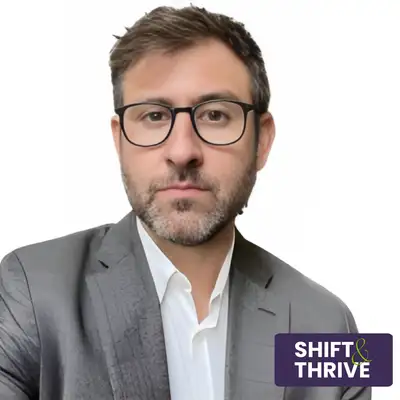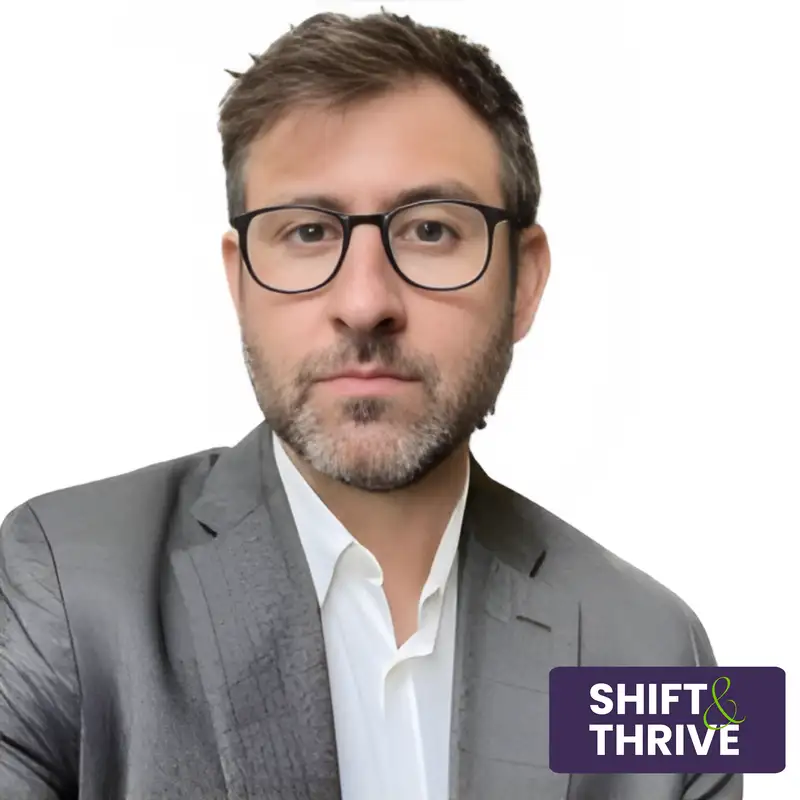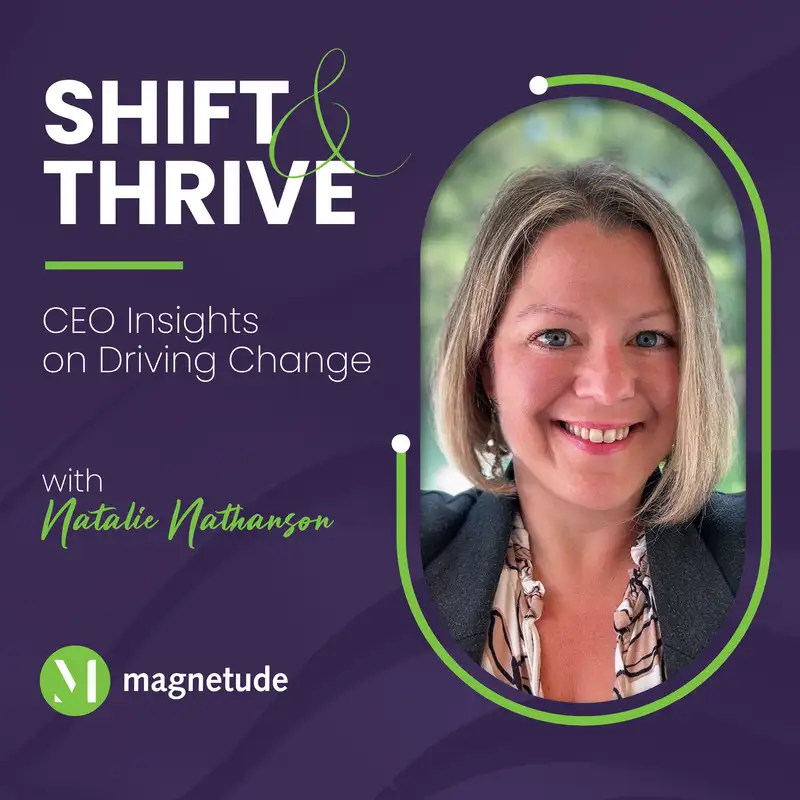
Decisive Leadership in Uncertain Moments - David Axler - Shift & Thrive - Episode # 092
S&T_David Axler
===
[00:00:00] In today's business world, change is the only constant, and mastering transformation is the ultimate key to success. Welcome to Shift and Thrive. I'm your host, Natalie Nathanson.
Each week we'll bring you conversations with CEOs who delve into how they successfully drove critical change in their organization. This show is sponsored by Magnitude Consulting, bringing you the thinking power of a growth consult. And the getting it done, power of a full service B2B marketing agency.
Natalie Nathanson: I am very excited to speak with today's guest. He is a seasoned operator and technology executive with a track record of leading companies through growth and transformation. He started his career in management consulting at Deloitte, where he worked with global organizations on corporate strategy and organizational transformation before making the leap into the startup world where he moved into a number of Go-to-market and other leadership [00:01:00] positions in B2B Tech, including at Intuitive and Wave.
And at Wave, he held roles including chief strategy officer, chief operating officer, and general manager, helping to guide the business through Rapid growth and through its acquisition by h and r Block. Today, he leads a venture backed prop tech company focused on helping commercial real estate manage the complexities of large lease portfolios in a more modern technology driven way.
He is the CEO of occupier. David Axler. Welcome to the show.
David Axler: Thank you very much
and, and hearing that introduction, it gives me a more clear version that I can tell my family of what I do and what the journey I'm on. So appreciate, uh, the way you've introduced that.
Natalie Nathanson: Of course, anytime. And, uh, hopefully they'll, uh, that'll start them listening to the episode too.
David Axler: Perfect.
Natalie Nathanson: Wonderful. Um, well, You know, David, I know you've had a front row seat to a number of, uh, kinda company inflection points throughout your career. Uh, but one that you shared with me that really stood out was your time at Wave, and especially that period, [00:02:00] uh, right after the, the acquisition by h and r Block, where you were given a pretty, uh, big and critical mandate.
So can you take us to, uh, that moment and talk through what was the transformation that you led?
David Axler: absolutely.
the, the acquisition by h and
r Block was an exciting time for Wave for me personally. And after the excitement of the acquisition starts to fade, it is a now what moment. And for us at Wave, it was really about a change
in how
we were gonna run the company
and
the expectations going forward.
We've gone from this venture backed journey growth in all timeframes that at all costs to really maturing the business. How do we have a more predictable, profitable, and sustainable business model? And really that was the ask of where are you taking this now that you're in the, uh, you're part of a public company and the, the stakes are different.
[00:03:00] And it really was a combination of both strategy change, business
model change, and
cultural change. And even in hindsight, I'm, I'm still not sure which one of those was the most complex because they all played a role together. Um, strategically, it was about
asking
ourselves in the new context in which we operate. Why do we exist? What is our unique differentiator and how do we take advantage of our unfair advantages to move forward
and create
even more enterprise value for the company?
And
Wave had been, uh, a essentially a
free or freemium
platform where we were a back office management tool for micro businesses and we had offered a
free suite and
monetized on financial services and.
That had led to much success for Wave, but it also meant that from a sustainability and [00:04:00] predictability standpoint, we need
to ask
some hard questions about is this is what got us here, gonna get us there. And ultimately, through a lot of insight, a lot of data work and making some big bets, we moved towards recognizing that our unfair advantage was that we had built a, a true operating platform for small business and had the unfair advantage of one of the largest tax prep and accounting platforms behind And we
essentially went deep on
solving for the accounting pane and it meant a business
model change from
freemium and FinTech to SaaS. And we launched our pro tier SaaS tools, um, so that we could truly solve the. The core need of the business. And culturally, it meant having now a culture of predictability and a high say, do ratio of not just big home run bets, [00:05:00] but we're gonna be able to predict where we need to be by the end of this quarter, next quarter.
The reporting needed to change there. And my, my, my big takeaways from that
were the diagnosis stage
is arguably the most critical in strategy. That what is strategy? It's, it's an action agenda against the context in which you operate. And that team did
an incredible job at
being honest and critical about the situation we were in in order to make.
Excellent bets, and then the follow through was exceptional. And so the results of moving to profitability, exponential growth, and cherishing and maintaining the parts of the culture that made us so special, while recognizing change gave us a new opportunity to almost reinvent ourselves with these new capabilities, cultural aspects,
recognizing
that all three of those things needed to work [00:06:00] together was really the, the wave story of going from the startup, the acquired company
to a, a huge lever
in a, in a public company in a relatively short period of time.
Natalie Nathanson: Uh, there's so much to what you just shared, so I wanna take us to a few different places here. Um, but You know, initially when you were given kind of that, that mandate of kind of where to take this now, uh, I know you said the diagnosis is, is the most important part. Can you talk about, You know, how you went about that?
What were kind of the first things you, you worked on and how did that unfold?
David Axler: Yeah,
so we actually started with a very small team relative to the overall organization, both at Wave and certainly in the context of of h and R Block. And my, my thought process towards that was
that we
needed to make smart, decisive action, we needed to move with pace.
And so I essentially constructed a, [00:07:00] almost a mercenary team of we
are going
to be able to leverage many of the insights
and smart
people and data that we have in abundance. But if we're gonna try and do this by committee or sticky, sticky note, sticky dot, uh, voting basis for strategy, it's gonna distill down both the
quality and the pace is going to, to suffer.
So I made a a, a very deliberate choice to construct a very small team. uh. That would lead the analysis help to ensure we knew what the decisions truly facing us were. What are the trade-off decisions? This is not between good and bad decision. Those are easy. This is between good and other good decisions that take the company down very different paths.
And we had a great data set that really helped us crystallize
the
true choices in front of us while moving with pace and not doing it by committee. So ultimately I had the decision that needed to [00:08:00] be, uh, blessed by the board, but we distributed the
insights.
So we had a very wide array of perspectives, but we absolutely narrowed the decisioning.
I think that was a, a huge part of why we're able to make great decisions, have buy-in because folks had their hand in constructing of the narrative, but we didn't restrict ourselves to this voting or consensus based strategy development. And if
I'm,
You know, giving the, the future me or past me advice is that was quintessential in being able
to, success
was narrowing in on where those decisions
lie, even
though it felt truly consequential and affecting so many people.
That was a, a key part in being able to move
with both
the quality and the pace that ultimately made this successful.
Natalie Nathanson: Yeah. And I think that balance of, You know, consensus versus [00:09:00] action is so important. And I, I do wanna come back to that. Um,
but I think,
I guess first, who was on that team and how did you decide, You know, which roles, uh, to, to put there and, You know,
with,
the, the eye towards keeping it small.
David Axler: So I'll, I'll talk about the, the team and also the, the broader stakeholder group because they, they had huge elements to play in that the team was very small.
I had,
uh, essentially two analysts
that
were, You know, exceptionally talented.
And I had a director of strategy who was very, uh, very quant oriented,
but had the
visibility across
the business to be
able to understand how all the various mechanisms in our business fit together to be able to understand a story.
We then
relied on a, a larger stakeholder group that essentially had every function in our [00:10:00] business represented with key roles. So we had
product,
engineering, design, finance. Uh, we had no sales team. 'cause Wave was very much product led in terms of
its growth. But our
Go-to-market team, which included,
uh, traditional marketing and DG
and brand and we, we use that group to stress test, to source, to, to validate ideas and. Made sure that we had a lot of visibility into the
process that we
were driving,
but
we kept that, that team, that mercenary team, that Navy Seal team, uh, very tight.
I also had stakeholder groups above me
on our,
on our board. And so we used very regular check-ins around the process that we were employing and tried to get ahead of what are the, what are the constraints, what are the assumptions that
we have that
are ultimately going to lead to this going forward
as
early as we could.
So it was a no [00:11:00] surprises, uh, experience. We had a very good sense of who the stakeholders were that were gonna help us come to a great decision,
who
the stakeholders were, that were gonna help us confirm that decision, and then kept the a or the, the accountability on that process to a very small group.
Natalie Nathanson: Well,
I would imagine that, You know, that combination, um, You know, you talked a lot about data and had, You know, the analysts and kind of the quant mindset, but that there's also decisions that maybe required conviction where didn't have kind of the full data or like you said, trade off between two good choices, but which one to pick.
I'm curious, um, were there any decisions that, that you recall that required kind of courage for you to, uh, kind of make the call and put the stake in the ground?
David Axler: A Absolutely. So part of
the decisions
we were making involved standing up of entire business units that didn't exist. We didn't have historical data to see, well, if we just improve this growth or if [00:12:00] we just, it didn't exist.
It, it simply didn't exist. We were talking about a new business line that was gonna go from zero to a significant part of, of our business. And what we did was we made very clear what assumptions needed to be true. For us to have the type of conviction that we did, and we stress tested those to the M degree because we didn't have that historical data.
I'm, I'm a very data oriented person. I love being able to, to model it, but it was so assumption laden And so I said, I
think being clear-eyed on
what needed to
be true
and is this a compounding bet scenario where everything has to be true for this to be successful or actually it's
just
the combination of some of these being somewhat true for this to be massively accretive for the business.
And
I think
that that was critical. That required conviction. And, and the example there is we were taking something that essentially had been free [00:13:00] forever for our customers, and now we were building a monetized paid platform. On top of that,
the
possibility
that that could
go wrong had. Brand implications, financial implications, reputational, there, there were everything in there.
And so we, we took a very, um, deliberate approach to understand those assumptions.
It also meant
we were going to now say no to things
that
in past time Horizons had been a very critical part of our story. And so in the, almost in the inverse of we're making a bet on something that doesn't exist, we're also now gonna make a deliberate decision to shut
something down That
had
a, a
big part of the story going into it.
So part of our financial services, we. Came
to the
conclusion that if we are going to be world class at being able to offer seamless accounting and almost self-driving accounting, it's going to require [00:14:00] different set, set of capabilities, different value props than essentially what becoming a bank,
uh,
would entail.
And
we, we sunset a product and it took a lot of conviction. My, my name and my picture is on the email to thousands of customers explaining why we were making this decision. And we spent a lot of time. the. Putting ourselves in the customer's shoes as to how are they negatively impacted by
the decisions
that we're making in support of the long-term viability of our business.
And we spent
a
ton of time and effort
to make sure that
none of our customers were hurt by decisions that we were making ultimately, that were in
the best long
term. And so we actually made, uh, partnership agreements with alternative banking companies to do
a
simple free offload. We built the integration into wave.
But anytime you're sun setting
something that's
some that,
it's
been a core part of our customer's [00:15:00] lives. People have spent years working on those projects. And so the same set of assumptions of what must be true on the. On the new. It also meant that our team needed to understand the why behind turning something off that had a important part in what got us here.
And so it, it, there was conviction and courage needed
around
this, this whole project because it's incomplete information.
You just,
you don't have the perfect choice. Um, but by having the assumptions, the why and knowing who your
key constituents
are, and starting with the customer and
making sure
that those are well thought out
and, and,
managed well, it allows the team to, to understand,
to
get buy-in and then move with the quality that they ultimately did.
Natalie Nathanson: Yeah. Well, it sounds like you handled the, the customer part very kind of thoughtfully and with a lot of care and including, right. The, the free users, which I know not all [00:16:00] organizations really. Of it, You know, that level of attention, um, is actually making me think. There's a client that we have that has a freemium product that is very like, well known in their space and more well known than the company itself and kind of their overall like corporate brand.
Um, but a lot of it was coming from customers that were not their ideal customer. And so we've been going through a transition now, um, around how to evolve that model to get kind of more of the freemium within the ICP, but then also kind of the, the business model around around paid. And there's so many different moving pieces at any given time on that.
David Axler: And, and
the interesting thing for us was, the rationale for going
from freemium to
paid could not just be we make more money. It, it needed
to be more central to
that. And, and part of it was
we started to get a
much better understanding of what free actually meant for our customers.
Our, our mental model coming in was free, is a great [00:17:00] acquisition tool. Come for what's free and you'll stay for what's paid. The, The micro business segment tends to operate much more like
the consumer
segment than the business
segment. So if you think about
how you apply value to different tools and services, used the consumer, we spoke to many of our customers, many of our free customers, about the value of free, and we had some very interesting findings.
Our
first assumption was free for them is a deal. What actually was coming back was free, was perceived as risky for them. If I can't understand how you're making money off of this, I'm starting to have some real questions about quality.
But
what was interesting is. Our quality scores were off the chart.
And so when they couldn't find
something wrong
with quality, now they started to question intent.
If I'm not
paying for this and it's really good, you [00:18:00] must be monetizing somewhere else. What are you
Natalie Nathanson: What am I missing?
David Axler: What am I
missing? What are you doing with with the data? the answer was nothing.
We weren't doing anything with the data. We were monetizing on financial services to the point that that the unit
economics
worked out. But our customers are not thinking about that. They're thinking about the plumber's, thinking about his next job. The interior designers thinking about our client, they're not thinking how does wave back money?
And so interestingly, when we introduced
paid
offerings
that customers
could truly understand how we captured the value we create, it had the opposite effect that we had initially thought about. We're gonna see massive churn. And It gave customers comfort of there's now a value exchange that I completely understand and I'm, I'm
not
questioning the quality or whether there's anything nefarious here.
This makes sense to me and the alternatives don't.
And so
we saw an outsized amount of success than even our initial models
had had
shown. 'cause we anticipated churn. We just thought, okay, when you're charging [00:19:00] for
something that
was once free, you're gonna see churn. And, You know, we did to, to some degree,
but far less
in
the growth, the
growth outpaced even our most aggressive model
based
on the, the human psychology that was going on, which is, I get this now and I trust this now and I gladly will exchange value with a company that is a cornerstone of how
I do
business. So a very interesting experience of free to paid and doesn't always go the way you think for reasons other than you naturally think are occurring for the customer.
Natalie Nathanson: Right. Well, and I love that example because I think just by talking to the customer and talking to enough of them, you learn something that maybe kind of flew in the face of what the understanding would've been. Right.
David Axler: Totally.
absolutely.
Natalie Nathanson: Um, so I know hindsight's always 2020, but as you look back on kind of the, this experience, kinda the overall transformation, is there anything, uh, you would say you would have done differently in hindsight?
David Axler: I mean, You
know, I, I worry about the butterfly effect of if I've changed [00:20:00] anything, I
wouldn't
end up exactly where we're here today, so
I, no,
no regrets. Certainly. Um,
I
think there are probably moments
where
we could have acted faster and
the
whole experience I just talked about in terms
of the
customer providing the direction that
we
needed to take. Getting to the customer faster, more often would probably be the thing that I would change. Looking backwards, and for every
company, but
for a company like Wave,
we have.
so
much
data on
any given
month, we had quarter of a million or more small business owners using our platform. And so when you have that much data, you tend to look at the, the
quantifiable side because it, it
gives you
objective
truths.
And it's difficult to go to the qualitative [00:21:00] because I'm gonna sit and do an interview with maybe a dozen customers in a week mapped against what the data is telling me that a hundred thousand do. I'm just gonna do the a hundred thousand. It was in the qualitative, it was in the story behind the story.
It was in what customers were saying that actually got
us
to our truth as. Effective and quickly as, as we could. And that's probably the thing that I would change. In retrospect,
I'll
also say that now if we would've had
the capabilities available
through AI and otherwise in, in 2023 that we have today, I think we could have got the qualitative insight in a much faster, more precise way than perhaps we
could have done
now.
So, You know, to answer your question, maybe
in an
unfair way, I would take some of the capabilities we have today. I'd give them to
my team,
uh, three or four years ago and, and say, let's, let's truly understand the buyer psychology, the, the user pain, and what's the narrative that they're [00:22:00] telling
us here, and how
do we juxtapose that against the data and the modeling?
I still think we
would've gone to a very
similar outcome, but perhaps it would've been,
uh,
even more expeditious than we experienced back then.
Natalie Nathanson: Yeah. Yeah. Well, and there's certainly a lot of, uh, new, new capabilities, uh, when we're kind of building and running all these motions that, that we didn't have a few years ago. Um, I think the point about the customer is just so important. And, You know, my marketing consultancy works with clients on things like messaging and positioning.
We're always so insistent on doing those qualitative interviews with customers. Um, because, and sales doesn't always want to kind of open their, their client portfolio and all of that, but once they see what comes back, it,
You know, the
value is, is so obvious and it's just you, it's hard. You can't argue with what the customer says.
Right. You can, uh, kind go back and forth on, do we phrase it this way? Do we phrase it that way? Is this the position? Um, but the customer insights are, uh, are
just incredible. They come back and I think,
uh, [00:23:00] especially in times like, like we're in right now, where there's so much changing so quickly, um, could be very surprised at at some of what we learn.
David Axler: Absolutely.
Hey, this is Natalie, your Shift and Thrive host. After chatting with lots of CEOs, one thing is crystal clear. Leveling up your company means having a killer Go-to-market strategy. That's what my crew at Magnitude Consulting does every day. If you're trying to step up your marketing game, whether it's strategizing, accelerating your pipeline, expanding into new markets, or getting into AI and automation, let's talk.
No pitch, no pressure. Just good conversation. Visit shift and thrive podcast.com/natalie to schedule a time. Can't wait to connect.
Natalie Nathanson: Um, I wanna talk a little bit more about kind of you and your leadership style. And you touched on this earlier, um, of kind of getting consensus, but also, uh, kind of making decisions and making the, the [00:24:00] call. Um, so I wanna just, uh, hear a bit more kinda how you think about this and, You know, how do you structure it so it does work well for you and you're not, uh, kinda spending too much time on too many opinions before kind of making the call.
Talk me through kind of how you, how you work through this.
David Axler: I think that's,
it's, it's evolved over
time for me
And I
think earlier in my career I was very much a consensus driver. Uh, it felt like the right thing to do. You could point to look at how many votes we have, and everyone
is feeling
good about the decision.
You'd go through an offsite or a whiteboard and you'd go around
the room
and you get votes and I learned that. More often than not that mode, that that consensus at all costs was distilling the end answer. It was becoming the thing that was least uncomfortable for the majority of the group to, to move towards.
And [00:25:00] probably one of those lessons you can only learn by doing and seeing
the, the
results. And it helped form my mental model for leadership of building the team that I have for a reason, which is these are the subject matter experts at what they're great at. I want to build a high trust environment so that A, I'm not trying to do all the things and I can give the leaders on my team exceptionally high agency to do what they're
great at.
And
if
I'm now. Taking that agency and just converging it back to a voting mechanism. It defies the whole ethos of what I'm, I'm trying to do. So one, how I build the team. I look for folks that are spiky and great on things that I'm not.
I,
I, don't want to build clones of myself. I, I want to compliment my [00:26:00] expertise and my, in my
style
said differently.
I know what I'm great at and I'd much rather work in an environment where I can use my superpowers as opposed to trying to distill them all across the team and be kind of good at a whole bunch of things. And so I build a team that is quite diverse. Skillset and archetype wise, give high agency. I'm a, I'm a high trust leader.
I don't
want to
be fact checking and, and work checking. I give clear accountability as to who actually owns this. And I think that it is, it's also, it's honest and it's fair folks understand who is truly driving the decisions here. Why are they, why are they driving the decisions? And being able to, to distinguish between one door and two door decisions.
Uh, I know it's, it's a, it's an Amazon
claim
and I've
worked with a
bunch of former folks from Amazon who I, [00:27:00] You know, with, with zero worry. I've, I've stolen that, that concept of really understanding the nature of the decision that we have, and if
there's
really very few one
door decisions
that a company will make in any one year, those are the ones where
in
all likelihood I'm gonna own the Aon or I'm gonna own the decision on with two door decisions.
One
that
they may have high stakes, but we have an understanding of what do we need to do if they're wrong. I wanna make where that decision lives as
clear as possible
and give folks
high agency to make that
decision. While as leaders understanding that part of
decision making is not just
deciding and executing it is keeping folks
aware
along the way of the why and the narrative and pulling in their unique expertise and perspective such that they feel [00:28:00] included, connected, but also understand how this decision is getting made.
So to,
You know,
maybe put a bow on that, it's building a team that has diverse capabilities and, and expertise being clear on how agency works and other than a very few select one door decisions that are quintessential
to the
business line or the company really giving those to the leaders on the team.
That's why they're there.
Natalie Nathanson: Uh, I wanna fast forward a bit and, uh, talk about what you're building today. So can you share a bit more about occupier, maybe a bit more about the types of problems you're. Loving for your customer.
David Axler: Absolutely. So after the, after the Wave story and the
success
that we had there, my mental model for the next company I want to join was
going to.
Have elements of the recipe that made wave so [00:29:00] special, but also different in the context of a company that I wanted to join that would meet the moment that we're in. So I'll explain what I took from Wave in the, in the company I was looking for. Wave Solved an
absolutely business
critical function. It was
not a
nice to have, it was absolutely required.
It was unglamorous
at the surface. So accounting,
not the, the flashiest thing that
you can work
on payroll, maybe even less so. Uh, I was looking for things that are, are hard. They have a high barrier of entry because of the complexity. Often regulatory
nature. That's
a place I like competing. With Wave. We were also competing against
two parts
of a market that was a really great wedge for us to be in.
On one side, you're competing against essentially nothing. Excel spreadsheets, shoebox of receipts,
and
on the other side. It's large incumbents who can't move as quick as, uh, as a startup. [00:30:00] So I looked for that in the next role that I was taking on, um, different than the HR block and wave
context,
which have a lot of
amazing things
going for it.
I was looking at where things were going in 2025 and now here we're in 2026 thinking that the way you would build a company would look completely different with ai, with remote culture. I was looking for a speedboat, not a battleship, and I think HH hundred block wave this incredible battleship with so much natural advantages.
I want to go to a place that was small
where the cake had
not yet been fully baked, but had the, the first advantages I talked about.
Enter
occupier, which is solving the, You know, back office and administration needs for commercial tenants who have been largely
underserved
for a long time. And similar to the wave context, the
alternatives
have been [00:31:00] manage all of your lease obligations via spreadsheet or some not built for purpose, uh, prop tech technology that you can try and Jerry Rig to manage these massive real estate implications for your business.
And it's a small team that 30 people, that if we have the ingredients of extremely satisfied customers, which OPI does,
if
we solve a business critical function, which we absolutely, absolutely do, we're competing in a fragmented. Market where it's, these are great folks to compete against,
and we have
the ability to operate as a speedboat, move fast, build a small team that uses the best in new ca capabilities and technologies to scale in a completely different way than you would even a year or, or two ago.
Um,
it
got me incredibly energized and the, the team is incredible, high integrity, high [00:32:00] capability, and it's an easy customer group to wake up in the morning and solve for. Our customers are commercial tenants are
overburdened by just
the sheer
amount of
detail and responsibility that they have. These are retail locations, large offices.
Mid market that will have 20, 50,
a hundred,
a thousand leases, each one with
clause
data that if you get something wrong, if you
miss a renewal,
a
critical date, a landlord
tenant responsibility, you are incurring massive risk and cost to the business. And so knowing that we're
taking that pain
away through technology, through capability and through built for purpose solutions,
it's,
it's very easy to get up in the morning and, and compete every day to, to provide value to those customers.
Natalie Nathanson: I am curious what kinds of commercial tenants tend to get the [00:33:00] most value from what you've built? And then, um, like do you think that's gonna change in the years ahead? Like, I don't know if you serve more of the, the leaders versus the laggards, I assume kind of a bit more on that side, on the leader side.
Um, any like behavioral, uh, criteria? Uh, tell me about
David Axler: And
so we, we typically start. We're about 20 or more leases, um, tend to be more retail oriented and have a dynamic portfolio, meaning that they're adding or removing locations on a frequent basis. So you
think about
QSRs health and wellness, where they need to find the best, the best places, and real estate is arguably their, their, their largest liability from an accounting standpoint and the way it's managed has massive implications on the
business. So
while we're a horizontal solution that we don't just
support one
vertical, they cluster around, um,
or more leases and a dynamic nature to,
to
the portfolio.[00:34:00]
What I'd
say is that there's, there's. Elements of leadership and frontier elements of who were initially the, the clientele, uh, ones that were more technology forward and technology enabled.
That changed about a year or two ago as accounting standards in lease management changed and now the compliance obligations of commercial tenants have increased. And so finance teams have a new set of criteria on which
they
need to report. And this no longer just becomes about a slicker, more organized way to manage your leases.
But there are. Audit requirements, there's reporting requirements. And so this has become even more of a critical function that all commercial tenants need to have an answer for that question. And the complexity only seems to be
increasing while
the capability to manage it from occupier [00:35:00] standpoint is only getting better.
So what used to be a, a leading frontier innovator, it's now it's, it's much more, um, commonplace to, to find a solution for
this.
Natalie Nathanson: I'm
curious, You know, where and when in the conversation, uh, do you bring in kind of the AI components of, uh, of the offering? Uh, a lot of conversations around, right? If AI feels, in some cases, like the table stakes where everyone's saying it, how do you truly talk about kinda the value of the solution?
Where does that happen kind of in the, kind of the sales and marketing journey for you?
David Axler: Yeah. I think it's important to understand your market and your buyer. That
AI
is not the thing. The, the problem that needs to be solved is the thing, and AI is a lever on which to solve it. And understanding both
what
that means for you in the,
in
the
products
and services that you're building and what it means for a [00:36:00] customer.
Different markets will have different comfort with what AI can do, and the reliability and accuracy requirements of that market have a very large role to play. So when you're buying different technology, you, you see the 9, 9, 9 0.99999% uptime that can is almost a proxy for accuracy. There are industries where 98% accuracy is unacceptable.
It's has to be 0.9 9, 9, 9 levels of accuracy. And knowing that. Dictates not only the solutions and offerings that you have, but what is the value inherent to the customer of AI in and of itself? So in our context,
we're in
a hundred percent accuracy, environment, AI to supplement and make that more effective, efficient, [00:37:00] interoperable with the tools is the value prop, but we are not abstracting away
human
involvement.
It's, you've heard the term, um, human in the loop or hands on the wheel. That's a big value prop for, for our segment is that we're not fully automating and fully going to ai, but we're giving human beings on our side as account managers, as
uh,
developers, tools to give those humans greater confidence. And so I'd say it's.
It's
bespoke to the industry and the, and the solution you're solving for. I think in a different context of the tools that we're using at
opi.
So our marketing team is probably the most AI pilled team I could possibly imagine. And what we get back at times will have imperfect accuracy. But that's okay because we have the ability to soundboard with ai.
Did this really get our persona [00:38:00] right?
Does
it have our brand voice? We're training on skills. The fact that it's not accurate the
first time
is okay because we have seasoned marketers who understand it, know how to make
changes.
In a world where you
are solving
for an administratively burdened customer, they do not have the time or the ability to fact check.
Thousands of leases or hundreds of accounting records. It, it needs
to be
true. They need
to be able to have that
high trust. And so understanding the nature of the workflow
that's kicked
off by that
is what's going to
give you the, the sense of where and how do we introduce AI as the value prop? Is it, is it the thing, is it supplementary to the thing or are you getting too far ahead of your skis where let it be the thing that allows you to build efficiently?
But there is, it's the, almost the inverse value prop with they, the fact that there are humans who are [00:39:00] overseeing this, this machine is the thing that gives your end customer the most confidence.
Natalie Nathanson: Yeah, that was very well said. I'm, uh, going to a conference in, uh, a few days, uh, that last year. Uh. Almost every booth had kinda AI plastered everywhere. Um, and I'm very much hoping that this year it comes back to kind of the business value, the problems you solve, the impact and outcomes, uh, because it, You know, you just walk the trade show floor and everyone sounds the same and you can't really tell kind of where the value's coming from or kinda how it's working.
David Axler: Well, and, and there's this, this phenomenon
of galman amnesia. I don't know if you've heard
this concept
before. It's a, a Michael Creighton concept where you're reading the newspaper on a, and it's a section
that You
know a lot about. So if I'm reading the sports section, for instance, I know everything about the Toronto Maple leaf. They torture me every year. I could see a editorial about this is the Leafs year. And I could fundamentally know, like, this [00:40:00] is not the
leafs year.
They are terrible. This person doesn't know what they're talking about yet. I flipped the section to the art section and I didn't see any of the Oscar nominee
films
this year.
I could just take that editorial saying,
um, You
know, sinners is the, the worst movie. It has no choice, no, no chance at winning. That that sounds probably right. And we have this selective critique based on what we deeply understand. And the same is true with
ai. When
we get something back that we know the space, we can instantly say like, this is not right.
I would never trust this. Yet in the same working session,
we can ask about
something that's just slightly outside of our purview and trusted as gospel. And that, that to me is what's distinguishing, first of all, it's a risk of ai, but it distinguishes. Those that can re create real
value versus
the AI slop that I think a lot of the, the, the tools unfortunately [00:41:00] help to, to create and, and permeate.
Um, and as human beings, we, we have a hard time distinguishing
between those two things
unless we really understand that intimately.
Natalie Nathanson: It's true. Well, and the, the distinction, uh, that, You know, everyone, you, you can be an expert and kind of serve that role in the areas that You know well. But then you can be kinda duped like everyone else in the areas that you don't know, uh, as well. I think it'll be a very interesting thing to, to solve for in the world of ai.
And I think we just see so much like content swap because things might sound good, uh, on face value, but it's being put out by people that have, have not taken that critical eye. So I think the, it, it really ups the ante for every, uh, knowledge worker, probably others as well, uh, to really, uh, kind of work through that.
David Axler: and, and
I think it increases the value of authenticity.
In a world where we're hearing, where we're seeing, and you can see it, whether it's on LinkedIn or or other, you can see where this is not authentic. And authenticity, customer [00:42:00] advocacy, real,
real,
authentic voice, I think
has never
been more important and
to, to
break through the noise because there's never been more noise in all of our ears or all of our screens.
And so authenticity has become a,
a real
currency.
Natalie Nathanson: Yeah. Yeah, definitely agree with that. Um, I'm curious, You know, along these lines, is there anything that you've kind of done or, You know, how you work with your team, uh, to make sure that, You know, everyone does have that, that critical eye and I guess like safeguarding against, uh, kind of the, the risk there with the, the gelman amnesia
David Axler: Yeah, it's, it's a balance because as,
as CEO. I want to make sure that our company is meeting the moment and I want to have the tools and ca capabilities in every single person's hand at our, at our company. And so we are AI maximalist in what we [00:43:00] use on a day-to-day basis to help us do our jobs effectively.
But we've also put it to the team, which is that this is not a replacement for the expertise and experience
that you're
here in the first place. So
this isn't simply a
create an AI generated summary and send it to the team. It does. It does not replace it.
And
we share every day our best practices. We have a whole Slack channel on what we've done, and we,
by
seeing how folks across the business are using AI not as a replacement for what they do, but a supplementary, it's creating a cultural norm at our company.
I'm not a big believer of.
Values
on a poster. I'm a believer of the behaviors that you celebrate and you call out as becoming what your culture is. And
it's,
this is becoming part of our culture, which is not abstracting away your expertise, [00:44:00] but using it as a way to
help
synthesize, help stress test. And so able to share that in public
has
been, to me the best way that we've been both able to have a bottoms up AI approach, but reinforce that you need to be critical.
You, you need to be involved and you can't simply just hand off the expertise, the taste, the decisiveness, that is why you're here in the
first place.
Natalie Nathanson: Yeah, we're, we're, uh, having some interesting discussions on, on the leadership team around kinda competency benchmarks around AI use and what's the expectation, um, at kinda different levels of, uh, of, of a role. Um, and it's just opening up some very, uh, interesting conversations and ones we haven't needed to solve for, uh, in that way before.
David Axler: Absolutely. And, and I'd say that the fundamentals still hold true. [00:45:00] So do you have clear outcomes for your team and, and, and the individuals?
We have all sorts
of new analytics to
say like, look how many poll requests were done by Claude this month? Look how many, uh, projects and artifacts we've created. It's like me saying, You know, I went to the gym 30
times this
month, but not actually
talking about the
results that I actually did. And so the fundamentals of having clear outcomes, clear goals, monitoring the business and individual performance, it, it holds true and perhaps is even more important than ever because it
can become
very performative of, look at all the cool new whizzbang things.
that we
did this month or this quarter, but what did you show for it? Did it, did it move you and the business and your team
forward,
or did it become the new shiny thing that took all of your time yet at the end of the day, we're, we're no better off. Perhaps we're even
worse off now, [00:46:00] because now
we're just confused as to what this does.
So it, it's really on leaders and teams to have their true sense of the why and how do you monitor for that performance. Otherwise,
like
to your point, it's like, well now we're
considering a
whole bunch of new things. Is
this even
important? What do we measure on? It's keeping the fundamentals in place.
Natalie Nathanson: Right. Right. Well, and I think that laser focus on impact and outcomes and then kind of a right sized, uh, level of, uh, experimentation and tolerance for experimentation that might not go anywhere.
David Axler: Absolutely.
Natalie Nathanson: Um, I wanna ask you, it sounds like you're doing a lot, uh, with AI within your Go-to-market function. Is there an example that you're able to share, uh, to help bring it to life for us?
David Axler: Yeah, I think that what's becoming clear for us is that what AI has been able to allow us to do
are
things that would've taken perhaps a week or a couple weeks that now can take an hour or three [00:47:00] hours. The conver, I was having this conversation with our head of marketing yesterday and the example that we were going through was we have a much more refined view of our competitive landscape and competitive analysis
by
connecting the right tools that we're using,
and
she's overlaying her expertise to make sure it's right.
So it's connected
to our
CRM, all of our sales call, all of our product usage. We can have a
clear sense
of how our customers perceive us relative to our core competitive set, mapped against, against key variables to position us. Old world, maybe only like three months
ago. That that
was a quarter long project to get to the level of quality that we ultimately have right now.
That took
probably over the
course of a week to really make sure it was instrumented properly and could be stress tested and validated to a point where we're using it as a, as a key input to decisions.[00:48:00]
And the
conversation that we had was not so much that what would've taken a quarter took a week, it's that it wouldn't have
happened. It
wouldn't have
happened because
the priority set that we have meant that we just would not be
getting to
this. We have a small lean team and we have pipeline to build, and we've got collateral, we've got new website. The competitive analysis is important,
but it
was not making it above the fold.
And
So now the fact that so much of that workflow could be built into just the tools that
we're using
with a, a seasoned set of eyes on what, what is here that, that makes sense, what is hallucination?
And it's,
it's pretty excellent.
So I think the competitive analysis, a
huge
piece synthesis is, is massive being able to recreate when you have a common set of [00:49:00] constraints. So we're doing a lot of website development where we're copy and landing pages, um, email nurtures, a lot of that can be exponential.
So it's
build once, deploy many without
sacrificing personalization
or, or customization on, on those things.
Um, but it is not a fully agentic experience. This is very much
humans involved, um, to
make sure that it meets. The brand voice, the quality standards, nothing is being fired off to folks that shouldn't be getting
it.
But,
but certainly our productivity and our output has increased by orders of magnitude.
Natalie Nathanson: Yeah. Um, I couldn't. Asking you about AI and Go-to-market all day long. But in the interest of time, uh, I wanna learn a little bit more about you. So,
uh,
can you talk about, You know, who were you as a child? Did You know you'd be in these kinds of fields? Uh, tell me a bit about yourself.
David Axler: Yeah, I don't think I had [00:50:00] any idea that this job even existed as a kid.
Um, I grew up
in, in Toronto and, um, went to university at, in London, Ontario. I'd studied poli sci and international relations with the thought I would become an international lawyer. Uh,
I was very into politics
and current events
and
travel and got into law school. And my grandfather actually, uh, who had, who was a refugee, immigrated to Canada, he said, you have the opportunity to do anything you want.
It's a privilege that you have just based on where you were born and what you've gone
through.
Are you choosing to do law because it's what you really want to do, or because it's what you think you
wanna do, or, sorry, what you think
you're
supposed to do? And I didn't really have
a [00:51:00] great
answer for that question as a 20-year-old, but enough of a premonition to know that there was probably elements of obligation that was driving me towards law.
And what he said is, if you really wanna do it, I'd recommend telling them you'll come in a year and go do the job you actually want. And see what that's like.
And I, I
got a job with an NGO doing international development work
in
Kenya
to
get up close
and personal with
what that actually looked like.
And while I was there,
so it's to date
myself a little bit, this is
2006.
The political situation in Kenya got very complicated, very fast. Um, both political parties essentially got on the radio and declared that they had won the election, so no one in the country knew what was going on.
And
that was my moment
to see
what international law law really does and international lawyers do.
And.
I
was [00:52:00] less than impressed, to say the least.
And
a very interesting
thing happened while I
was there.
The phone companies in East Africa, so Safaricom
and uh, Tel had just released a
new technology called EM Pesa,
which
allowed folks to trade phone, phone credit as almost real dollars. And when the whole country was falling apart,
it was
this new technology of trading phone credit that was
keeping the
economy afloat to, to some degree.
And it was just this huge epiphany moment, which was the thing that actually is gonna create change and be consequential for me is
through
technology and business, not through. Law. And I got on a payphone in Nairobi, I think at two in the morning to call my parents telling them I'm not gonna law school.
'cause I wanted to go into tech. It freaked them out. Like, you, what are you talking about? Tech? You've never taken a computer science course in your life? And I said, no, I, I, I think, I think this [00:53:00] is a really important step I want to take. I didn't have any idea what that would look like, but ended up coming back to Toronto, I got into my MBA is where I joined Deloitte to really understand how to break down a business,
but always with
the eye on how do I get that first step into tech so that I can be at the intersection
of tech,
technological change.
Business and human
impact. And now,
You know, too many years later, I, I think that's what I'm doing of being able to help find these innovative s solutions, change real lives to, to, to make impact and a very windy road at times. Unplanned, a lot of luck, a lot of circumstance. But that's the, that's the version of how you start with an acceptance to law school and end up with
a, a, a tech CE.
So, um,
not sure it's a blueprint, but that's the, the Story.
Natalie Nathanson: Yeah, I love that story. And Oh, amazing to have that kind of an [00:54:00] encouragement like from your grandfather, because I do think oftentimes, uh, young adults are mired by kind of the expectations of them, and it's hard to know kind of what do you, what do you truly want? And it sounds like that experience in Kenya, I can't imagine, uh, kind of all the different things that, that you must have taken away from that.
David Axler: Absolutely.
Natalie Nathanson: Um, I'd love to ask you, uh, a, a closing question, David, and as you think through all the experiences you've had, what would you say is the, the piece of advice that has stuck with you most?
David Axler: The piece of advice that has stuck with me most, and maybe there's some recency bias because I've come back to it a few times, that it's
bu, and
that sounds generic, but particularly as
you enter
leadership or new leadership, it can be easy to think that the right way of doing this is to follow a leadership profile that you've read [00:55:00] about or you've seen or you're copying.
But to understand yourself and know what the best leadership context of you really is and be authentic to that.
all have
some type of imposter syndrome to some degree, because we're doing hard things that we haven't done before. And the, the sooner you can find your footing as to what that version of you looks like
and
know what you need to surround yourself with,
that's
where you hit your flow.
And so it's a, it's a bu advice.
Natalie Nathanson: I love that I had a similar, uh, learning of that. I think it took me, uh, some time to, to get to that, uh, earlier in my career. Um, but there's the quote, gonna be yourself because everyone else has taken, that's. You know, tongue in cheek, but I, I love it. Um, so David, as, uh, listeners want to get in touch, what's the best way to reach you?
David Axler: [00:56:00] Well, you can find me on, on LinkedIn, uh, LinkedIn slash David Axler
on Twitter at
relax, or I guess it's X now. And, uh. definitely for those that are in the commercial real estate space, occupier.com and, uh, You know, look forward to speaking with folks that have listened to this, uh, episode in the future.
Natalie Nathanson: Uh, that's amazing. Uh, and this was, uh, such a great conversation. So, uh, thank you so much. And I loved hearing about the transformation that you led at Wave, You know, the, what you shared about leading collaboratively, but kind of making those, uh, those decisions and, uh, and moving fast through that process.
Um, and then the discussion we had about the domain expertise and, and what that looks like in a world of ai. Um, so thank you so much for everything that you shared.
David Axler: Yeah, I had a lot
of fun.
I.
Natalie Nathanson: Great. And thank you too to everyone who's listening, today's conversation sparked something for you, and I'm sure that it did. Please pass this along to another leader because [00:57:00] we know that insights like this fuel fresh thinking and help all of us drive real transformation in our companies and in ourselves.
So thank you again, David, and this has been another amazing discussion on Shift and Thrive. I'll see you all next time.
That's a wrap for this week's episode. For show notes and more visit Shift and thrive podcast.com. A special thank you to our sponsor, magnitude Consulting, bringing you the thinking power of a growth consultancy and the getting it done Power of a full service marketing agency to help B2B companies fuel their growth.
For more information on magnitude and to get your complimentary transformation readiness assessment, visit magnitude consulting.com/. Get ready. Thank you so much for listening. We'll see you next week.
Creators and Guests